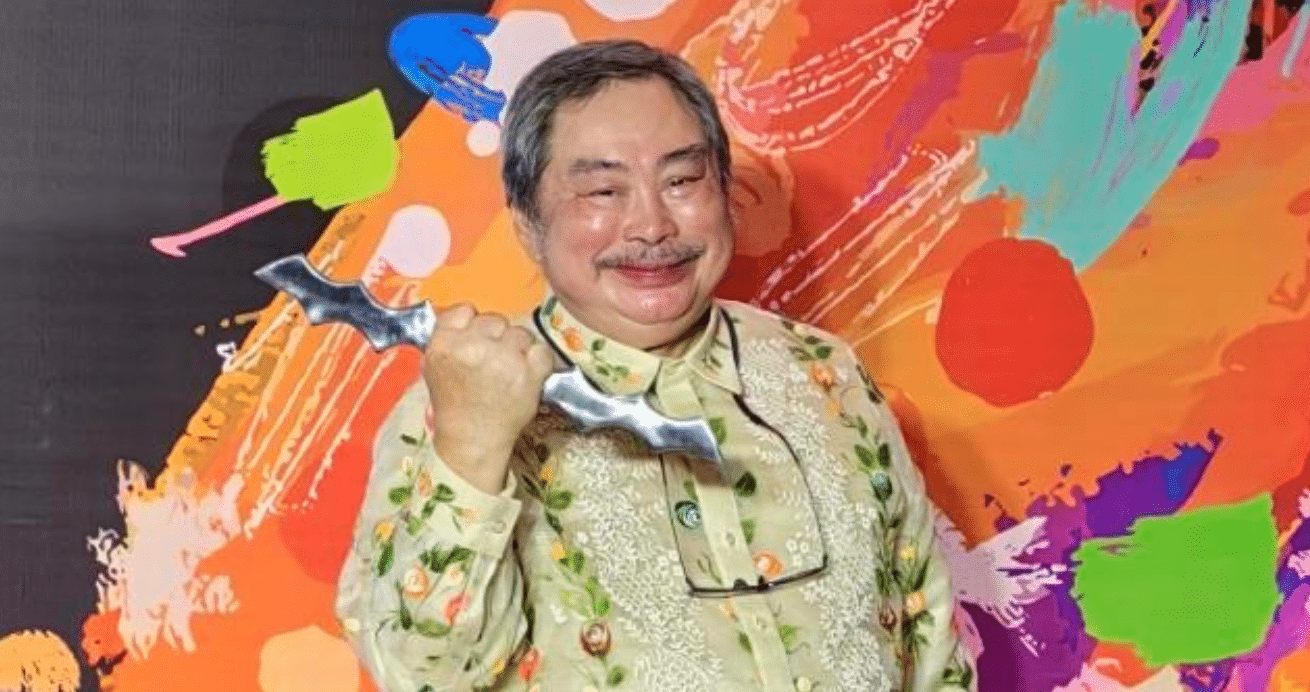
As GGC Group Asia moves into a new chapter following the transition from DDB Group Philippines, Chairman and CEO Gil G. Chua is focusing not only on the business it has built, but on the systems, culture and leaders that will carry it forward.
After more than three decades in the advertising industry, Chua has turned recent changes facing the organization into an opportunity to formalize the principles that have guided his leadership. The GGC Way, a codification of his management practices, is intended to make those lessons accessible across the organization and strengthen its leadership pipeline.
His approach reflects a broader business challenge: how leaders can build institutions that remain resilient and effective beyond the individual at the top. Chua’s recent work—from the company’s rebrand and leadership development efforts to his initiatives with Rotary organizations and the establishment of the Gil G. Chua Marketing Excellence Award—has centered on building capability, developing people and creating a lasting impact.
Article continues after this advertisement
The following contributed piece, written by his eldest daughter Anna Chua Norbert, offers a personal perspective on those milestones and the leadership lessons she has observed throughout his career.
THE BEST IS YET TO COMEAt 68, Gil G. Chua Is Still Building — and Still Teaching Us How
Written by: Anna Chua Norbert
Most people, on their 68th birthday, look back. My father looks at what’s next.
He has spent more than three decades building a company, and this past year, he had to rebuild it — not because he wanted to, but because the world changed under his feet. When Omnicom decided to retire the DDB brand globally, the agency he’d nurtured for 33 years lost the name it had worn since before I was born. It would have been reasonable for him to feel that a piece of his life’s work had been taken from him.
Article continues after this advertisement
Instead, he asked a better question. Not “what do we call ourselves now,” but “who are we, really, underneath the name?”
Who Are We Now?
Article continues after this advertisement
He didn’t hire a branding consultant to answer that question. He asked the people who worked for him.
“Who do you work for?” he asked, across the organization.
The answer came back the same way, again and again: “GGC.” Not the network. Not the holding company. Him — or rather, what his initials had come to mean inside those walls.
That’s how DDB Group Philippines became GGC Group Asia. The name wasn’t invented in a boardroom. It was already alive in how people spoke about their own workplace, long before it went on the door.
THE TAKEAWAY — Culture is the asset that survives Logos, networks, and contracts can be taken away overnight. What can’t be taken is what people believe about how work gets done in your building. Before your next rebrand, restructuring, or crisis, ask your own people the question my father asked his: not what should we be called, but what do you already believe we are? The answer is usually the truest strategy document you’ll ever get for free.
Building Leaders, Not Followers
If the rebrand answered who we are, the next project answered what we do about it. My father calls it The GGC Way — a codification of the habits he used to teach one conversation at a time, now written down so anyone in the company can learn them without needing years of proximity to him.
Respond with discipline. Bring solutions, not complaints. Protect the dignity of clients and teammates. Measure what you execute. Leave people and places better than you found them. And there’s a visible ladder for anyone who lives by it — coordinator to senior, manager, director, principal, equity partner.
In the book Abundance, Ezra Klein and Derek Thompson argue that progress doesn’t come from good intentions alone — it comes from institutions with the actual capacity to build. My father has always understood this instinctively. For him, abundance was never about having more for himself. It’s about building the kind of systems that let more people succeed without him in the room.
Shared success means multiplying leadership, not multiplying dependence on the leader.
THE TAKEAWAY — Write it down before it walks out the door If your best judgment only exists in your own head, your organization’s ceiling is your own bandwidth — and your risk is that it leaves when you do. Turn your instincts into a document your newest hire can read on day one. That’s not bureaucracy. That’s succession planning disguised as a handbook.
Awards He Didn’t Chase — and One That Will Outlive Him
The recognitions came anyway. The Creative Guild of the Philippines gave him the Kidlat Lifetime Achievement Award. Junior Achievement of the Philippines gave him the Tanglaw ng Kabataan Award, one of its rarest honors, for a lifetime spent preparing young Filipinos for the world beyond their diploma.
Then Junior Achievement did something my father has never done for himself: they put his name on something that will keep giving after he’s gone. The Gil G. Chua Marketing Excellence Award, inspired by the Sarimanok — a Filipino symbol of good fortune — will recognize marketing mentors, companies, and schools that use creativity to build businesses, create opportunities, and uplift communities. Four words anchor it: Creativity. Purpose. Impact. Legacy.
But if you ask me what people will actually remember about my father, it isn’t the plaques. It’s that he made other people believe they could lead, too.
From 15 Rotary Clubs to 125, at Once
Here is what he did the week after the honors came in: he went back to teaching.
He had personally visited 15 Rotary clubs and noticed the same gap in every one — good people doing meaningful community work, without the communications skill to make that work visible or supported. His answer was pure Gil Chua: don’t teach the same lesson fifteen separate times. Do it en banc. He organized a single conference and brought in leaders from 125 Rotary clubs to learn public relations and media strategy in one room.
THE TAKEAWAY — Design for scale, not just for effort The instinct to help one person at a time feels generous, but it caps your impact at the size of your calendar. Before you repeat a lesson for the fifth time, ask my father’s question: could this be one room instead of five? The multiplier is usually sitting right there, waiting for someone to bother convening it.
The Measure of a Life
My father’s legacy was never going to fit neatly into revenue or awards. It’s in the numbers that took decades to build quietly: women now make up 68 percent of GGC Group Asia’s workforce, 70 percent of its senior management, and 53 percent of its Board. Nobody handed him a mandate to build that. He just kept opening doors and then stepped back to let people walk through them. Today, GGC Group Asia employs 7250 nationwide.
It’s in the Rotary clubs that can now tell their own stories. In the 2,000,000 students learning that professionalism is predictable, that calm is a form of power, and that consistency is what turns trust into scale.
What I Want You to Take From This
I could tell you my Papa is a great businessman, and he is. But the more useful thing I can tell you — is this: every hard turn in this story became a system, not just a story. The rebrand became a values exercise. The recognition became an award for other people. The Rotary visits became a scaled conference to reach more people. The hardest news cycle in years became a magazine about what’s still good.
When circumstances force an ending, you get to decide what kind of beginning it becomes.
That is the real inheritance he’s building — not a company name, but a habit of turning whatever happens to you into something that helps the next person.
Happy Birthday, Papa
The future is always bright with GGC around. And the best really is yet to come — because you never stopped building it for the rest of us.
With all my love,Anna
ADVT.
Your subscription could not be saved. Please try again.
Your subscription has been successful.
This article is brought to you by GGC Group Asia.