In October 2014, the museum opened its doors to the public for the first time; this year it hopes to reach the goal of 200,000 visitors.
By: Sofía V. Hernández. “During these 12 years, we have always looked for different and creative ways to continue communicating about how Panama is important to the world,” said Eyra Flores, coordinator of the Biomuseo Public Program.
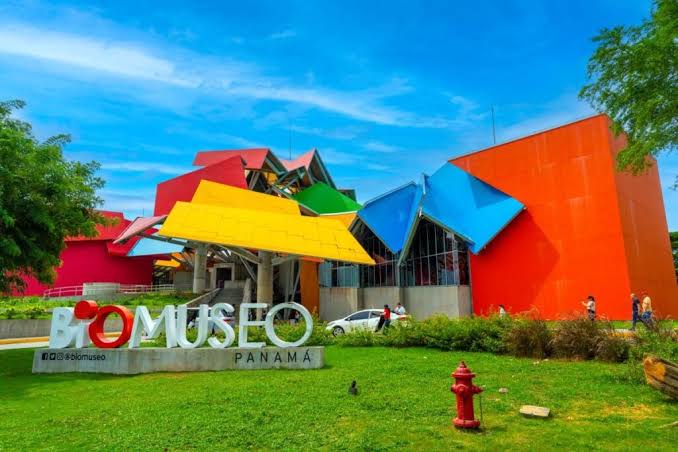
Also known as the Biodiversity Museum, the Biomuseo is located on the Amador Causeway; its structure stands out for its irregular shapes and striking colors, designed by Canadian architect Frank Gehry. This is his only work in Latin America.
One interesting fact about Gehry is that he married Berta Aguilera Gehry from Panama, which is why there is a square named after her in the Biomuseo Park. According to its website, the structure was designed to tell the story of how the Isthmus of Panama rose from the sea, uniting two continents, separating an ocean into two, and forever changing the planet’s biodiversity. The vibrant colors, unusual in Gehry’s projects, and the irregular shapes are a nod to the country’s natural diversity. Interestingly, of all the irregular roofs that make up the building, only one is curved, resembling the arch of the Bridge of the Americas.
From its architecture to every exhibit in the museum, they have focused on showing how Panama changed the world and continues to do so. Flores mentioned that a phrase that encapsulates the Biomuseo’s mission is the one that can be read in the ‘The Bridge Emerges’ gallery, one of the first on the tour, and quotes: “The emergence of Panama changed the world forever,” a message they have sought to reinforce in their 12 years open to the public.
So far, the museum has 10 permanent exhibition halls and two temporary exhibitions, including Eyes in Space, sponsored by the United States Embassy and carried out in collaboration with the National Aeronautics and Space Administration (NASA) and the Ministry of Culture of Panama.
October 2, 2026, marked 12 years since the Biomuseo opened its doors to the public. It is operated by the Amador Foundation, a non-profit organization established in 2000 for this project.
Read more at ellas/pa.
Audio transcript
Your browser does not support the audio element.
00:00
/
02:33