.
The writer is a former Secretary to Government, Home & Tribal Affairs Department and a retired IG. He can be reached at syed_shah94@yahoo.com
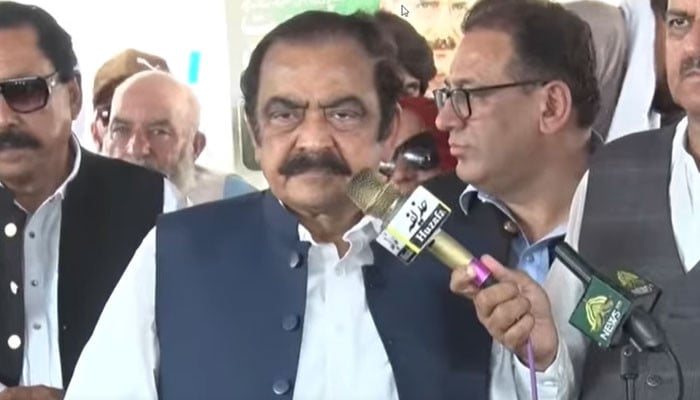
Federal Interior Minister Mohsin Naqvi’s recent remarks – that the current political system has collapsed and that politics is increasingly being pursued by a few families and elites – have evoked an intense debate on Pakistan’s political and constitutional landscape. Simultaneously, a map proposing new provinces is also circulating, further fueling speculation that the country may be entering another phase of constitutional experimentation and administrative change.
Amid all this, another voice, that of Dr Ishrat Husain, declares that good governance is the basic issue. A prominent economist, academic and civil servant, Dr Hussain opines that institutional effectiveness, economic stability and public trust are the fundamental pillars of national security. From the aforementioned interconnected views and narratives, one reality that emerges is that Pakistan is facing an acute crisis of governance. Undoubtedly, this bitter reality is reflected in the title of the book Governing the Ungovernable, authored by Dr Husain.
These days, the word ‘good governance’ is being floated as a panacea for all ills. Undoubtedly, good governance is a prerequisite for the well-being of the public. But the fundamental question is not whether governance matters; it is: what do we actually mean by good governance?
During all these discussions, Shehzad Roy’s satirical song, Laga Reh, flashed through my mind. Satirically, he narrates Pakistan’s political history since independence. He reminds us that successive governments have kept promising change but have often been greasing their own palms and pursuing narrow self-interests instead of really developing institutions and ushering in reforms. The central idea of the song – that everyone tries to serve their own interests while the country’s fundamental structural problems remain untouched – points to a bitter truth.
This same reality is narrated in the Hindi proverb, dhaak ke teen paat. This proverb portrays a situation that does not change despite repeated efforts. It can be translated into English as ‘the same old story’.
Pakistan has passed through parliamentary governments, presidential systems, martial law, caretaker setups, constitutional amendments, accountability drives, and repeated promises of a “new beginning”. Yet, having experimented with all models, the country is facing the same problems and is back at square one i.e. dhaak ke teen paat.
It may not be out of context to mention here that I have recently been back from a long visit to the UK and the US. What appealed to me most there was that good governance was reflected not just in how institutions perform, but in people’s daily lives too. I realised that the rule of law is the hallmark of good governance. Those countries were administered by elected local governments, but they operated within a clear legal framework and planning principles. Parks, roads, commercial centres, residential areas, playgrounds, recreational facilities, and public services – all have been developed and maintained according to the law, not personal discretion.
More significantly, the enforcement of law is impartial and non-discriminatory. Freedoms are enjoyed within the bounds of the law. The moment a violation occurs, the law is sure to take its course, and the violator is brought to justice. The law is universally applied – ensuring that no one is above the law. This certainty of the enforcement of law is the essence of good governance, which differentiates it from mere political sloganeering.
Adherence to the rule of law ensures that real freedom flourishes. Freedom without law inevitably turns into chaos. This sentiment is echoed in the words ‘Thy liberty in law’ from the patriotic song, America the Beautiful, penned by the famous American poet Katharine Lee Bates.
The Constitution always remains the supreme law of the land; therefore, respect for it is paramount to good governance. Unfortunately, our constitutional history is filled with accounts of constitutional provisions being mutilated, ignored, or bent to suit political expediency and tailored to favour specific individuals.
This brings us back to the debate on new provinces. Changing administrative boundaries and creating several new provinces may appear sound to many, but it runs the risk of sidelining the real issue of governance itself. Whether Pakistan has four provinces or fourteen, the real question is whether the state can ensure good governance by providing every citizen with quality education, accessible healthcare, employment opportunities, public safety, robust infrastructure and timely justice.
These undertakings require massive funding, something that necessitates a broad-based tax system. But, unfortunately, the majority of the affluent class remains outside an effective tax system. At the same time, regions like Malakand, the ex-Fata region, Gilgit-Baltistan, and Azad Jammu and Kashmir are out of the pale of the federal and provincial tax systems, even though they require heavy public investment for socio-economic development.
Virtually dismantling the existing federal structure or ignoring the constitutional framework of the National Finance Commission would further compound the problem. The real solution lies in expanding the economy, broadening the tax net, strengthening institutions, ensuring the equitable distribution of resources, and making targeted investments in underdeveloped areas. If governance really is Pakistan’s main problem, then we must realise that good governance, in essence, means efficiency, effectiveness, transparency, accountability, and – above all – the rule of law, which includes respect for the Constitution.
Creating new provinces, boundaries or administrative structures would only add to administrative costs, further shrinking the fiscal space for development, and proving counterproductive. For the desired results, the enforcement of law is imperative. Otherwise, once another political cycle is complete, we will find ourselves standing exactly where we are today: new faces, new promises, but the same problems. Once again, Shehzad Roy’s satire and the old Hindi proverb, dhaak ke teen paat, will reflect our political reality.
In short, good governance does not lie in new provinces, new slogans or repeated constitutional experiments. Its real essence lies in respect for the Constitution, strong institutions, and – most of all – the effective, fair and impartial enforcement of the law. That is the true and lasting solution to Pakistan’s problems.