23
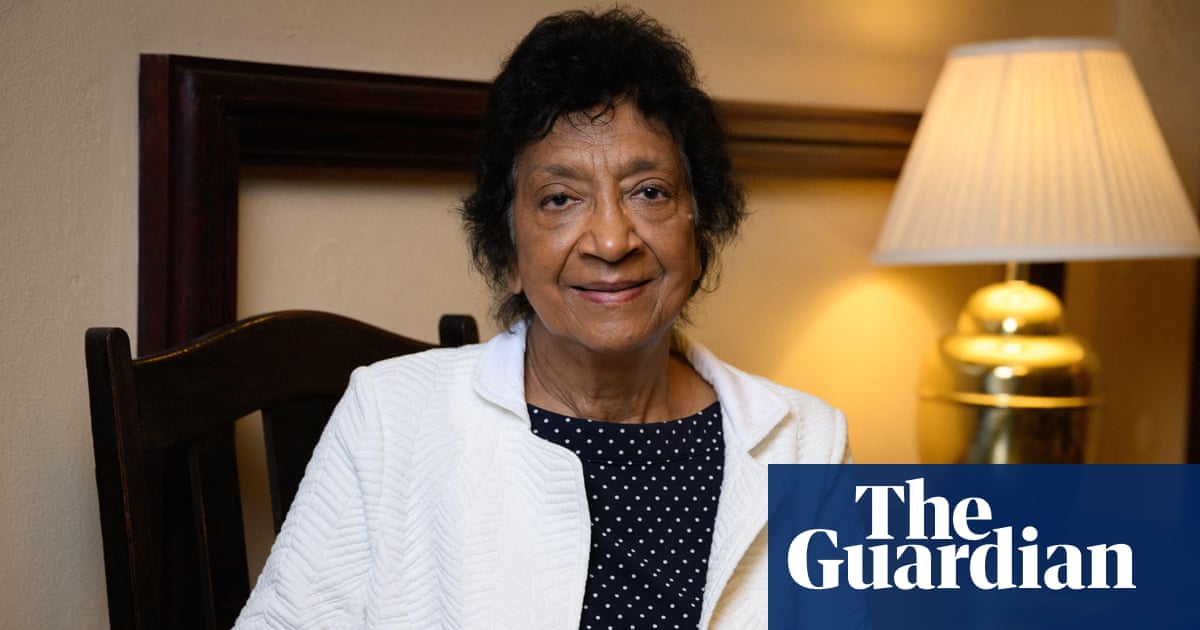
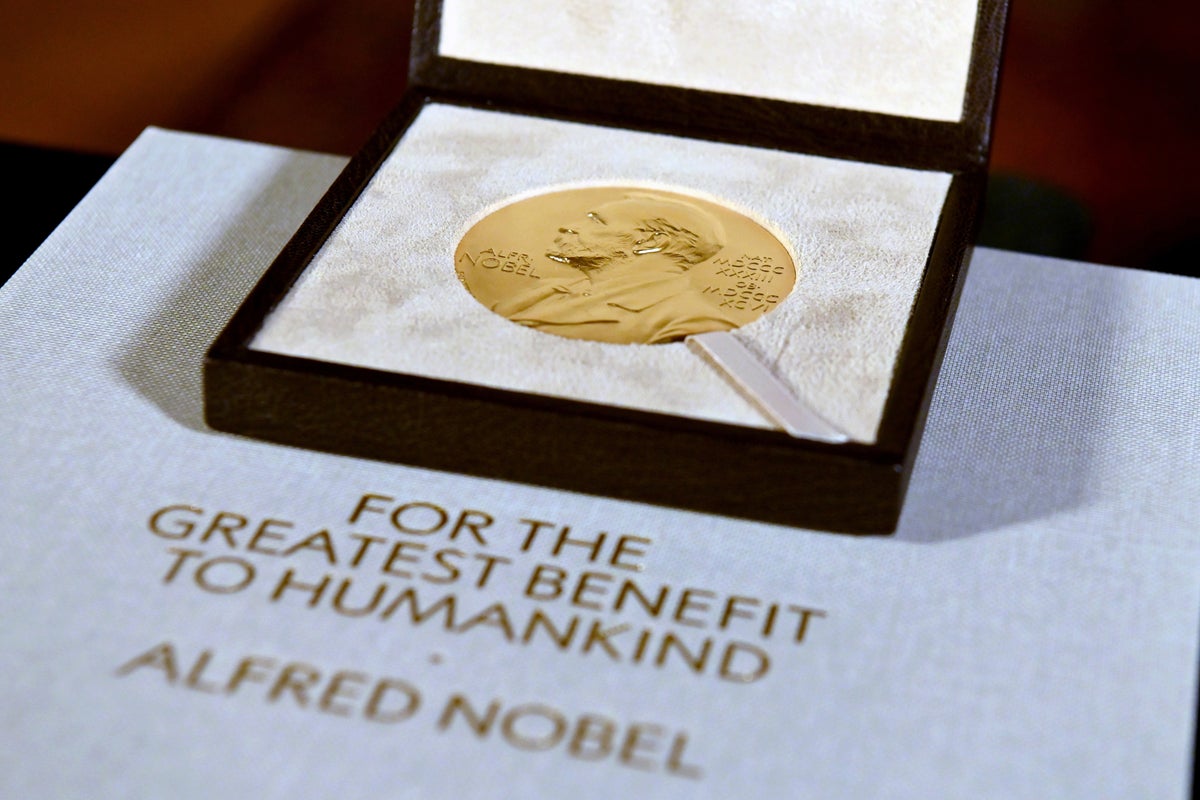
NUREMBERG — When the Norwegian Nobel Committee announced on October 9, 2026, that Judge Navanethem “Navi” Pillay had won the Peace Prize, the 85-year-old jurist was attending a human rights forum in this German city—the very place where the world first codified the principle that leaders cannot hide behind sovereignty to escape accountability for atrocity crimes.
It was a fitting stage for a woman whose career has been defined by the conviction that the law must apply equally to the powerful and the powerless. The committee honored her “for her efforts to promote peace and international law,” praising her as a source of hope for all those who seek a more peaceful world. Pillay dedicated the award “to all of the survivors of international crimes”.
Yet among the many chapters of her extraordinary career—from defending anti-apartheid activists in South Africa to serving as a judge at the International Criminal Court and the International Criminal Tribunal for Rwanda—few were as politically charged, as personally vilified, and as consequential as her confrontation with the Sri Lankan state.
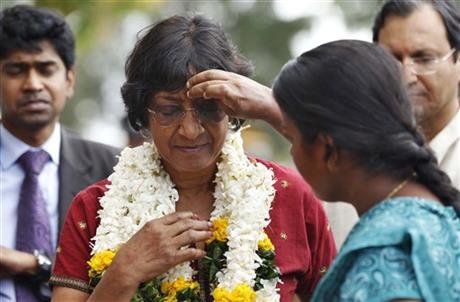
In August 2013, Pillay arrived in Sri Lanka for a seven-day fact-finding mission—the longest official visit she had ever made to a single country. The government, then led by President Mahinda Rajapaksa, had promised her unrestricted access. “It stated that I could go anywhere, and see anything I wished to see,” Pillay recalled.
She traveled to the former war zones of Jaffna, Kilino bychchi, Mullaitivu, and Trincomalee, meeting with survivors, families of the disappeared, and local communities still reeling from the final, catastrophic phase of the 26-year civil war.
What she found disturbed her deeply. At a press conference in Colombo on August 31, Pillay delivered a verdict that would define her relationship with the Sri Lankan government: the country was “showing signs of heading in an increasingly authoritarian direction”.
She warned of a persistent climate of fear, documented the intimidation of individuals who dared to meet with her, and called for the demilitarization of the war-affected northern and eastern provinces, where the continued large-scale presence of security forces was seen many as “oppressive and intrusive”.
But it was her response to the personal attacks that revealed the steel beneath the jurist’s calm demeanor. Government ministers and state media had spent the week branding her a “tool of the LTTE” and the “Tamil Tigress in the UN,” exploiting her Indian Tamil heritage to discredit her findings.
Pillay did not retreat. “This is not only wildly incorrect, it is deeply offensive,” she said, noting that at least three government ministers had joined the chorus of abuse during her visit. She reminded her accusers that her only previous visit to Sri Lanka had been to attend a commemoration for Neelan Tiruchelvam, a celebrated peacemaker assassinated by an LTTE suicide bomb in 1999. “The LTTE was a murderous organization that committed numerous crimes and destroyed many lives,” she stated flatly, dismantling the smear with a single sentence.
Pillay’s findings crystallized in February 2014, when she published her comprehensive report to the UN Human Rights Council. She concluded that Sri Lanka’s failure to investigate serious violations was “fundamentally a question of political will”. None of the domestic mechanisms established by the government inspired confidence among victims, and new evidence of violations continued to emerge. Witnesses, she noted, were willing to testify before international mechanisms “in which they had confidence and which could guarantee their protection”.
Her recommendation was unequivocal: the Human Rights Council should establish an independent international inquiry mechanism to investigate alleged violations of international human rights law and international humanitarian law committed by both government forces and the LTTE during the war’s final stages.
The Sri Lankan government’s response was swift and categorical. It rejected the report “in its entirety,” calling it “arbitrary,” “biased,” and an “unwarranted interference in the internal affairs of a sovereign State”. The foreign ministry accused Pillay of pursuing a “preconceived, politicized and prejudicial agenda” against Sri Lanka since the war’s end in 2009.
Yet the diplomatic pressure worked. On March 27, 2014, the UN Human Rights Council adopted Resolution 25/1, establishing the very international investigation Pillay had demanded. The Sri Lankan government announced it would not cooperate.
The investigation Pillay set in motion would eventually produce the 2015 UN report documenting grave violations by both sides. But her broader legacy—the one the Nobel Committee recognized—was the principle she had defended throughout: that sovereignty is not a shield for impunity, and that victims of atrocity crimes deserve justice regardless of where they live or who governs them.
Volker Türk, the current UN human rights chief, called her award “a collective win for human rights and for all those seeking justice and accountability”. South African President Cyril Ramaphosa described it as a “profound tribute to the veteran jurist’s courage, integrity and lifelong commitment to justice”.
Pillay’s response, delivered from Nuremberg, was characteristically direct. “This award strengthens my conviction that we must stand together in defence of the rule of law, in defence of independent courts, and an international legal order based on principle,” she said. World leaders, she added, had a “legal obligation to protect human rights and refrain from war”.
In Sri Lanka, she confronted a government determined to bury the past. In Gaza, she would later lead a UN commission that concluded Israel had committed genocide—a finding Israel dismissed as “scandalous”. Through it all, she has remained what she has always been: a judge, applying the law without fear or favor.
The Nobel Committee’s citation noted that “at a time when the number of wars and conflicts is rising, and when judges and institutions of international law are under political attack,” her work serves as a reminder that resolving conflicts without force depends on the international rule of law.
For the families of the disappeared in Jaffna and Kilinochchi—those who met with a UN official in 2013 and dared to hope that someone in power was listening—that reminder carries a particular weight. Navi Pillay listened. And she never stopped demanding that the world do the same.