A geopolitical trap
In the case of the Western Balkan states, the issue of Schengen accession carries a strong geopolitical dimension. While even the harshest EU sceptics did not question Croatia or Romania’s pro-Western orientation, fundamental questions remain about the true foreign policy orientation of some Western Balkan states and their willingness to align their policies with Europe.
This issue is particularly evident in Serbia, which has maintained close ties with Russia and China as part of a foreign policy that seeks to balance competing geopolitical interests, while remaining reluctant to bring its policies fully into line with those of Europe.
Certain recent gestures by President Vucic, such as hosting Ukrainian President Volodymyr Zelensky or rearming the country’s air force by replacing Russian MiGs with French Rafale fighters, do not signal a Serbian turn away from Russia, but are merely a reflection of his long-standing policy of geopolitical balancing, which is becoming increasingly difficult to maintain as geopolitical tensions between Europe and Russia escalate.
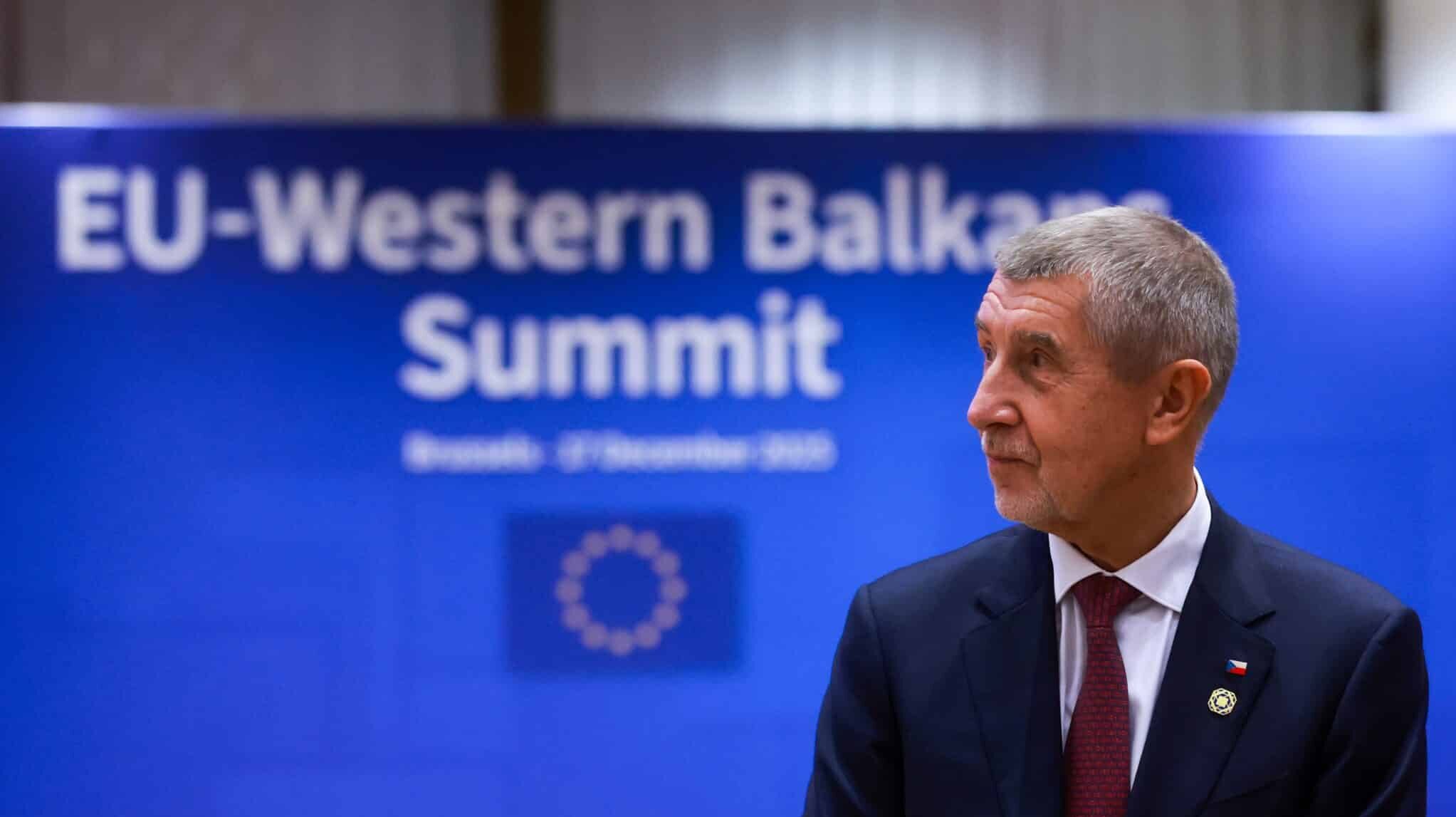
A key problem with Babis’s proposed accelerated Schengen accession is Serbian visa policy, which precisely reflects the country’s geopolitical balancing act. Serbia is one of the last European states to maintain a visa-free regime with Russia, despite EU pressure to terminate it and align its visa policy with that of the EU.
In Serbia’s case, this is no minor unfulfilled task. Beyond its considerable symbolic significance, the open-door policy for Russians carries a strong economic and security dimension. Over the last four years of Russia’s war against Ukraine, Belgrade has become a major hub for Russians traveling to Europe for various reasons. Serbian state airlines operate regular direct flights to five destinations in the European part of Russia. Belgrade Airport is the only one on the European continent offering such connections, making it a key transit hub on this route.
A significant number of Russians have also settled permanently or temporarily in Serbia, which is not only easily accessible to them but also culturally relatively close. While the Serbian border police registered nearly a million single entries by Russians between 2022 and 2024, estimates put the number of Russians residing in Serbia long term at around 100,000. The Serbian government has accommodated this trend with generous residence permits and citizenship grants, in some cases through accelerated procedures “in the state interest” or even to Russians under sanctions.
What statistics fail to capture is the political profile of this new Russian diaspora. It is presumed to be a mix of pragmatically minded Russians, many of whom are successfully building businesses in Serbia; anti-Putin exiles; and prominent figures directly linked to Putin. The proportion of these individual groups remains unknown, and judging by recorded intelligence activities targeting the Russian opposition in Belgrade, Moscow is seeking that answer as well.
Furthermore, Serbia is not merely a venue for Russian intelligence services to monitor their own opposition, but also a safe staging ground for operations elsewhere in Europe. For instance, BIRN recently documented the Russian recruitment of volunteers in Serbia for the war against Ukraine, as well as training centres for hybrid operations in Moldova. As-yet unconfirmed reports of a Serbian citizen’s involvement in a hybrid attack in Leipzig and the use of Serbia for the transit of Russian operatives provide further evidence of Serbia’s role in Russian activities on European soil.
It is precisely Russia’s ongoing intelligence links with Serbia that expose the main flaw in Babis’s statements on Serbia’s rapid Schengen accession. While the prime minister defends such a plan as a means of combating illegal migration, he completely overlooks another risk that cannot be ignored during a period of escalating Russian operations against Europe. Czechia’s European allies are well aware of this risk and for this reason won’t permit any hasty expansion of the Schengen Area.
Serbia may have its place in the EU and Schengen someday, provided it genuinely desires membership and meets at least the basic political and security conditions. Ending its visa-free policy with Russia certainly ranks among them, regardless of the Czech prime minister’s disregard for the issue.
Petr Čermák is a Research Fellow at the Association for International Affairs focusing on Western Balkan politics.
The opinions expressed are those of the author and do not necessarily reflect the views of BIRN.