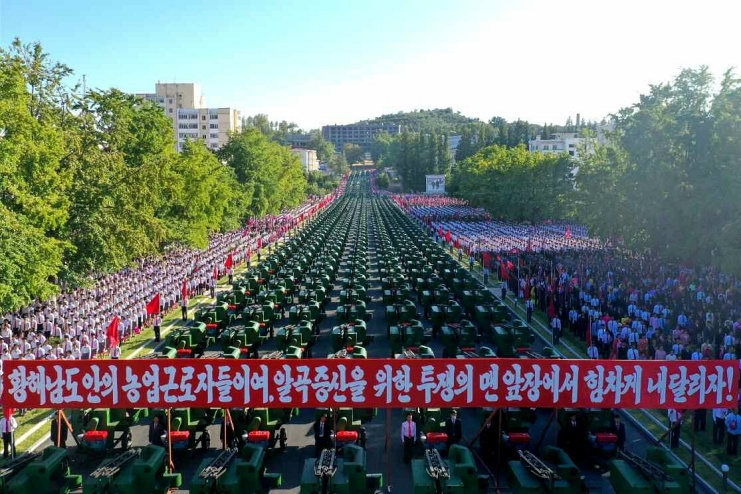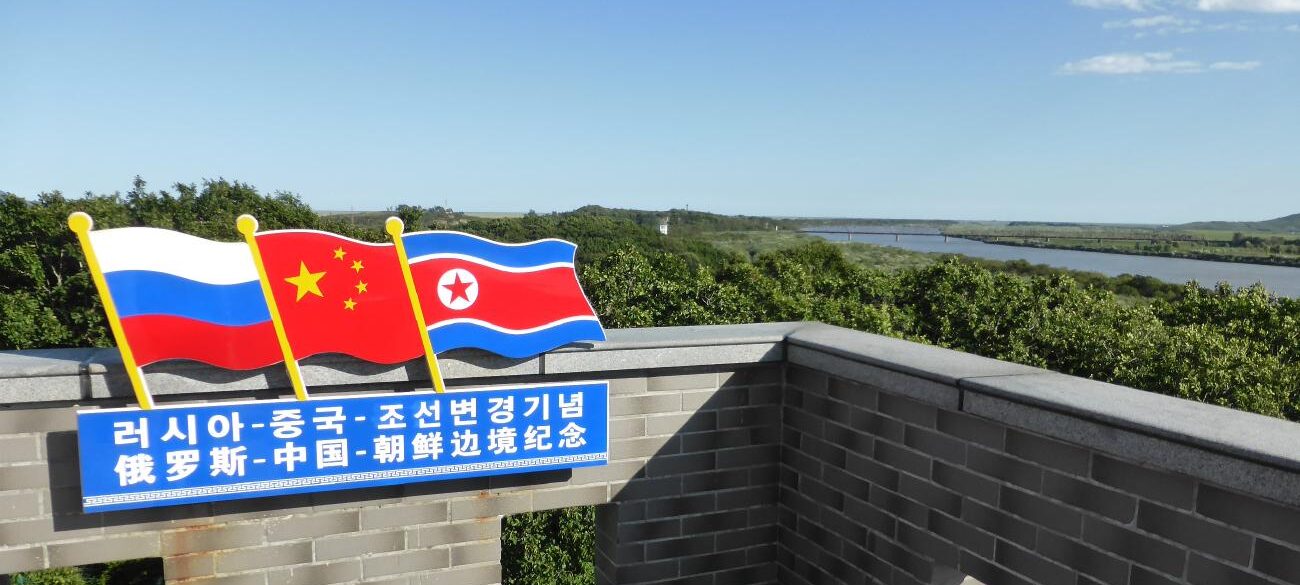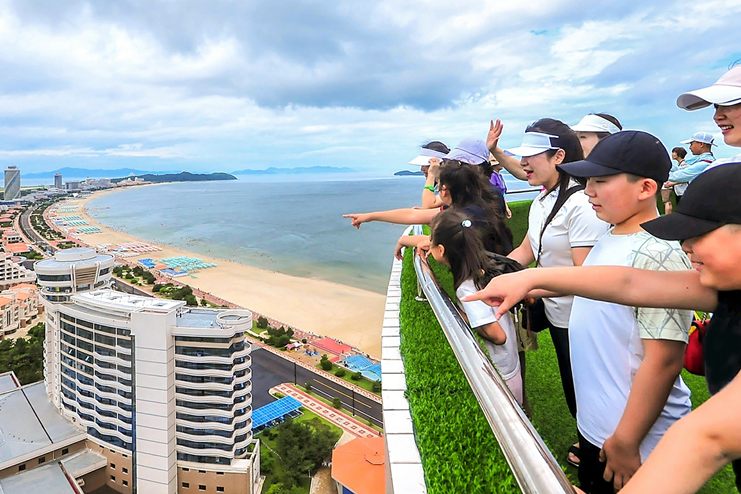
North Korea’s Rodong Sinmun on July 24 extolled the responses of people who visited the Wonsan Kalma Coastal Tourist Area, with visitors saying the “dreamlike” area gets “more beautiful the more you look at it.” (Rodong Sinmun, News1)
North Korea keeps opening lavish tourist resorts in 2026 and touts them as gifts for “the people’s welfare and cultural life.” Many ordinary North Koreans, however, have greeted the projects with open cynicism. Strict controls on travel between regions make most of the new tourist resorts hard to reach. Steep fees then put them beyond the budgets of all but a few families.
State media recently highlighted Kim Jong Un’s inspection of a new tourism zone in Samjiyon, Ryanggang province. That coverage has made access to the resorts a hot topic among ordinary people, a Daily NK source in South Pyongan province said recently. Rodong Sinmun, the Workers’ Party of Korea’s official newspaper, reported that Kim gave field guidance at the site on Nov. 15 and 16. Samjiyon sits at the foot of Mount Paektu near the Chinese border, and the regime has rebuilt it as a showcase city. That rebuilding came through a construction drive that has left local people exhausted.
Besides Samjiyon, the state has built the Wonsan Kalma Coastal Tourist Zone, the Yangdok Hot Spring Resort and Pyongyang’s Munsu Water Park. The Yangdok resort opened in South Pyongan province in early 2020, and the water park has operated since 2013. Authorities frame each project as a way to improve people’s welfare and enrich their cultural lives.
Many North Koreans respond coldly, saying things like “We’re nowhere in that picture” or “I’m not one of those people.”
“The state promotes these as facilities for the people, but people see them as places they’ll never use,” the source said. “However nice they are, people can’t travel there, and even if they could, they’d have no money to spend.”
Two practical obstacles stand between ordinary North Koreans and these tourist resorts: travel restrictions and high fees. North Koreans generally need a travel permit to leave their home area. Trips to Pyongyang or sensitive border zones such as Samjiyon require extra approval on top of that.
Those destinations demand far stricter permit and approval procedures, the source explained. A few people earn a visit as a reward for special service to the state. Others go on a group tour organized by their workplace. Outside those channels, arranging a personal trip there is extremely difficult, according to the source.
Wonsan Kalma fees put tourist resorts out of reach
By comparison, many North Koreans consider the Wonsan Kalma resort relatively easy to visit. The sprawling beach complex on the east coast opened in July last year. Daily NK has reported that it has since become a playground for the wealthy elite. Even so, North Koreans who have actually gone there say the prices left them feeling the pinch.
One man from Kaechon, a city in South Pyongan province, visited the resort this summer. He said the whole complex seemed carefully designed to keep visitors spending money. He had always suspected such places existed mainly to make money, and his trip confirmed that impression.
“You have to buy a ticket just to enter the tourist zone,” he said. “Once you’re inside, you pay separately every time you use a facility or try an activity. There’s plenty to see and do, and the facilities are flashy. But the place is set up so money keeps flowing out of your pocket.”
He also admitted that $100 did not cover a single day of touring and using the resort’s services. “Fewer than 10% of people could spend around $100 on one day of sightseeing,” the source said. “Even with a resort like Wonsan Kalma open to visitors, not many people can truly enjoy it.” The finding echoes earlier Daily NK reporting that the resort remains out of reach for most North Koreans.
What, then, can ordinary North Koreans realistically afford when they want a break? The source pointed to hot springs as places people might visit once or twice, budget permitting. Most would use plain public bathhouses in hot spring towns, the source added. The upscale spa resorts that state media promote remain another matter entirely.
Rodong Sinmun spotlighted one such showcase on Nov. 18, the Onpho Workers’ Rest Home in North Hamgyong province. The paper praised it as a top-class resort built “under the party’s benevolence.” Rest homes are state-run vacation facilities where workplaces have traditionally sent workers as a reward.
Even a basic hot spring is hard to justify when it sits far from home, however. “Ordinary hot springs are affordable enough, but people only consider going if one is nearby,” the source said. “Many more people can’t even imagine traveling far just to soak in a hot spring.”
Some North Koreans are reportedly planning hot spring trips this winter because they cost less than beach holidays. “Some people are getting ready to spend a few days resting at a hot spring this winter,” the source said. “It definitely costs less than a summer trip to a place like Wonsan Kalma.”
Still, people who can plan a personal vacation remain a small minority, the source said. Most North Koreans struggle just to cover daily living costs and stock up for the winter. With rice prices hitting record highs this year, few have money or time left over for travel.
For ordinary people, access matters far more than how modern or glamorous a resort looks. “Even places people can visit, like Wonsan Kalma, cost a fortune,” the source said. “The new resorts going up in Samjiyon are an even more distant dream for ordinary people. Most people share the view that no matter how many great facilities get built, the people who enjoy them are a different class.”
Read in Korean
About This Translation
This article was originally written in Korean and translated with the help of generative AI tools. It was then edited by a native English-speaking editor. All AI-assisted translations are reviewed and refined by our newsroom.
Reporting from Inside North Korea
Daily NK operates networks of sources inside North Korea who document events in real-time and transmit information through secure channels. Unlike reporting based on state media, satellite imagery, or defector accounts from years past, our journalism comes directly from people currently living under the regime. We verify reports through multiple independent sources and cross-reference details before publication.
Our sources remain anonymous because contact with foreign media is treated as a capital offense in North Korea — discovery means imprisonment or execution. This network-based approach allows Daily NK to report on developments other outlets cannot access: market trends, policy implementation, public sentiment, and daily realities that never appear in official narratives.
Maintaining these secure communication channels and protecting source identities requires specialized protocols and constant vigilance. Daily NK serves as a bridge between North Koreans and the outside world, documenting what’s happening inside one of the world’s most closed societies.