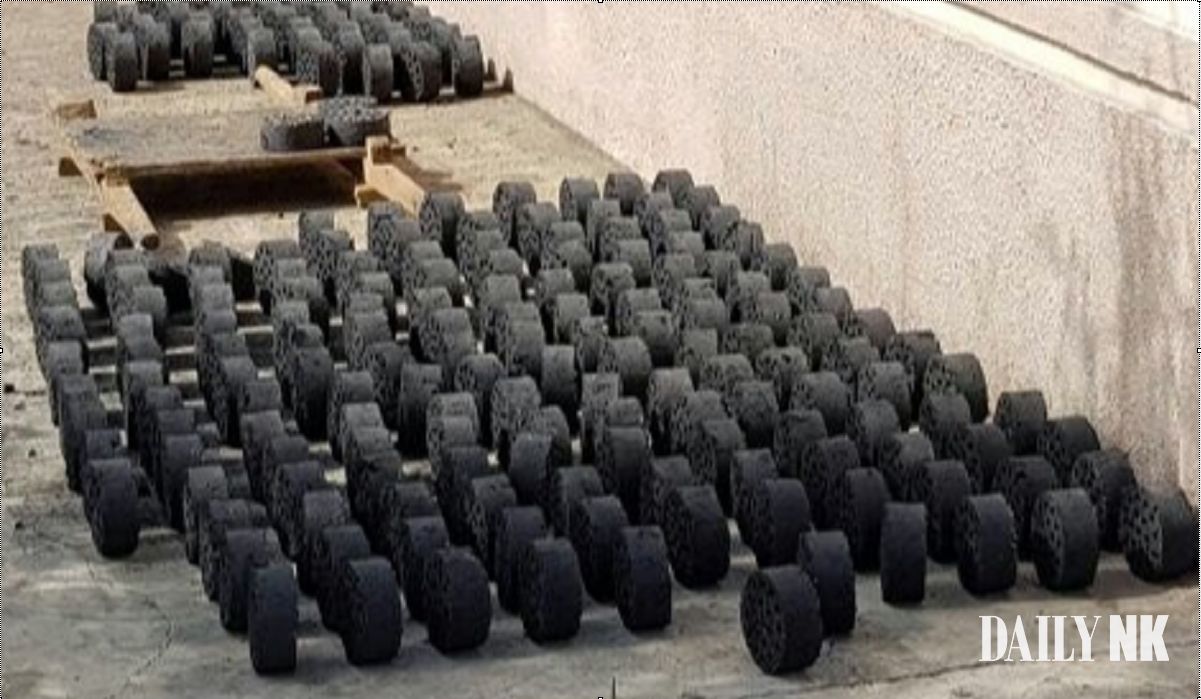
FILE PHOTO: Coal briquettes lined up in an unidentified area of North Korea. (Daily NK)
North Koreans across the country are quietly breathing a sigh of relief as spring temperatures climb and fuel costs begin to ease, according to a Daily NK source in North Pyongan province.
With winter behind them, many are switching from gumyeongthan (briquettes used for heating and cooking) to chakgapthan (quick-lighting charcoal used primarily for cooking), which costs roughly one-tenth the price. The shift offers some of the most tangible financial relief North Korean people have seen in months.
“As soon as temperatures started climbing above freezing, a significant number of people who had been using briquettes switched to chakgapthan,” the source said Wednesday. “For people living hand-to-mouth, they’re saying it finally feels like they can breathe again.”
Fuel costs outpaced food costs all winter
Throughout the winter, a single briquette sold for around 17,000 North Korean won. Quick-lighting charcoal runs about 1,700 North Korean won per unit, making briquettes roughly ten times more expensive. For North Korean people surviving on day-to-day income, that gap proved crushing.
“Better-off households buy coal by the ton in autumn, press their own briquettes, and burn dry fuel all winter,” the source explained. “But people without that kind of capital buy their fuel the same way they buy food, one or two days’ worth at a time.”
The source said some North Koreans described winter itself as something to dread. “Even burning just three or four briquettes a day, the minimum needed to get by, cost more than food,” the source said. “People were saying winter felt terrifying.”
Compounding the financial burden, wet winter briquettes burn poorly and produce high levels of carbon monoxide, a known hazard in poorly ventilated homes.
Spring nettles and lighter loads
Now that heating is no longer a necessity, many have simply given it up. Mornings and evenings still carry a chill, the source acknowledged, but people are managing. They are buying chakgapthan for cooking only, accepting the cold rather than spending on warmth.
The mood in communities has begun to shift along with the season. “Life is still hard, but just getting out from under the fuel costs makes it feel more bearable,” the source said. “A lot of people are saying it feels like the weight pressing down on their shoulders all winter has finally lifted a little.”
Adding to the cautious optimism, early spring wild greens are beginning to appear on hillsides and in fields. For North Korean people who struggled through a difficult winter, the source said, the sight of the first edible shoots is prompting a new reaction: “It finally feels like we might make it.”
Read in Korean
Reporting from inside North Korea
Daily NK operates networks of sources inside North Korea who document events in real-time and transmit information through secure channels. Unlike reporting based on state media, satellite imagery, or defector accounts from years past, our journalism comes directly from people currently living under the regime. We verify reports through multiple independent sources and cross-reference details before publication.
Our sources remain anonymous because contact with foreign media is treated as a capital offense in North Korea — discovery means imprisonment or execution. This network-based approach allows Daily NK to report on developments other outlets cannot access: market trends, policy implementation, public sentiment, and daily realities that never appear in official narratives.
Maintaining these secure communication channels and protecting source identities requires specialized protocols and constant vigilance. Daily NK serves as a bridge between North Koreans and the outside world, documenting what’s happening inside one of the world’s most closed societies.