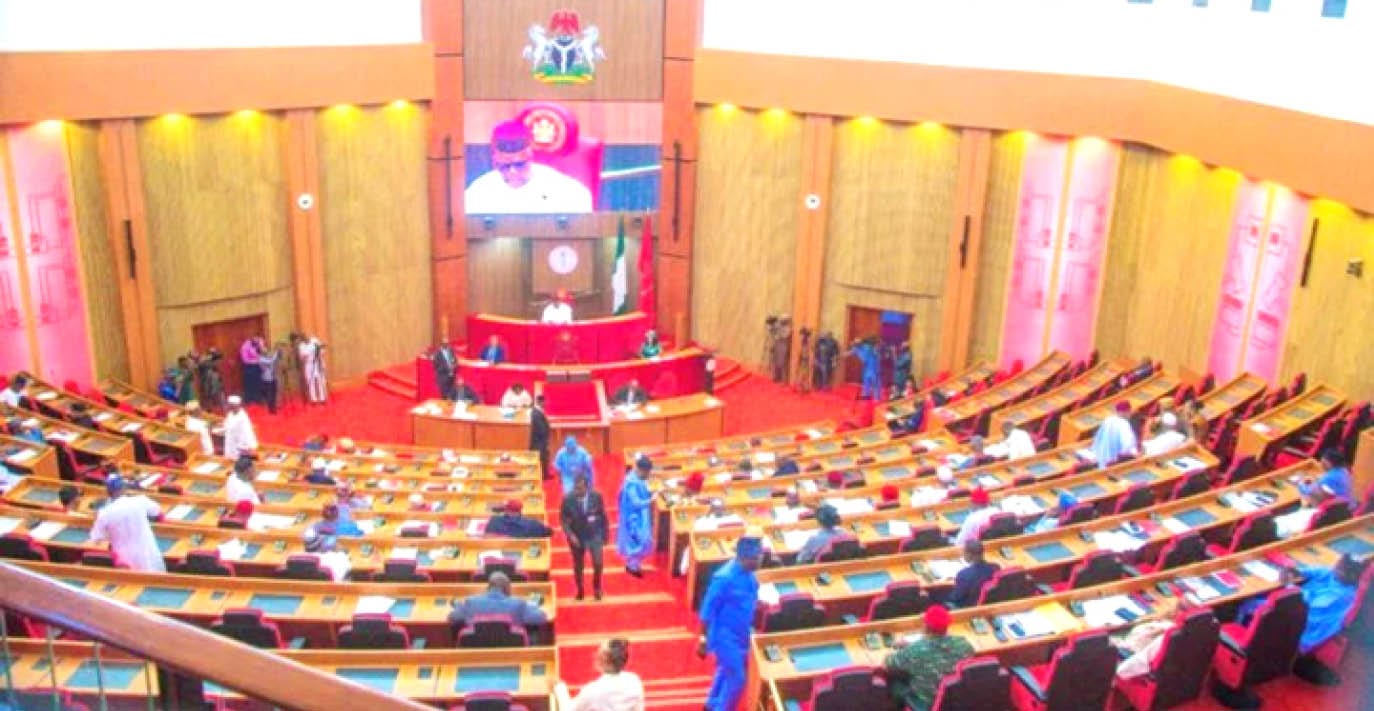
The Senate has called for a strengthened regulatory framework that places the Central Bank of Nigeria (CBN) at the centre of coordinating oversight for the country’s fast-growing fintech sector, while also demanding tougher measures to combat the proliferation of Ponzi schemes in Nigeria.
The position was articulated by Senator Mukhail Adetokunbo Abiru (Lagos East), Chairman of the Senate Committee on Banking, Insurance and Other Financial Institutions, at the National Assembly, Abuja, during a one-day public hearing on the Banks and Other Financial Institutions Act (Amendment) Bill 2025 (SB. 959) and an investigative hearing into the operations of Ponzi schemes in Nigeria, with particular reference to the recent Crypto Bullion Exchange (CBEX) incident.
The hearing, jointly convened by the Senate Committees on Banking, ICT and Cyber Security, Capital Market, and Anti-Corruption and Financial Crimes, focused on strengthening Nigeria’s financial regulatory architecture amid rapid digital transformation and rising financial fraud.
Senator Abiru, a retired bank chief, an accomplished economist and accountant, in his address advocated for strengthening the existing legal framework under the Banks and Other Financial Institutions Act (BOFIA) and explicitly placed fintechs under the supervisory authority of the CBN.
SPONSOR AD
According to him, the Bill seeks to amend the Banks and Other Financial Institutions Act (BOFIA) 2020 to provide a clear statutory framework for the designation, registration, and enhanced supervision of Systemically Important Institutions, particularly technology-enabled financial service providers.
Over the past decade, Nigeria’s financial ecosystem has evolved significantly. Fintechs—mobile money operators, payment platforms, digital lenders, and settlement companies—now serve millions of Nigerians, process vast transaction volumes, and hold sensitive financial data. While their growth has strengthened financial inclusion, the law has not kept pace with their scale and systemic relevance.
Although the Central Bank of Nigeria currently designates Systemically Important Financial Institutions, the framework is largely bank-focused and does not fully address the realities of large, data-driven, non-bank financial platforms. This creates a regulatory gap with implications for financial stability, data sovereignty, consumer protection, and national security.
This amendment will:
Empower the CBN to designate qualifying fintechs and digital financial institutions as Systemically Important Institutions.
Establish a national registry to enhance transparency and beneficial ownership disclosure.
Strengthen risk-based supervision tailored to technology-driven financial services.
Promote data sovereignty and systemic stability.
“The question has arisen as to whether the creation of a new standalone regulatory agency would be a preferable pathway for supervising fintechs,” Abiru said. “However, after careful consideration, it is evident that establishing an entirely new agency would duplicate functions, create bureaucratic overlap, increase administrative costs, and fragment regulatory authority in a sector where coordination and coherence are essential.”
He emphasised that fintech regulation is closely linked to monetary policy, payments oversight, prudential supervision, Know-Your-Customer (KYC) and Anti-Money Laundering (AML) enforcement, and systemic risk monitoring functions that already reside within the Central Bank.
“It is far more effective to strengthen the BOFIA framework, modernise CBN supervisory powers, and mandate robust coordination with agencies such as the Securities and Exchange Commission, Nigerian Communications Commission, National Information Technology Development Agency, Corporate Affairs Commission, Federal Competition and Consumer Protection Commission, Office of the National Security Adviser and the Federal Ministry of Finance,” he said.
He added that incorporating fintech regulation into BOFIA would prevent the emergence of regulatory silos and ensure that digital financial services remain fully integrated with the broader banking ecosystem.
Beyond fintech regulation, the Senate intensified its scrutiny of Ponzi schemes and fraudulent digital investment platforms during the hearing. Senator Abiru described their growing prevalence as a serious threat to financial stability and public confidence, citing the recent CBEX incident, which reportedly caused significant losses to many Nigerians, including young professionals, retirees, traders, small business owners, and students.
He warned that such schemes not only inflict individual hardship but also undermine trust in legitimate financial institutions, distort capital allocation, damage Nigeria’s financial reputation, and heighten risks of money laundering and illicit financial flows.
UPDATE NEWS:
Nigerians can now invest ₦2.5 million on premium domains and profit about ₦17-₦25 million. All earnings paid in US Dollars. Rather than wonder, click here to find out how it works.