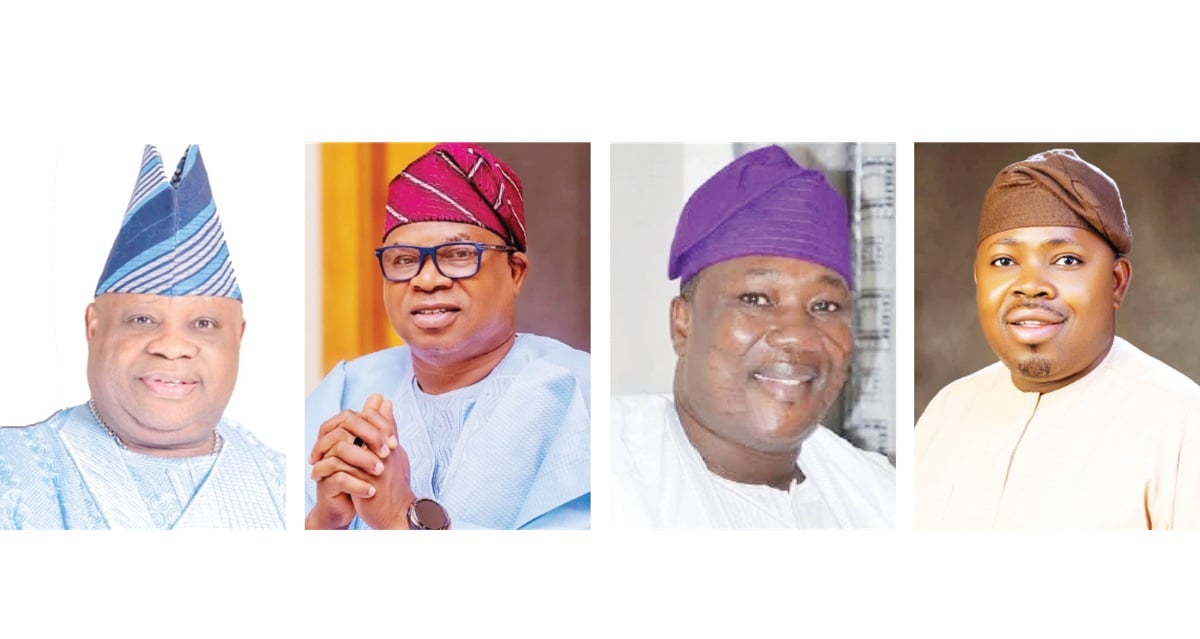
With barely six weeks until the August 15, governorship election, Osun State is holding its breath. Billboards are up, campaign convoys now choke major roads, and political rhetoric has shifted from promises to accusations. But beneath the banners and brass bands, a deeper tension is brewing. Among the five parties jostling for the Bola Ige House; the All Progressives Congress (APC), Accord, African Democratic Congress (ADC), Allied People’s Movement (APM) and the Peoples Democratic Party (PDP), trust has broken down, peace talks are being boycotted, and allegations of electoral manipulation are flying. The question among stakeholders is: can Osun vote without blood? The candidates and their parties poised for the contest for the governorship seat in Osogbo include Ademola Adeleke, Adewale Adebayo of APM, Bola Oyebamiji of the APC, Najeem Salam of the ADC. Some of the powerbrokers include Olagunsoye Oyinlola, Rauf Aregbesola, Senator Olu Alabi, ex-deputy Governor Iyiola Omisore, ex-Governor Adegboyega Oyetola, to mention a few.
A peace meeting without the big two
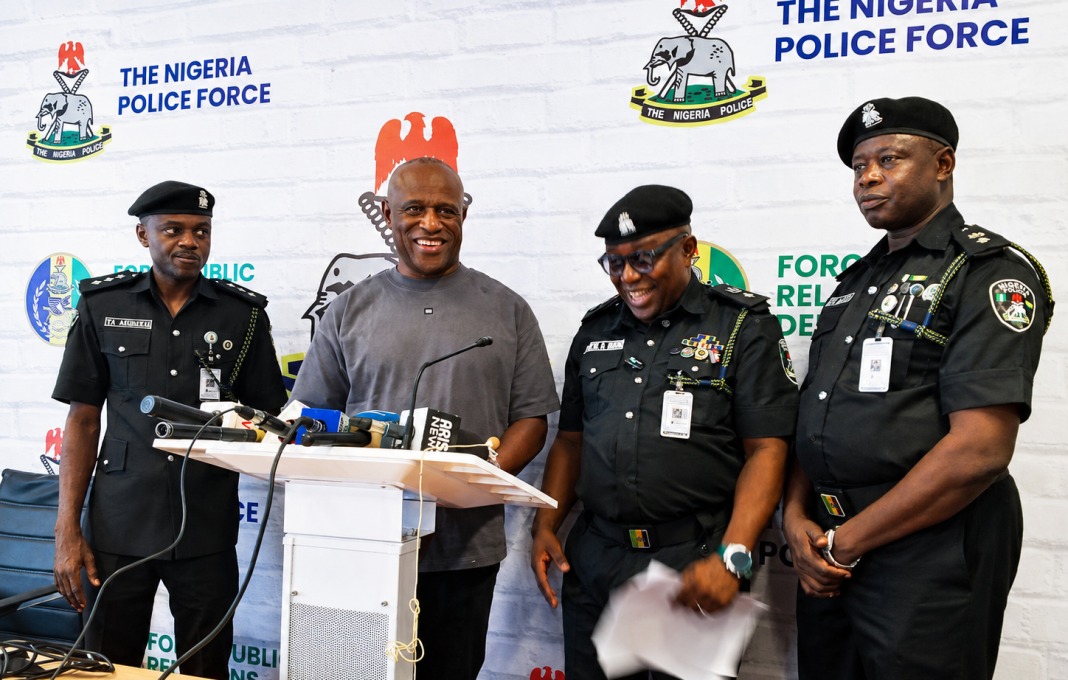
It was supposed to be a show of unity. The Osun State Police Command convened political parties in Osogbo to sign a peace pact ahead of the poll. But two chairs remained conspicuously empty. The APC and the Accord Party, the platforms of both incumbent Governor Ademola Adeleke and Gboyega Oyebamiji, shunned the meeting.
For Allied Peoples’ Movement (APM) candidate Adewale Adebayo, the absence was more than symbolic. “It’s scary to me that the two political parties that have been fingered at one point or another for killing, maiming, and harassing each other’s supporters are not here,” he told reporters. Also, the Boot Party chairman, Prince Adesoji Masilo, agreed, calling it “disappointing” that the parties most often mentioned in violence were absent. For many observers, that empty table may have set the tone: this will not be a gentleman’s contest.
Who is after unclaimed cards?
Ten days ago, the temperature rose further within the state political landscape. In a joint statement, PDP chairman, Sunday Bisi and his Accord Party counterpart, Victor Akande, alleged that APC was pressuring electoral officials to release thousands of unclaimed Permanent Voter Cards, PVCs, in bulk. According to them, the cards are meant for “imported voters” allegedly mobilised during recent registration exercises. They warned that allowing political actors to take possession of unclaimed PVCs would violate the Electoral Act and undermine the process. The PDP and Accord called on INEC to ensure PVC collection remains strictly personal. The APC dismissed the claims as “baseless and imaginative fiction.” But the allegation has stuck, because Osun’s elections are usually decided by razor-thin margins. In 2022, Adeleke won by just 28,000 votes. In 2023, the presidential margin in the state was barely 11,000. With numbers tight, every card counts, and every rumour about voter cards spreads like wildfire.
ALSO READ: Reps to quiz Accountant General over submission of Federation Account for audit
Parties and their permutations
The list of candidates itself tells a story of realignment and confusion. Beyond publicly announcing new alliances by some key political actors, others have chosen to operate from behind the scenes in renewed alignments as the race for the governorship seat hots up across party lines.
Accord
Governor Ademola Adeleke is the incumbent and initially emerged as PDP candidate seeking re-election. But he soon moved to Accord, after years in PDP. That move triggered resignations of two PDP senators and left the party with “no candidate” on INEC’s list as of the last update. The decision of the governor to seek re-election on the platform of the Accord has raised the bar of the party in the psyche of the people, bolstering its structures and buoying its presence across various media platforms. Defectors from other major parties joined the governor’s team to increase his support base across the three senatorial districts. While some loyalists of the governor remaining in PDP are believed to be working assiduously for his candidacy, close allies of opposition parties have ditched their hitherto principal to rally support for Governor Adeleke. Above all, the foot soldiers of the governor, who cut across party lines have focused on the grassroots as matter of strategy.
APC
The path through which APC chose its candidate was marked by seamless intrigues and backstabbing. It triggered anger, accusations and counter accusations, as well as subtle threats by divergent groups and individuals. After zoning debates that favoured Osun West, the party settled for Munirudeen Bola Oyebamiji, “AMBO,” the managing director cum Chief Executive Officer of the Nigerian Inland Waterways Authority (NIWA). He emerged from a field of nine aspirants that included former deputy Governor Iyiola Omisore and insurance magnate, Dr. Akin Ogunbiyi. APC leaders had pushed hard for Osun West after Minister Adegboyega Oyetola withdrew.
ADC
The African Democratic Congress (ADC) smells opportunity. With former Governor Rauf Aregbesola now serving as Interim National Secretary, ADC is projecting itself as the third force. State chairman, Charles Omidiji declared the party will produce the next governor and that “both APC and PDP will face defeat.” The party is fielding former Speaker Najeem Salam. Aregbesola himself has vowed to remove Adeleke from power, prompting a sharp response from the Governor about Aregbesola’s “sordid legacy.
APM
The APM is also in the race and was vocal at the peace meeting. Its structure has begun to gather oxygen after its alliance with the PDP. It gained further strength, following the declaration of interest in its presidential ticket by Governor Seyi Makinde. The structure of APM got another boost because of the strong backing of a former governor of Osun State and former national secretary of the PDP, Prince Olagunsoye Oyinlola.
PDP
Structurally active but candidate-less on paper, PDP has chosen to fight from the trenches, accusing APC and Oyetola of plotting to use police and the Independent National Electoral Commission (INEC) to rig, and of planning to use withheld federal allocations to local governments against Governor Adeleke.
Why the tension matters beyond Osun
Osun is not just another off-cycle election. It is a test. The poll is another opportunity for entrenched interests, powerful individuals, political godfathers and other powerbrokers to flex muscle and consolidate or confirm their supremacy in the political space. To some, the Osun contest is a make-or-break battle because of what the outcome portends for the 2027 general election that is less than eight months away. Already, there are insinuations that some forces are poised to enact the Jagba syndrome, a euphemism for victory at all cost.
When parties refuse to sit in the same room for peace talks, and when PVCs become a subject of conspiracy theories, public confidence erodes. Voters begin to wonder if their vote will count, or if the game was decided in backrooms. So, political analysts see Osun as a laboratory. ADC’s boldness with Aregbesola’s machinery is part of a national coalition project aimed at 2027.
According to some observers, if ADC can break the APC-PDP ‘two-horse configuration in Osun, it will embolden similar efforts elsewhere. The defection of Adeleke and two senators also shows that politicians moving with their structures will define party politics ahead of 2027.
Post-Ekiti
Osun comes immediately after Ekiti’s recent governorship election. If Osun is peaceful and credible, some analysts said INEC can argue that lessons were learned. If it is marred by violence or PVC scandals, it becomes the template that parties will either copy or guard against in 2027. The fact is that Osun has always been close. It is a state where federal power and local sentiment collide. That is why accusations now include not just local actors, but a serving minister.
As August 15 beckons
Governor Adeleke, speaking at the commissioning of the LAMECO Flyover on July 1, urged residents to “own it, keep it clean and maintain it for the next generation.” Many observers and stakeholders also said the same appeal now applies to democracy. Thus, INEC has been called upon to be transparent on PVCs. The Police have been called upon to be neutral. The parties have been called upon to return to the peace table. But as of today, the two parties with the biggest structures: APC and Accord are not talking to each other, and both are accusing the other of planning to steal the election. In the opinion of some observers, in a state where elections have been decided by thousands, not millions, of votes, that is a dangerous place to be. As one Osogbo trader who identified himself as Adebisi Badmus put it: “We just want to vote and go home. We don’t want 2018 again.”
Whether Osun gets that wish will depend on whether the parties choose ballots over bullets, and rules over rumors, in the next 40 days.
Incumbency factor is critical in the contest, and the election could be referenced as a referendum on the scorecard of those in government since 2022. Another factor is the role of godfathers in the political space coupled with the influence and support of external forces within the business circle and industry. To some, their role is because of government policies on the business environment and the quest to consolidate. A factor related to this is what is described as the influence of the centre, which tends to exert much power on subnational entities, when it comes to highly competitive contests for public offices from the centre, to states and local government levels. So, the issue of federal might forms an integral part of the matrix that influences who or party that controls the lever of power. There is the twin issue of monetary inducements by the parties and their principal with awesome resources. All the mix will play and shape the Osun election coming up weeks from July. However, what should have been a properly shaped electioneering time is being subsumed by a wave of violence with the attendant tensions and apprehension across the State of the living springs. The theatre of the absurd has triggered claims and counterclaims by the vested interests and parties to election meant to be the last of the off-season cycle preceding the 2027 general election.
No office worth a life – Wale Adebayo,
APM governorship candidate, Wale Adebayo, blamed some key politicians and parties, particularly APC and the Accord Party, for the rising tension ahead of the August 15 poll. Adebayo said politics must be driven by ideas and service, not fear or violence. He said the primary responsibility of the political actors is to guarantee peace and tranquility so that the citizens can reap the benefits of democracy. He also spoke on the role of security agencies in dousing tension, and said they have a constitutional duty to be swift, professional and unbiased. “When the law is enforced fairly, political actors are less likely to resort to violence,” Adebayo declared. He urged Osun residents to reject fear-based politics. “Any politics that thrives on fear instead of ideas does not deserve the support of the electorate. On August 15, Osun people should reject violence, reject intimidation, and vote for leadership that values every life and respects the democratic process.”
Reacting to claims of desperation of some candidates to win in Osun after the Ekiti election, the APM candidate said tension rises when politicians lose confidence in the electorate. Adebayo said his campaign would be different, noting: “As the youngest frontline candidate, I believe energy, ideas and genuine engagement with the people will always defeat fear. We are focused on winning the confidence of the electorate, not creating unnecessary tension.” Speaking on the implications of the crisis on Nigeria’s democracy and the 2027 general election, Adebayo warned against normalising violence. He described the period as a defining moment for all stakeholders adding that political parties must campaign responsibly, security agencies must remain impartial, and citizens must refuse to be used as instruments of violence.” Adebayo, however, asserted that no political ambition justifies bloodshed. “I believe the first responsibility rests with politicians and political parties, especially the APC and the Accord Party, because they have allowed the political atmosphere to become unnecessarily heated. Politics should be about ideas, vision and service and not intimidation or violence. We have witnessed disturbing reports of violent clashes involving supporters of rival political camps. We have also seen campaign posters torn down and innocent citizens caught up in political confrontations. None of these has anything to do with good governance.
“Whenever you begin to see desperation in politics, it is usually because some people are no longer confident that the people are with them. Instead of convincing voters with ideas and performance, they begin to rely on pressure and intimidation. But Osun people are wiser than that. They cannot be bullied into voting against their conscience. It should worry every lover of democracy. If we normalize political violence today, tomorrow people will begin to lose faith in elections. That is dangerous for any democracy.
“No political office is worth the blood of any Osun son or daughter. Governments come and go. Parties rise and fall. But once a life is lost, it can never be replaced. On August 15, let the people of Osun vote with hope, not fear; with conviction, not coercion. If anyone cannot earn the trust of Osun people without violence, then they do not deserve the mandate of Osun people. This is a defining moment for all stakeholders , political parties must campaign responsibly, security agencies must remain impartial, and citizens must refuse to be used as instruments of violence,” Adebayo added. .
WATCH TOP VIDEOS FROM NIGERIAN TRIBUNE TV