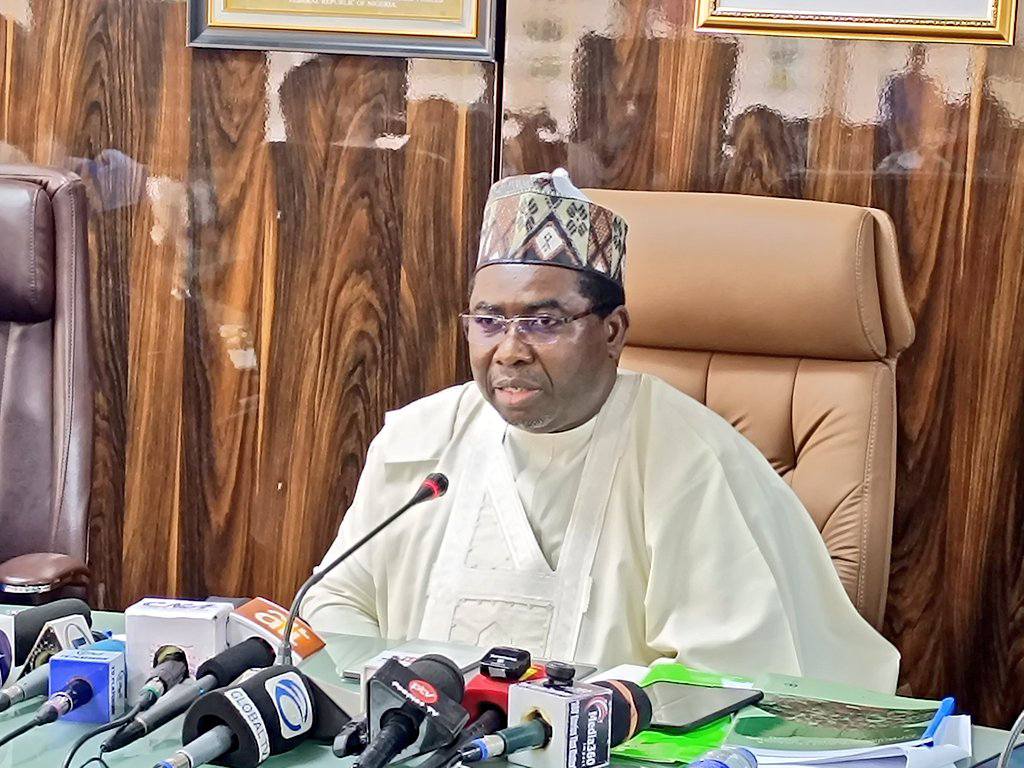
The Chairperson of the Independent National Electoral Commission (INEC), Joash Amupitan, has defended its handling of the leadership crisis in the African Democratic Congress (ADC), insisting its decisions were guided strictly by court orders and pending proceedings before the Federal High Court.
Speaking in an interview with Arise Television on Friday, Mr Amupitan, a professor and Senior Advocate of Nigeria (SAN), explained that INEC decided to stop engaging with either faction of the party as a result of the Court of Appeal issuing “clear preservative orders”.
“The court also ordered that parties should maintain status quo ante bellum and should not do anything that will foist a fait accompli on the trial court or render the proceedings nugatory,” he said.
The INEC chairperson also denied the ADC’s accusation that the electoral commission had taken sides due to the interpretation of the order of the appellate court.
ADC leadership crisis
A leadership dispute had emerged within the ADC after a former vice national chairman of the party, Nafiu Bala, challenged David Mark’s emergence as national chairman, arguing that he (Bala) should occupy the position, following the resignation of Ralph Nwosu, who previously headed the party.
Mr Amupitan said the controversy stemmed from an interlocutory appeal filed by Mr Mark’s group on 18 September 2025, which was dismissed by the Court of Appeal on 12 March 2026.
Meanwhile, Mr Mark’s camp filed an interlocutory appeal ahead of the Federal High Court judgment, but was dismissed by the Court of Appeal.
In dismissing the appeal, the appellate court also asked all parties to maintain “status quo ante bellum” until the lower court ruled on the substantive suit.
In compliance with the court order, INEC said on Wednesday that it will not deal with any of the two factions of the party until the case at the Federal High Court is determined.
However, Mr Mark faulted the commission’s interpretation and decision, arguing there’s no basis for it.
How INEC decided
According to the INEC chairperson, lawyers to Mr Mark’s group urged INEC to maintain the status quo and refrain from recognising the rival faction, while counsel to Mr Bala insisted that their client should be recognised as the party’s national chairman based on court orders.
Faced with the situation, Mr Amupitan said the commission referred the matter to its legal department and initially opted to monitor party activities while awaiting further clarity.
However, he said a subsequent letter from Mr Bala’s lawyers drew attention to a pending motion filed in December 2025 seeking to restrain Mr Mark’s group from parading itself as the party leadership and to stop INEC from monitoring any meetings of the faction.
Mr Amupitan said the existence of the pending motion influenced the commission’s decision, particularly in view of the Court of Appeal’s directive that parties must not take steps capable of affecting the subject matter before the trial court.
ALSO READ: ADC defies INEC, sets congress, convention dates
He explained that when Mr Mark’s faction later notified INEC of plans to conduct congresses and primaries, the commission considered such actions potentially in breach of the appellate court’s order.
“If parties go ahead with congresses or conventions while such motions are pending, it may amount to foisting a fait accompli on the court,” he said.
He added that INEC could not ignore the pending suit or assume the legal standing of any party, stressing that such determinations rest solely with the court.
‘We did not take sides’
Responding to allegations of bias, Mr Amupitan denied that INEC had taken sides in the dispute.
He said the commission carefully interpreted the Court of Appeal’s order on maintaining “status quo ante bellum,” which he described as the state of affairs before the crisis began.
“That interpretation is supported by judicial authorities, including decisions of the Supreme Court,” he said.
Mr Amupitan also described as “unfortunate” comments by some party officials who accused INEC of undermining democracy.
He reiterated that the commission’s actions were guided by the need to preserve the integrity of the judicial process and avoid interfering with matters pending before the court.
The INEC chairperson emphasised that the substantive issues in the ADC leadership dispute remain before the Federal High Court and should be resolved through judicial determination.
He maintained that the commission would continue to act in compliance with court orders and refrain from taking steps that could prejudice the outcome of the case.