New Zealand could be hit with more frequent and intense heatwaves and catastrophic glacier melts in the near future, as greenhouse gas levels hit record highs, a new report about the nation’s climate has revealed.
Released on Wednesday, the Our Atmosphere and Climate 2026 report shows New Zealand is experiencing mounting climate pressures, which will have wide-reaching implications for the environment, native species and communities.
“The signal is just becoming clearer … there are multiple indicators that are showing increased warming and the likelihood of climate change,” Dr Alison Collins, chief science adviser for the ministry for cities, environment, regions and transport (Mcert) told the Guardian.
New Zealand’s annual average temperature has risen by 1.36C since records began in 1909, and seven of the 10 warmest years on record occurred in the last decade, the report said.
“Whilst it sounds like a small amount … it is a significant baseline shift that’s having ramifications through nature, through our communities, and through businesses and industry,” Collins said.
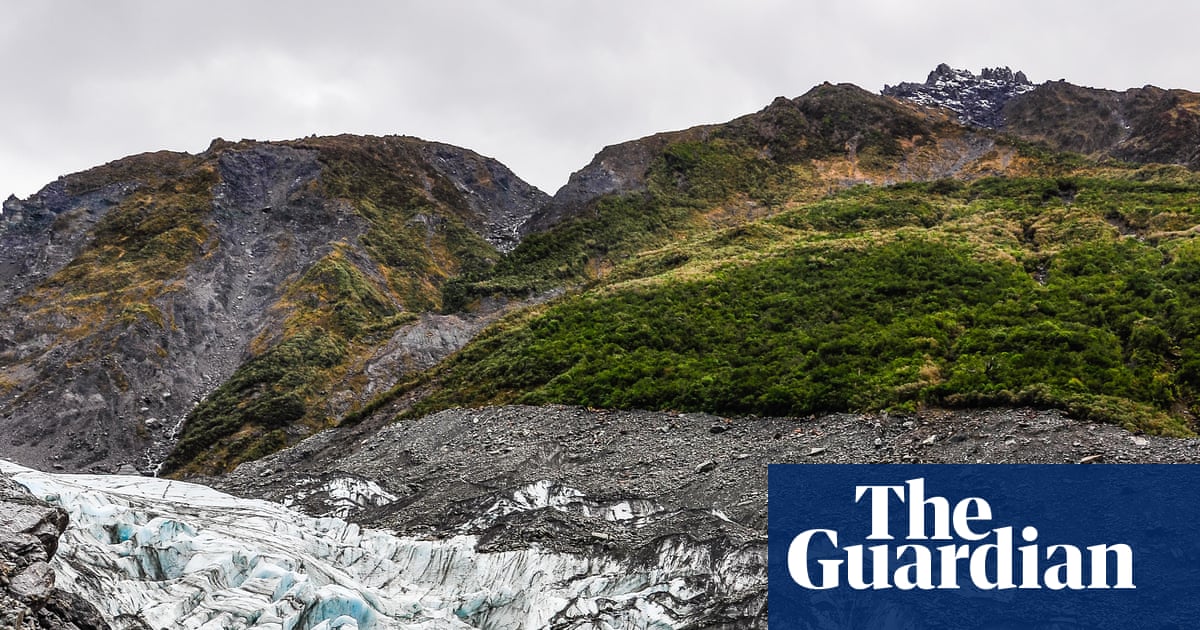
The report finds that as the climate heats, glaciers are shrinking. New Zealand has roughly 3000 glaciers, and they have shrunk in volume from 56 cubic kilometres in 1997 to 30 cubic kilometres in 2023, the report said.
Modelling of glacier retreat shows a high risk of further decline on the horizon. Under the “low climate scenario” – which assumes low emissions – glaciers will very likely lose between 14 and 86% of their volume by 2100. Under the “high climate scenario”, that figure rises to between 69 and 100% of their volume.
“We’re talking about substantial loss,” Collins said.
Flooding caused by Cyclone Gabrielle in Awatoto, near the city of Napier. Photograph: AFP/Getty Images
Greenhouse gases have increased to record levels in New Zealand’s atmosphere, the report shows. There was a 30% increase in carbon dioxide since monitoring began in New Zealand in 1972. Methane levels had also slightly increased in 2025 to their highest concentration ever.
“That additional heat is showing up in rising temperatures, warming oceans, rising seas, shifting rainfall patterns and more intense extremes,” the report said.
Among those extremes were heatwaves, which the report said were “very likely” to increase in frequency, length and intensity across the country. The number of days hitting more than 25C was also “very likely” to increase by 2050, which will expose people to heat-related health risks, including physical illness, disease and psychological distress.
Marine heatwaves are also becoming more pronounced and affecting some native species, the report said. In 2025, the series revealed New Zealand’s oceans were warming 34% faster than the global average which has been linked to mass sea sponge bleaching, die-offs of southern bull kelp, large scale fish standings and penguin deaths.
The three-yearly update from Mcert and Stats NZ collates statistics, data and research across five domains – air, atmosphere and climate, freshwater, land, and marine – to paint a picture of the state of New Zealand’s environment.
The report outlined a myriad of issues that will stem from continued warming, including damaging storms and cyclones that pose a risk to life, droughts affecting species and agricultural industries, sea level rise eroding infrastructure and housing and Māori communities having reduced access to culturally significant places.
Severe storms, including Cyclone Gabrielle and the Auckland floods in 2023, have battered New Zealand in recent years, causing deaths, widespread devastation and billions of dollars in costs.
New Zealand was built and developed around a relatively stable set of climate conditions and the report examines what happens when those conditions begin to change, Collins said.
“Climate change is not just an environmental issue. It’s a human story. It’s an economic story.”