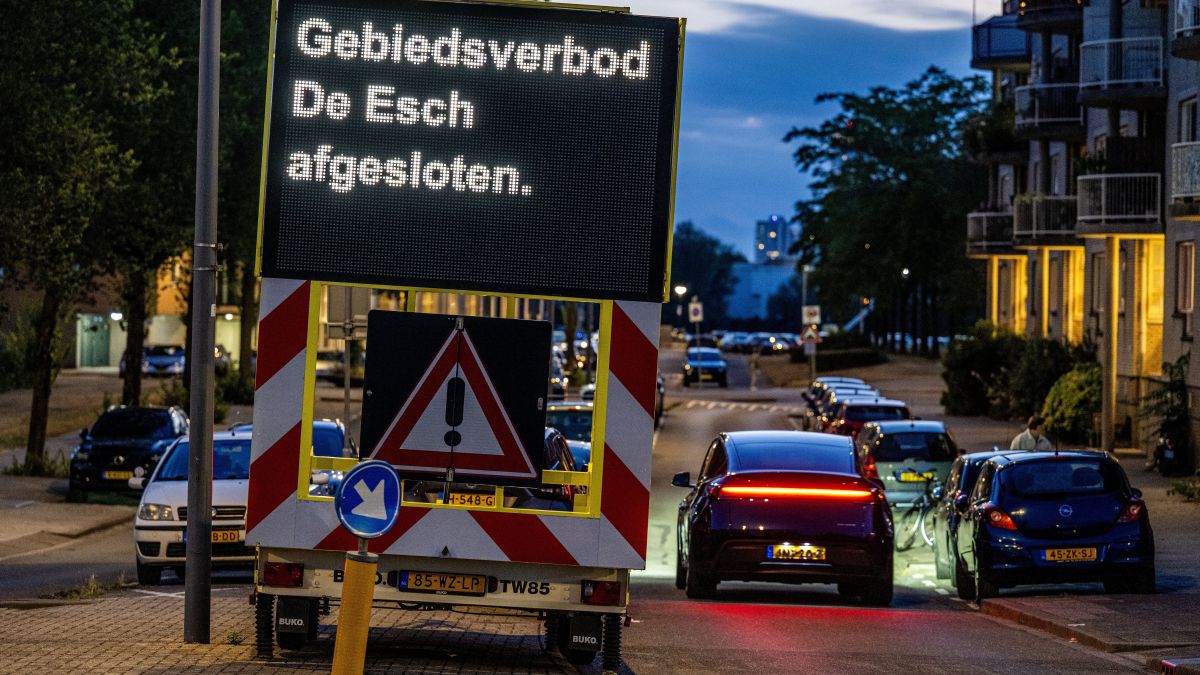
Anyone in large parts of the Rotterdam neighbourhood of De Esch at night without a good reason to be there is now committing a criminal offence, under a ban that took effect on Thursday evening and which some legal experts say has no precedent in the Netherlands.
The ban applies every night between 11pm and 5am, and offenders risk a fine. The measures are intended to stop public disorder in the area, which has caused constant disruption for residents for several years.
Residents, people visiting them, anyone going to an event or a bar or restaurant in the area, and people who work there are all exempt. It will be evaluated after three months.
“Calm must return to De Esch and residents must feel comfortable and safe,” Schouten said. “That is why I am using this power.”
Years of disruption
Residents say they have put up with serious disruption for close to three years, beginning shortly after the Covid pandemic, caused mainly by people who come in from outside the neighbourhood. One resident described street racing, drug and laughing gas use, and prostitution.
“We were pretty much at our wits’ end,” another resident told broadcaster NOS. “Something really had to change, and it just never did.” Women and children no longer go out in the evening, she said.
The council had already put down concrete blocks, stepped up patrols and held talks with the people causing the disruption, without enough effect. Christiaan de Jong, who chairs the neighbourhood council, which backed the measures, said dozens and sometimes hundreds of people come into the area at weekends.
Why it is unusual
Dutch mayors can already bar named individuals from a specified area. But this order applies to anyone who cannot give a reason for being there.
Michel Vols, professor of public order law at Groningen University, told NOS he knows of no other Dutch municipality that has done this and called it an unprecedented step, amounting to a no-go area and a severe restriction on freedom of movement. Someone living in the next neighbourhood who walks the dog through De Esch in the evening would be breaking the law, he said.
The police say that preventing disruptive behaviour is not always possible. Residents report the disruption, but by the time officers arrive it has stopped, and they have to witness it themselves to act. Making presence an offence, the police argue, gives officers something to enforce.