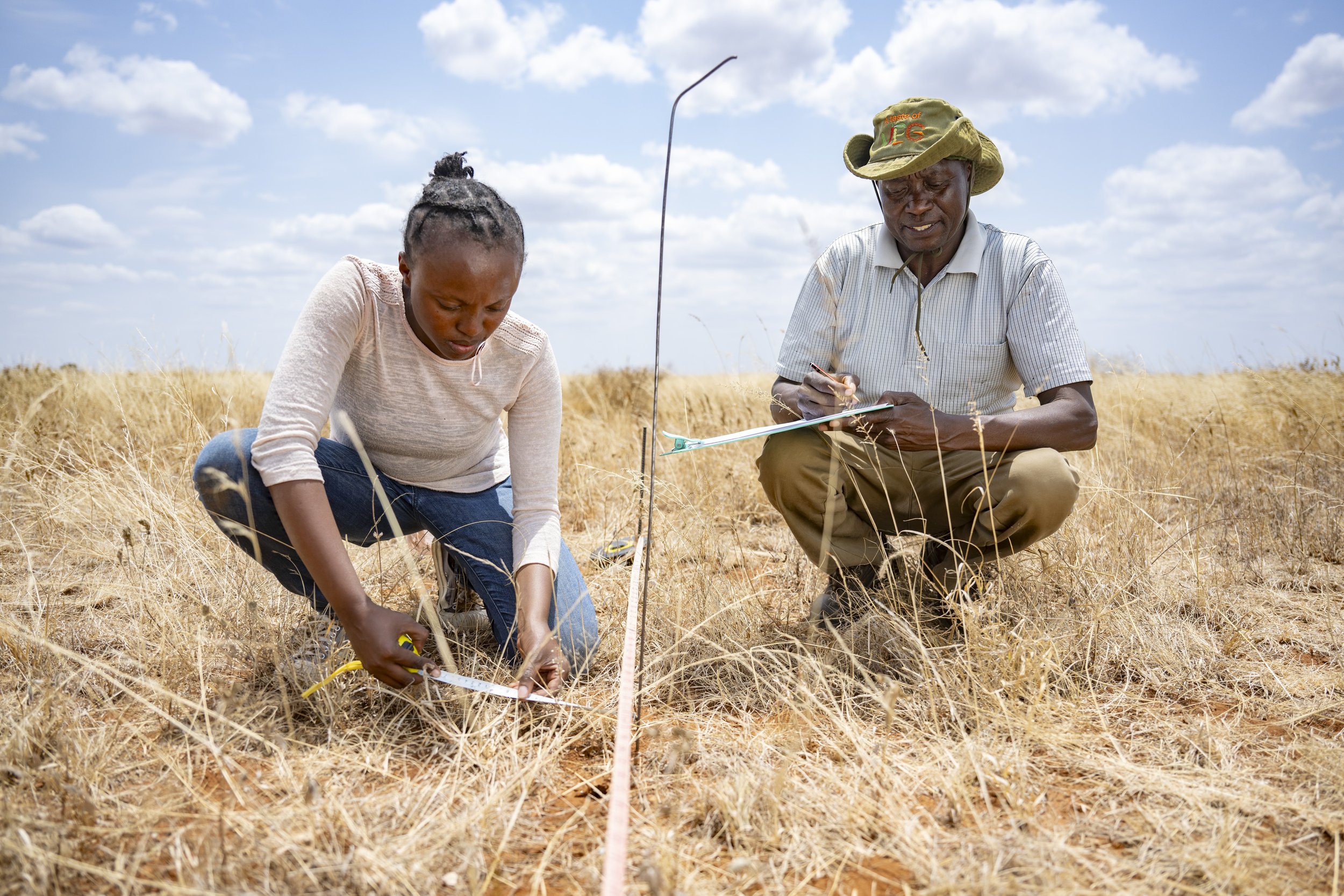
Rangeland is defined as an area of land with natural forage materials that are utilized by livestock and wild animals. Its productivity depends on rainfall and utilization.
Rangeland plants require favourable environmental conditions and adequate protection for their establishment, distribution, and resilience in agroecosystems or on livestock farming lands.
In grazing areas, the most important attributes to consider when assessing rangeland productivity are grass vigour, density, species composition and abundance or richness, among other factors.
These attributes indicate the resilience of grass growth after dormancy and grazing, the grass yield per unit area, the different grass species, and their dominance.
These are indicators of grazing value in different rangelands, and are influenced by climatic conditions and utilization, varying in spatial and temporal scales.
Rangeland is the main and cheapest source of food for livestock. Moreover, humans derive very useful resources from it. These include medicinal plants, edible plant products, household materials such as timber, poles, droppers, and thatching grass, among others.
Vital support
Therefore, rangeland resources support all forms of life. To this end, there is competition for rangeland resources between animals and humans.
This has placed many rangelands under pressure to the extent that their productive potential is compromised, thus degrading them.
In Namibia, rangeland degradation is conspicuous at different scales in varying landscapes, and takes the form of deforestation, desertification, soil erosion, and bush encroachment.
The increasing human population, developmental activities, climate change, as well as the demand for livestock and their products continue to put pressure on rangelands.
Deforestation activities are rampant, especially in rural or farming areas, due to construction, mining activities (minerals, sand), timber harvesting, and land clearing for crop production purposes, among others.
These activities result in the removal of valuable plants, local extinction of native plants, and loss of biodiversity.
Furthermore, deforestation together with overgrazing leads to desertification, where soils become bare and exposed to extreme desert-like conditions such as high temperatures where only a few or no plant species can survive.
Bare or exposed soils lose their stability due to the absence of plants to protect them against erosion activities and trampling. Wind and water erosion remove the topsoil, seeds, and organic matter. In addition, erosion results in surface capping, water run-off, excessive evaporation, and soil dehydration.
Livestock production in many parts of Namibia has become a costly enterprise, and this is due to degraded rangelands. Rangeland degradation has compromised farm productivity and income as farmers tend to spend a significant share of their earnings and effort on rangeland rehabilitation and livestock feeding.
This in turn depletes their financial resources, threatening their ability to sustain production and livelihoods.
To ensure sustainable livestock production, farmers need to embark on sustainable rangeland rehabilitation and utilization efforts or regenerative farming practices.
These include conservative grazing regimes, controlling bush encroachment and soil erosion, rebuilding soil organic matter, rangeland re-vegetation, and water conservation, among others.
In conclusion, any change in the rangeland condition will change a farmer’s livelihood in the same way.
*Erastus Ngaruka is Agribank’s technical advisor on livestock and rangeland.