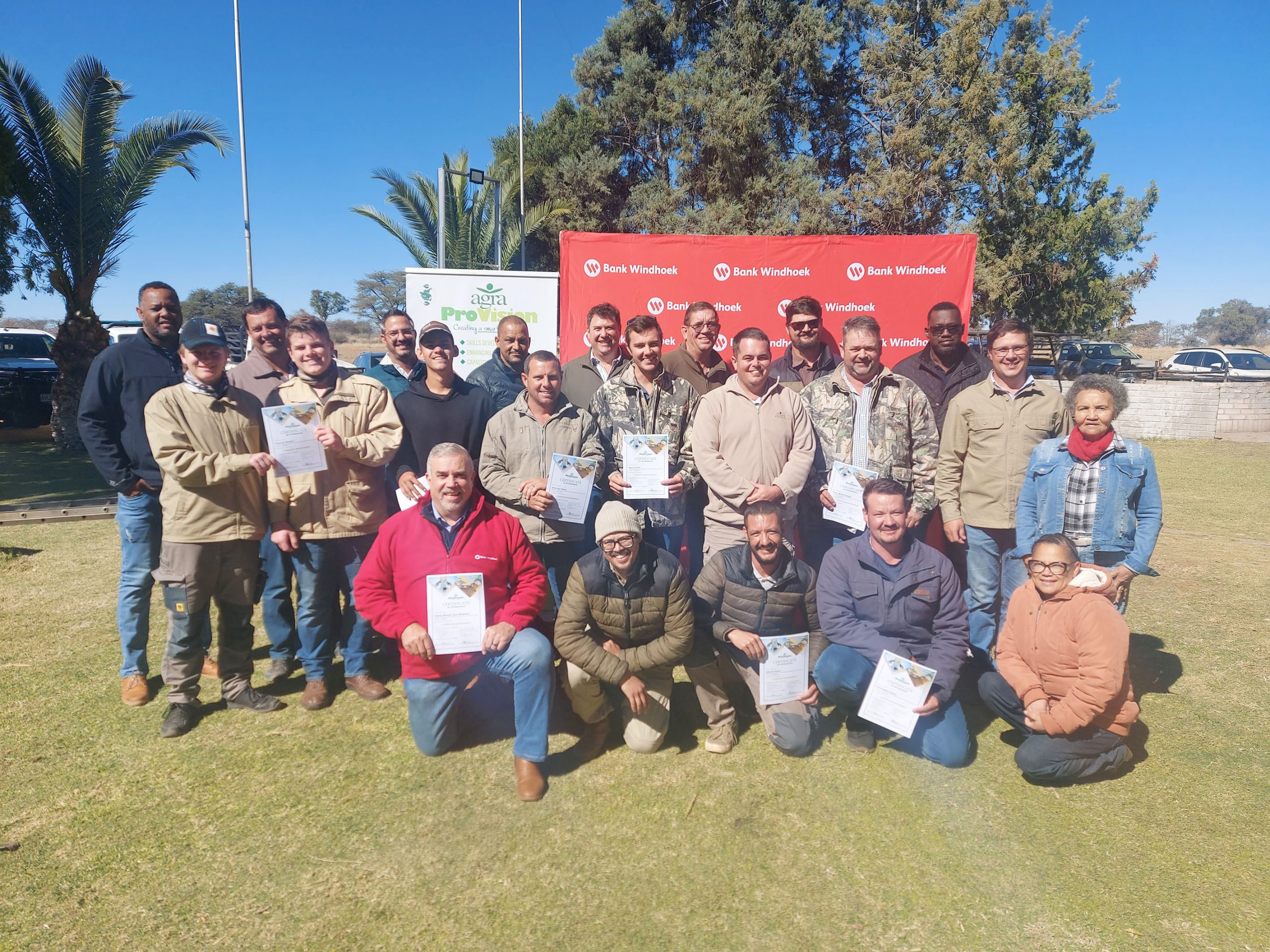
As Namibia’s agricultural sector continues to serve as a vital pillar for livelihoods, food security, and rural economic development, Bank Windhoek has taken a significant step by investing in practical livestock management training to empower farmers with essential skills and knowledge.
From April to early July 2026, the training initiative, facilitated by Agra Provision Training and Consulting Services, was delivered across multiple regions and towns, including Windhoek, Mariental, Otjiwarongo and Gobabis.
The programme focused on equipping farmers with business-oriented farming techniques to foster more productive, sustainable, and profitable agricultural enterprises.
Participants received instruction on a range of critical topics, including animal health, cattle nutrition, feed supplementation, parasite and disease management, vaccination planning, farm diversification, record-keeping, and cash flow projections. The sessions aimed to enhance farmers’ understanding of farm management, improve animal husbandry practices, and promote sustainable farming methods. In Mariental, 20 farmers participated in a one-and-a-half-day training session held from 17 to 18 June, while 13 farmers attended a comparable session in Otjiwarongo from 29 to 30 June. In Gobabis, 23 farmers from the Omaheke region participated from 1 to 2 July.
An earlier session was held in Windhoek from 15 to 17 April. The initiative was designed to strengthen farmers’ capabilities in animal health management, improve nutritional knowledge, and strengthen overall farm management and planning.
Outcomes
Emphasis was also placed on maintaining accurate farm records and financial planning to support increased productivity and profitability.
Bronwyn Moody, Head of Strategic Communication and Social Impact at Bank Windhoek, highlighted the significance of such initiatives. “Agriculture remains one of Namibia’s most vital sectors, and empowering farmers with practical knowledge is essential for building resilient and sustainable communities. Through programs like this, Bank Windhoek continues to invest in skills development that extends beyond banking,” she said. Feedback from participants across the regions was overwhelmingly positive. Many described the training sessions as highly relevant and informative, praising the facilitators for their practical approach, clear communication, and ability to simplify complex concepts.
Several farmers expressed interest in further training, including advanced topics such as small-stock production, crop cultivation, rangeland management, poultry farming, animal marketing, climate-smart agriculture, and practical animal husbandry. According to Agra Provision Training and Consulting Services, the program successfully met its objectives. The organisation also recommended follow-up sessions, extending course durations, expanding regional coverage, and integrating more practical components into future training programs.
Moody affirmed Bank Windhoek’s ongoing commitment to supporting inclusive growth and skills development within the agricultural community. “By providing relevant training and resources, we aim to improve livelihoods, strengthen agricultural enterprises, and contribute to a resilient Namibian economy,” she stated.
This livestock management training initiative is part of Bank Windhoek’s broader portfolio of agricultural support programs, which aim to foster sustainable development through strategic partnerships that address practical needs and unlock growth opportunities across Namibia.
[email protected]