Guest contributor
James Shwe
Sometime between the opening of the 81st Session of the U.N. General Assembly on September 8 and the Credentials Committee’s decision later this year, nine countries will decide, by consensus, whose credentials get accepted for Myanmar’s seat.
The precedent, the record, and the mechanism all support the outcome we are asking for. Our task is to make sure that support is visible in the room where the decision is made.
What is this campaign?
I am involved with “The Global Coalition Supporting Federal Democracy in Myanmar”, an informal group of like-minded people from across five continents who have worked together on Myanmar’s U.N. representation since the February 2021 coup.
We do things a formal body cannot: sign in our own names, move quickly across time zones, and reach missions in host countries where the more visible advocacy groups do not always have a footprint.
We support, we do not lead. The 2021 open letter to member states was signed by 358 Myanmar and international civil society organisations.
Dozens have signed and amplified these submissions across the years. Our submissions reinforce theirs. They do not replace them.
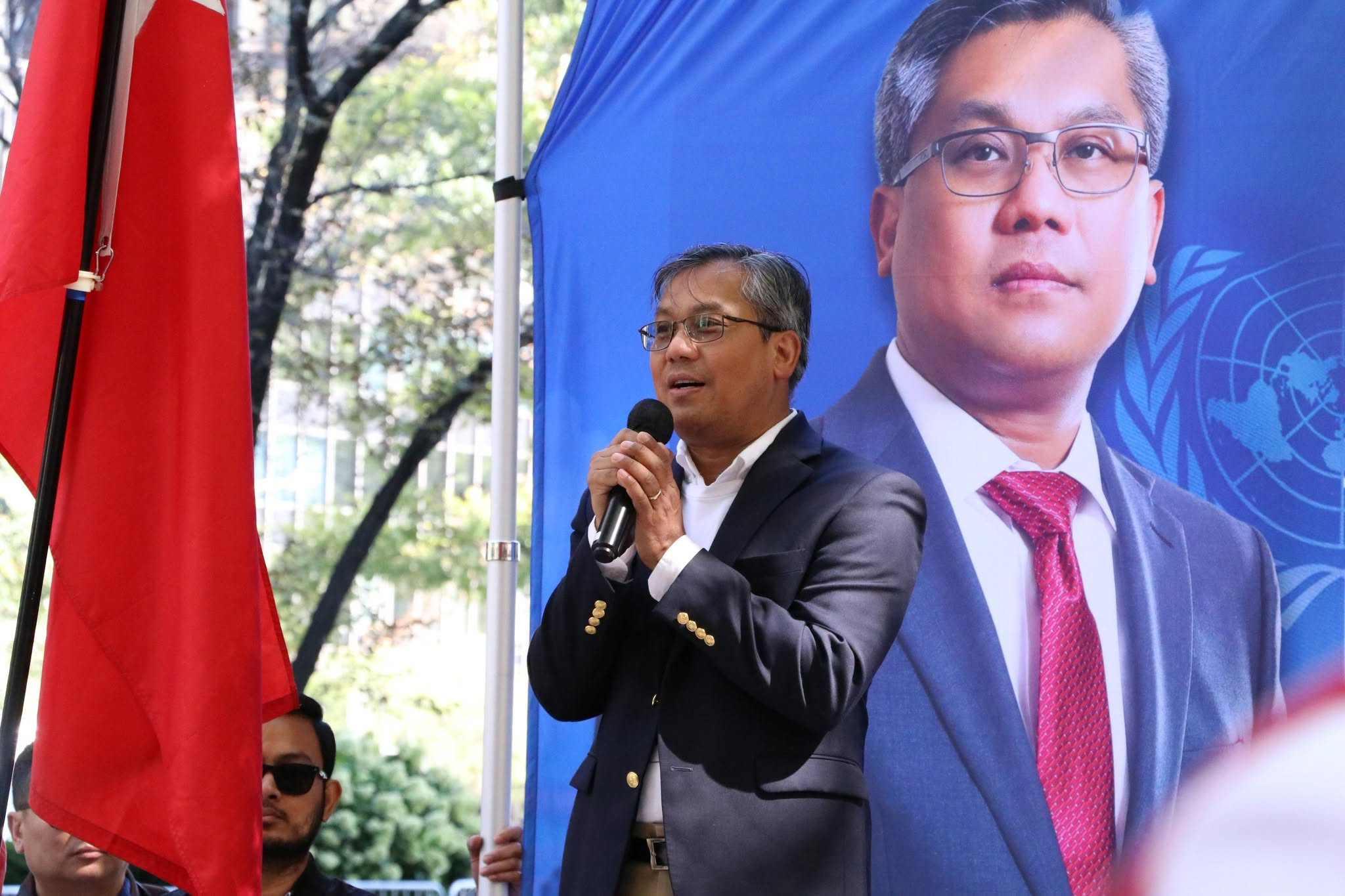
The task this year is the same as every year. Confirm Ambassador Kyaw Moe Tun’s continuing status as Myanmar’s Permanent Representative, with full rights of participation and speech.
Decline to accept any credentials from the authorities established after the 2021 seizure of power.
Reject the quieter loss of leaving Myanmar’s seat unrepresented or indefinitely deferred.
Resolve the matter by consensus, consistent with how the Assembly has handled it in every session since 2021.
Similar petitions and open letters — from leading civil-society networks, from legal scholars, from parliamentary groups, and from other coalitions active in previous sessions — are expected to reach the Secretary-General and the Committee in the weeks around the September opening. Many voices, one asks.
How the Credentials Committee is chosen
Under Rule 28 of the U.N. General Assembly’s Rules of Procedure, a Credentials Committee of nine members is appointed at the beginning of each regular session on the proposal of the President of the General Assembly.
The Office of Legal Affairs consults member states and suggests candidates to the President, who proposes the slate at the first plenary meeting, and the Assembly appoints the nine by acclamation.
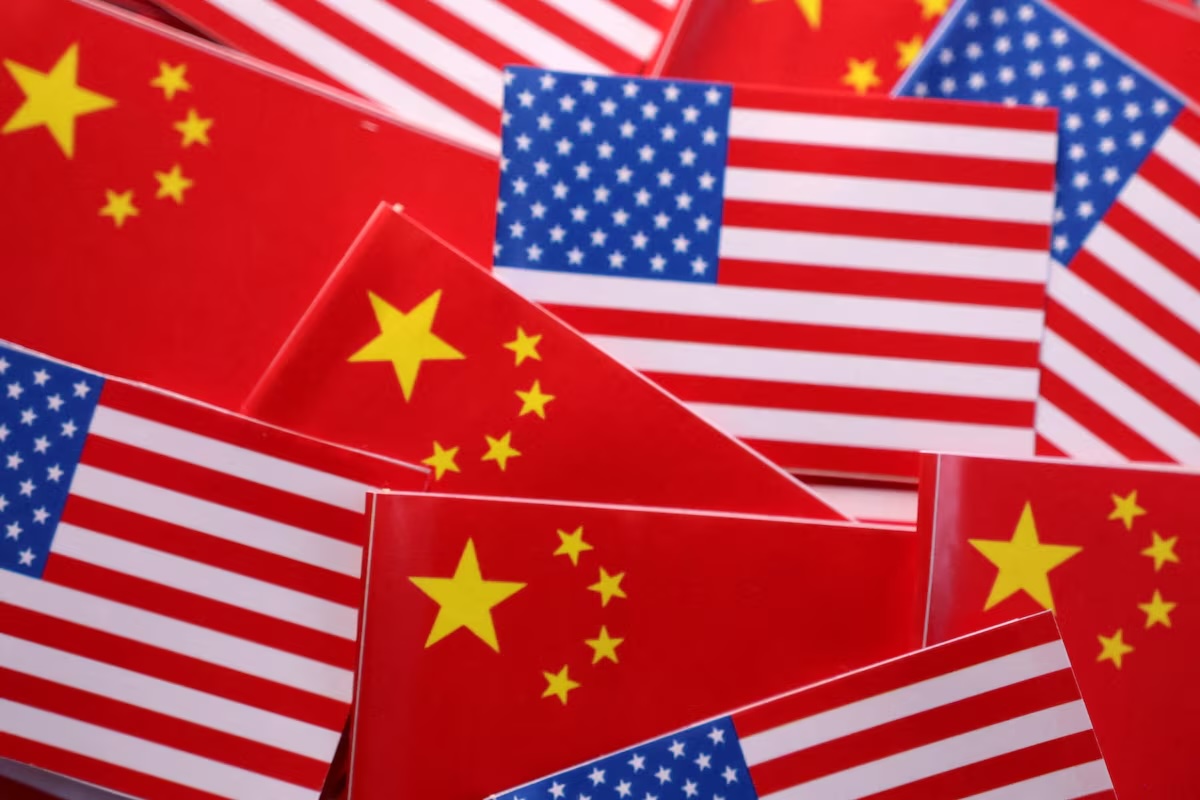
By long-standing custom, China, Russia, and the United States are always among the nine. The remaining six are distributed informally across the five U.N. regional groups — African, Asia-Pacific, Eastern European, Latin American and Caribbean, and Western European and others.
There is no fixed one-per-group formula, and the exact distribution shifts session to session. The Committee then elects its own Chair.
That is why timing matters. The nine members are named at the first plenary on September 8. The advocacy work that shapes the six non-permanent seats happens before that date.
The advocacy work that shapes the outcome happens between the appointment and the Committee’s decision meeting later in the session.
Why is this campaign necessary?
Ambassador Kyaw Moe Tun’s seat is the only continuing institutional channel through which Myanmar’s people can be heard inside the General Assembly.
Myanmar’s people cannot vote or express their opinions freely in Myanmar. What is decided in New York is, in effect, the world’s vote on whether their voice is heard at all.
Every one of us, inside and outside the country, speaks second-hand until he speaks in New York.
That is the operational reality of how the U.N. weighs a country’s positions on sanctions, arms transfers, humanitarian access, and accountability mechanisms.
The junta has tried to unseat him in every session since 2021 and failed. It has gone further.
In August 2021, U.S. federal prosecutors in the Southern District of New York charged two Myanmar citizens with conspiracy to attack the Ambassador on U.S. soil.
It was a plot, they said, that involved wiring funds to a Thailand-based arms dealer who supplied weapons to the Myanmar military.
Failure by consensus deferral is not the same as victory on the merits, and every year that the case is not clearly won on the merits, the political cost of continuing consensus rises for the nine countries carrying it.
Why this year is more critical
Something changed on March 30 Min Aung Hlaing relinquished the post of Commander-in-Chief — because the constitution he himself administers does not let one person hold both offices — and in April the Pyidaungsu Hluttaw “elected” him President.
He was sworn in on April 10. On April 17, President Win Myint was released under an amnesty that can be withdrawn at any time. On August 8, Myanmar’s Ministry of Foreign Affairs told ASEAN that any release of Aung San Suu Kyi would happen only “in accordance with the law” — the law of those who convicted her — and rejected any continuing need for an ASEAN Special Envoy.
That sequence is designed for New York. The August 8 statement is, word for word, the argument the junta will put before the Credentials Committee: “the government, which emerged from the multiparty democratic elections reflecting the genuine will of the people, has assumed state responsibility.”
The theatre has been staged. The paperwork has been prepared. The regime is betting that a title change and a controlled vote will be enough for exhausted diplomats to treat the question as newly ambiguous.
The junta’s case rests on a controlled vote held while political prisoners remain imprisoned, entire townships are outside the state’s control, and civilians are being killed in the weeks around polling day.
That is not a mandate. It is a costume worn to a Committee meeting.
The most dangerous outcome this year is not only that the junta gets the seat. It is that the seat also goes silent. Either outcome produces harm beyond the seat itself.
Bilateral legitimacy. Every state trading with, arming, or normalising relations with the junta — in Beijing, Moscow, New Delhi, and beyond — will cite acceptance in New York as cover. The UN General Assembly’s treatment of Myanmar is the most-cited single referent in every bilateral dossier we track.
Accountability mechanisms lose their political anchor. The IIMM, the Special Rapporteur, and the Human Rights Council resolutions on Myanmar all draw operational weight from the fact that Myanmar’s U.N. representation continues to speak against the 2021 coup. Move the seat and their political floor moves with it.
Regional precedent. Every general in the neighbourhood who might consider a coup in the next decade is watching this session. If credentials can be laundered through a title change and a controlled election, the cost of seizing power falls.
Incumbency and the will of Myanmar’s people. Ambassador Kyaw Moe Tun is the Permanent Representative recognised by the General Assembly and remains so in every session since 2021.
Any credentials submitted by the authorities established after the 2021 seizure of power cannot be accepted, because those authorities emerged from an unlawful overthrow of the elected government and stand outside the constitutional order they claim to administer.
The seat cannot be left empty or silent either, because silence would be read as a Committee judgment that Myanmar has no legitimate representation at all, and no such judgment is warranted.
The people of Myanmar — through the elected representatives who authorised his appointment, through the civil society organisations that continue to endorse him, and through the diaspora on five continents — want Ambassador Kyaw Moe Tun to continue in the seat that speaks for them.
The junta’s own words. The August 8 Ministry of Foreign Affairs statement rejected the ASEAN Chair, dismissed the Five-Point Consensus, refused to release political prisoners unconditionally, and asked to be treated as a normal state on the same day. New York does not have to argue against the junta’s case. It can quote it.
Documented escalation. The IIMM 2026 Annual Report found that war crimes and crimes against humanity — including deliberate attacks on civilians — escalated in the weeks around the election. The Special Rapporteur has called the vote a sham. The European Union told the Assembly on 19 June that the elections “do not confer legitimacy.”
A clean Security Council record. In 78 years, the U.N. Security Council has adopted resolutions on Myanmar exactly twice. Resolution 45 (1948) recommended Burma’s admission. Resolution 2669 (2022) demanded the release of all those arbitrarily detained, including Aung San Suu Kyi and President Win Myint. Those demands are unfulfilled.
Regional cover from Manila. The 59th ASEAN Foreign Ministers’ Meeting on July 21 reaffirmed the Five-Point Consensus as ASEAN’s “main reference” for the Myanmar crisis, limited junta representation at that meeting to Permanent Secretary level, and began developing formal benchmarks for assessing progress before the November Leaders’ Summit.
The Committee’s composition rotates. China, Russia, and the United States are always there. The other six change every year, and we cannot make our full case to them until they are named.
Coordination among the multiple coalitions writing to New York is imperfect. It is a strength that many voices are writing. It is a hazard when the operative asks to drift apart. We align our four tasks with the leading networks precisely to avoid that drift.
Where the diaspora fits
The diaspora is the campaign’s evidentiary base. When a Credentials Committee member’s mission in New York can be shown that Myanmar civil society, professional associations, ethnic representative bodies, and community networks on five continents are aligned on the same four tasks, that member’s political cost of accepting junta credentials rises. When those networks are silent or fragmented, the cost falls.
Every diaspora reader can do three things this month. Sign the public endorsement form. Ask your community organisation, professional association, or faith body to sign. Write, in your own name and in the name of your organisation, to your host country’s mission to the U.N. in New York, asking them to support the Ambassador and reject any empty-seat compromise.
For people inside Myanmar, three things.
One, you do not need to be publicly named for your voice to count. The petition withholds the names of individual supporters inside the country from the public submission and offers the Secretariat confidential verification of the roster on request, on the basis of the U.N.’s own reprisals framework — Human Rights Council resolution 12/2 (2009) and successive Council and General Assembly resolutions on cooperation with the UN in the field of human rights.
Two, protection is not evasion. Withholding names is U.N.-consistent practice, established because the Organization has long recognised that visible engagement with it can cost people their freedom.
Three, be counted, protected, and heard through the incumbent seat that continues to speak for your aspirations.
What we should do
Between now and the Committee’s decision, five things.
One, hold the four asks together across every letter.
Two, do not fragment the signal.
Three, reach the six non-permanent Committee members as soon as the President of the General Assembly’s office signals composition.
Four, prioritise the United States Mission to the United Nations (USUN). Congress can shape the U.S. position, but it cannot instruct the Committee. The vote lives with the executive branch.
Five, do not chase the junta’s frame. A vote cannot make a coup lawful. That is the sentence we should force New York to argue against.
One more thing
Hold the seat.
Reject the empty chair.
Refuse the rebranded coup.
James H. Shwe is an independent policy analyst and writer on Myanmar and Southeast Asian affairs based in California, USA.
DVB publishes a diversity of opinions that do not reflect DVB editorial policy. We’d like to hear what you think about this or any of our stories: [email protected]