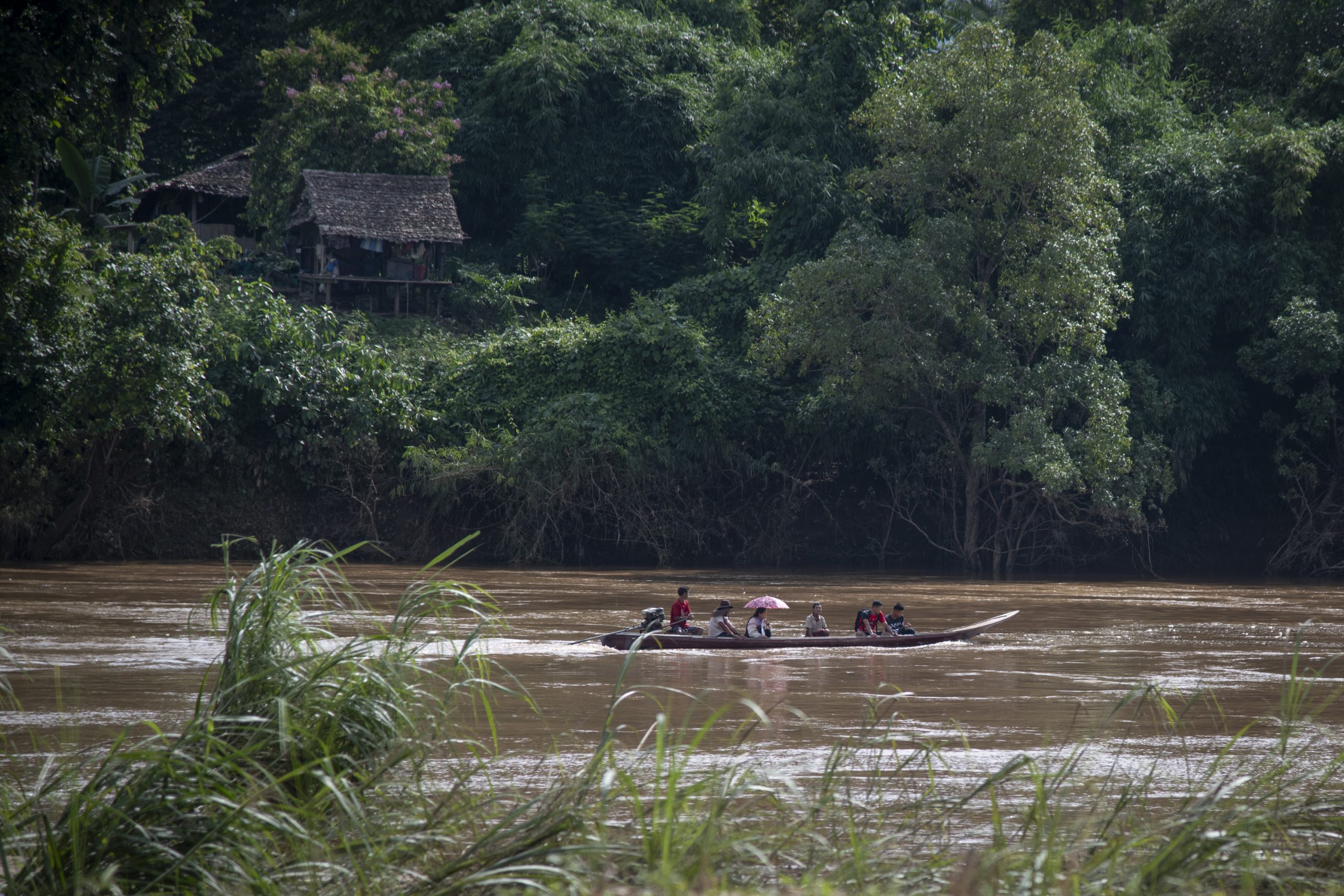
Over the past decade, pollution has shrunk the population of fish for consumption, and impending damming projects have displaced thousands of indigenous Karen villagers.
By Zachary Lim and Anis Nabilah Azlee
MAE SOT, Thailand — About a decade ago, Mr Saw Ni Say recalls being able to catch up to 5kg of fish along the Moei River — a tributary of the Salween. Today, the corn farmer reels in less than a kilogram if he is lucky, making it harder to feed his family at times.
“When I was young, there were a lot of fishes in the river,” said the 65-year-old. “I fish less today because there are fewer fishes and they’re smaller in size.”
His experience mirrors that of the over 10 million people from at least 13 ethnic groups who rely on the life-giving waters of the Salween River. It spans 2,800km and is Asia’s longest undammed river – so far.
But as discussions on tapping hydropower progresses across Southeast Asia, dam construction projects, pollution and unregulated fishing are threatening the Salween River, which flows through China, Myanmar, and Thailand.
In 2010, the Salween River was among the ten most polluted rivers in the world, according to the Food and Agriculture Organization (FAO) of the United Nations.
These river threats have implications for a large proportion of the Karen community in both Thailand’s Mae Sot and Myanmar’s Karen State. The Karen are an ethnic group largely originating from southern Myanmar.
The majority of the Karen community are farmers and fishermen, and rely on the river to irrigate their crops and get their supply of fishes, said Mr Saw Hea Say, coordinator of environmental watchdog Karen Rivers Watch (KRW).
“Having spent much of their day near the river, many of them have developed a special affinity for, and dependence on the river,” he said.
The Moei and Salween rivers are also home to about 300 species of freshwater fishes — though some experts estimate there could be many more others yet to be discovered.
Professor Peter Ng, an advisor of the National University of Singapore’s Lee Kong Chian Natural History Museum, who studies marine and freshwater crabs in the Indo-West Pacific, said these rivers are still poorly explored.
He added: “We actually don’t know very much about them… these are just numbers of species for fishes alone, which are considered one of the more explored things. If you look at other freshwater animals, like insects — probably up to 90 per cent of the fauna there is not known.”
This makes creating comprehensive management and mitigation plans by the relevant authorities challenging due to the overall ambiguity of the ecosystem, he added.
River life on the line
The Moei River is mainly fed by rainfall, surface runoff, and treated wastewater.
Its headwaters – streams of water that merge near the source of a river – meet in the highlands of Phop Phra, in Mae Sot.
During the rainy season between June and September every year, rubbish that is discarded along either side of the river gets swept into the Moei River, said Mr Ni Say, the corn farmer.
“About two years ago, I saw along the riverside in Myawaddy, every day around 4 to 5pm, people would throw rubbish like food boxes and packaging carelessly into the river. Even the rubbish truck would dump trash into the river,” the 65-year-old added.
River life is also threatened by unregulated fishing practices, which include the use of explosives and electricity to kill or stun a large number of fishes. Such practices often result in the death of more fishes than is required by the fishermen.
The collective impact of the multitude of stress factors has resulted in a drastic drop in both numbers and sizes of the fishes native to the river, said the Karen River Watch’s KRW’s Mr Hea Say.
“These methods kill the baby fishes — which they do not want, and leave adult fishes unable to reproduce,” he added.
While data on the decline of biodiversity in the basin is scant, environmental non-profit International Rivers noted that damming activity alone is likely to disrupt the freshwater fish ecology and threaten one-third of fish species in the river.
The construction of large dams would also lead to new roads being built, that would facilitate the movement of poachers, loggers and other resource users, thereby threatening the ecological integrity of the area, they added.
While the Thai authorities have introduced regulations such as fines of up to 10,000 Thai baht (S$396.29 or $317 USD)) for the improper disposal of rubbish, and irregular fishing practices, locals say they are not actively enforced.
Mr Hea Say added that political tensions in Myanmar and Thailand have pushed environmental issues off the national agendas of both countries.
“It is concerning because these issues are affecting the bigger Salween River, which is already one of the world’s most polluted rivers…The Salween River is our home. We must protect it. If it is damaged, we are damaged,” he said.
Damming and displacement
These threats affect more than just the biodiversity of the Salween River and its tributaries. The Karen community, too, faces displacement from dam projects.
Over the past two decades, companies, enterprises, and the authorities across China, Myanmar and Thailand have been planning to erect dams along the Salween River to harness the channel’s hydropower potential, according to a 2011 report by the Food and Agriculture Organization of the United Nations.
This includes the Electricity Generating Authority of Thailand and Chinese hydropower company Sinohydro, which has proposed building seven dam projects — one of which, the Hatgyi dam, is to be situated in Karen state’s Hpapun district.
Progress on the project, first announced in 2006, has stalled, most likely due to post-coup instability and strong resistance from locals, as reported by multiple sources including the climate diplomacy arm of German environment consultancy Adelphi Global.
In September 2016, the Karen State Border Guard Force collectively displaced some 5,000 Karen from their villages near the proposed dam site, the Karen Rivers Watch said, citing information from villagers.
In 2023, villagers filed a landmark lawsuit to halt a different initiative – the Salween Water Diversion Project. The project aimed to pipe large amounts of water from the Moei and Yuam, another tributary of the Salween, to irrigate central Thailand’s rice-producing region.
There is currently no set completion date for the project.
Karen youth push back
Despite the call by Karen Rivers Watch for a moratorium on damming activities until peace is established in the conflict zone, construction has persisted.
In response, activist organisations like the Karen Students’ Network Group have partnered with the environmental watchdog since 2016 to protest damming activity every year on March 14 — the International Day of Action for Rivers.
The student group provides Karen students with a platform to tackle a variety of societal issues through education and publicity efforts.
The group’s social & relations Officer Joseph Lah said: “A lot of our Karen people plant rice, beans, and vegetables. So, if the river is stopped by a dam and not flowing as usual, then both sides will face a lot of impact on their agriculture.”
He believes that the media attention on these movements has helped delay parts of the hydropower project timeline in recent years.
Beyond protests, the students organise clean-up drives, tree-planting programmes, and community dialogues to help with river conservation, promoting environmental responsibility.
“But it’s hard to change [people’s waste disposal habits sometimes],” Mr Lah said. “It’s been ingrained in many people’s minds, and it’s what they are used to doing. No one is stopping them either.”
For Mr Hea Say, cross-border cooperation and law enforcement are necessary to protect the river.
“Rivers should have the right to flow freely…but that can only be done if Thailand and Myanmar work together,” he said.
“More research about the area, and education on responsible waste and fishing practices is needed. The authorities need to enforce regulations much more actively as well, so that our future generations can enjoy a healthy flowing river too.”
This article is part of a package produced by a group of final-year undergraduates from Nanyang Technological University’s Wee Kim Wee School of Communication and Information, for the programme Going Overseas For Advanced Reporting, or Gofar. They reported from a town called Mae Sot at the Myanmar-Thailand border in July and August 2025. There, they met migrants and refugees displaced by six decades of civil war in Myanmar and are rebuilding their lives in Thailand.