Nine years after the Rohingya genocide, I stood at the Bangladesh-Myanmar border and finally saw the homeland I had spent my lifetime imagining. What I saw was breathtakingly beautiful. What I know is happening there is devastating. And what the world is now normalizing should frighten us all.
Guest contributor
Yasmin Ullah
On August 14, 2026, I stood at the edge of Bangladesh, near the Naf River, at the zero point of the Bangladesh-Myanmar border.
And I saw Arakan.
For most of my adult life, Arakan had been an idea as much as a place.
I had spoken about it in parliamentary rooms, at international conferences, in refugee camps, in meetings with diplomats and human rights organizations.
I had written about it. Advocated for it. Defended our people’s right to belong to it.
But for much of my life, my ancestral homeland existed in fragments: in my family’s stories, in the memories of elders, in Rohingya songs and food and traditions, in names of villages I had never seen, in the ache of people who had been forced to leave.
Then, suddenly, it was there.
Across the water, I could see the mountains of Arakan.
It was breathtakingly beautiful. And that was perhaps the hardest part.
Everything looked so normal from where we stood. The mountains stood quietly against the horizon. The river moved as rivers do. The landscape looked peaceful. Yet I knew what that landscape had witnessed.
In 2017, as hundreds of thousands of Rohingya fled across this very frontier, the violence was so close that people in Teknaf described smelling smoke and burning flesh from across the border.
The catastrophe that appeared in international headlines as statistics and satellite images had crossed the Naf river. Villages were burned. Families were torn apart. People fled with nothing.
Nine years later, standing there, the geography of genocide became real to me. My homeland became real to me.
I cried.
My team cried too.
Some of my colleagues had never set foot in Arakan. Some were born outside our homeland altogether. Yet when they saw those mountains, something visceral happened.
Perhaps that is what happens when a person finally sees the place from which it was torn.
Once you have seen Arakan, it is difficult to erase it from your memory.
And that is why I keep thinking about a Rohingya child born today. Nine years have passed since August 25, 2017.
There is now a Rohingya child who can be born into exile, grow up among the bamboo and tarpaulin of a refugee camp, learn the names of villages in Arakan from their parents, hear stories about rivers and mountains they have never seen — and reach childhood without ever knowing the scent of their homeland or the embrace of Arakan.
Nine years is a long time in a human life.
It is the difference between a child who remembers home and a child who has never known it. That should be unbearable to us.
Instead, the world is beginning to behave as though this is simply the new normal.
When genocide becomes diplomacy
The danger nine years after the genocide is not simply that the world might forget what happened to the Rohingya.
It is that the world might remember it, condemn it, and then normalize the political and economic relationships that make impunity possible.
This is how normalization works. It rarely announces itself as forgiveness for genocide. It arrives dressed as pragmatism.
It comes as engagement. As regional stability. As an investment. As economic cooperation.
As the argument that we must deal with whoever controls the territory. And increasingly, it comes with handshakes and red carpets.
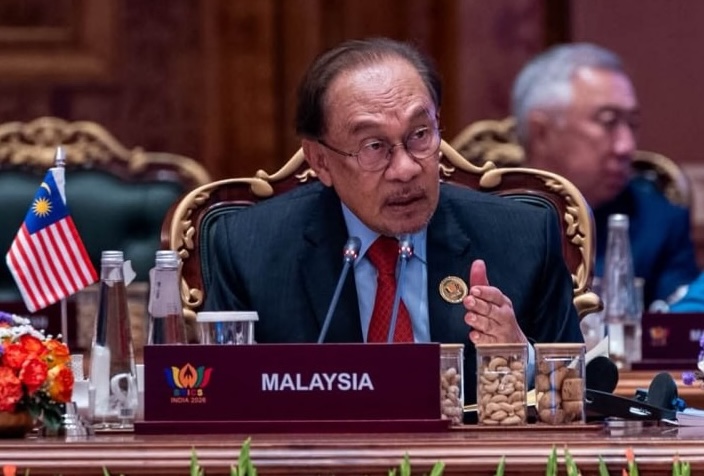
This month, Thailand gave Min Aung Hlaing, the head of Myanmar’s military regime, a formal red-carpet welcome.
Bangkok framed the visit as part of efforts to deepen bilateral and ASEAN engagement, while a Thailand-Myanmar business summit promoted trade, investment and economic cooperation.
The regime has attempted to present Min Aung Hlaing as a civilian leader following its military-engineered election.
But most of Myanmar’s people did not have a meaningful democratic choice: major opposition forces were excluded, most of the country could not vote while being bombarded by the junta’s airstrikes, the election was widely criticized, and ASEAN itself did not endorse it.
Changing a military uniform for a suit does not transform a genocidal junta into a democratic leader.
A title does not create legitimacy.
And an election held under military domination does not erase a military regime’s record.
Days after the Thailand visit, Min Aung Hlaing travelled to Moscow, where Russia and Myanmar discussed deeper cooperation in energy, including an oil refinery and hydrocarbon exploration.
Meanwhile, Reuters has reported that Myanmar’s military is using force, including the burning of villages and displacement, to clear land for a Russia-backed special economic zone and port project in Dawei.
We should ask ourselves what exactly we are normalizing.
For Rohingya survivors, Min Aung Hlaing is not simply another political figure in Myanmar’s complicated history.
He is the junta chief who commanded the military during the genocidal campaign that drove more than 700,000 Rohingya across this very border in 2017.
The evidence of the military’s crimes is vast.
Rohingya women survivors documented systematic sexual violence. Razia Sultana’s landmark Rape by Command documented widespread sexual violence against Rohingya women and girls during the military’s 2017 campaign.
In 2022, the United States formally declared that the Myanmar (Burma) military committed genocide and crimes against humanity against the Rohingya Muslim minority.
And the International Court of Justice continues to hear The Gambia’s case concerning Myanmar’s obligations under the Genocide Convention.
The Court has already rejected Myanmar’s preliminary objections and determined that it has jurisdiction to hear the case and that The Gambia’s application is admissible.
The Court’s proceedings concern allegations that Myanmar violated its obligations under the Genocide Convention through acts committed against the Rohingya.
Yet the head of the military regime responsible for the 2017 campaign is increasingly being welcomed into regional and international political and economic spaces.
What message does that send to survivors?
What message does it send to the Rohingya child who has never seen Arakan? And what message does it send to every future perpetrator watching from somewhere in the world?
A red carpet for a regime leader implicated in the machinery of genocide is not merely a diplomatic photograph.
It is a precedent.
And now the word “Arakan” itself is being contested
There is another form of erasure happening alongside political normalization. It concerns language. Today, Arakanese is increasingly treated as though it simply means Rakhine — as though the history, geography and identity of Arakan can be reduced to one ethnic group.
That is a historical revision.
The 1872 Census of British Burma is not a perfect document. It was produced by a colonial administration, used colonial categories and excluded the hill tracts of Northern Arakan from the formal census, relying there on an approximate estimate.
But precisely because it predates today’s nationalist battles over terminology, it offers an important window into how people in Arakan were being classified at the time.
The census recorded Arakan as a distinct administrative division, with a population of 484,363 in 1872.
Its discussion of the population is revealing. It referred to “Arakanese Mahomedans” and distinguished them from Indian immigrants, while also discussing Mro and other communities.
In Akyab (Sittwe today), the census described many Muslims as having lived in Arakan for generations and noted that they had little distinguishing them from the Arakanese except their religion.
Elsewhere, it described the inhabitants of the plains as including the original Buddhist or Burman-stock Arakanese, “Arakanese Mahomedans,” Mros and others.
This does not mean that a colonial census can settle every question about centuries of identity. It cannot.
Nor does it mean that Rakhine people do not have the right to call themselves Arakanese.
The point is precisely that Arakan’s history has never belonged exclusively to one community.
Rohingya are of Arakan.
Rakhine are of Arakan.
So are Chakma, Mro and other communities with their own histories and relationships to the land.
Arakan is a homeland and a historical region. Rakhine is an ethnic identity. They are not interchangeable.
Rohingya historical scholarship has long examined the relationship between the names Arakan, Rohang and Roshang, and the place of Muslim communities within Arakan’s history.
Historical accounts likewise document the multicultural character of Arakan and the longstanding presence of Muslim communities there.
Ronan Lee’s Myanmar’s Rohingya Genocide examines the relationship between Rohingya identity, competing historical narratives, nationalism and the hate speech that helped create the conditions for genocide.
This distinction matters because when a geographical identity is transformed into an ethnic monopoly, language itself becomes a tool of exclusion.
And we have seen where that road leads.
Ethnonationalism did not save Myanmar. It destroyed it.
Myanmar’s tragedy did not begin with the 2021 coup.
The military’s ethnonationalist vision of the country had been cultivated for decades.
The idea that some peoples were more authentically Burmese, more entitled to citizenship, more entitled to land and more entitled to political power than others helped create Myanmar’s structure of exclusion that ultimately produced genocide.
The lesson should be obvious:
If the revolution against military dictatorship simply replaces one ethnonationalism with another, Myanmar has learned nothing.
This is why what is happening to Rohingya under the Arakan Army cannot be ignored simply because the Arakan Army is fighting the junta.
Two things can be true at once:
The Myanmar military committed genocide against Rohingya.
And the Arakan Army can commit serious abuses against the Rohingya.
One does not cancel the other.
Human Rights Watch has documented severe restrictions on Rohingya movement, arbitrary detention, extortion, forced labour and other abuses under Arakan Army control.
Human Rights Watch has also documented the Arakan Army’s massacre of Rohingya in northern Rakhine State, including the killing and wounding of civilians and the destruction of a Rohingya village.
Reports from Rohingya sources have additionally documented allegations of forced recruitment especially of 450 Rohingya women, detention, seizure of fishing equipment, extortion and forced labour.
For Rohingya communities, these experiences have increasingly been described as a second wave of genocide.
We should be careful with legal terminology. But we should not be careful about listening to people who are telling us they are afraid.
The Arakan Army says it represents a revolution.
Then it must answer a simple question:
What kind of revolution excludes the people who have lived on the land it claims to liberate?
A revolution cannot reproduce the very machinery of oppression it claims to overthrow. It cannot demand freedom from the junta while denying freedom to Rohingya.
It cannot condemn military abuses while practicing collective punishment, forced labour, dispossession or discriminatory restrictions. And it cannot claim to be building a future Arakan while simultaneously making Rohingya afraid of that future.
We have seen this before
There is a particularly dangerous contradiction emerging in the international response.
Some governments and international actors are increasingly eager to engage the Arakan Army because it controls territory and is not the Myanmar military.
I understand the logic.
But territorial control is not a human rights credential.
An armed group does not become democratic simply because it defeats a military regime. And economic connection is not the same thing as peace.
Have we forgotten how we arrived here?
For decades, governments and businesses pursued stability, trade and economic relationships while the foundations of exclusion and impunity deepened underneath.
We should not repeat that mistake with new actors. The answer is not to abandon the people of Arakan.
It is the opposite.
Invest in the people of Arakan. Build the capacity of women. Support civil society.
Support educators, journalists, farmers, health workers, youth, community leaders and human rights defenders.
Strengthen people-led movements rather than rewarding armed groups simply because they control territory.
Put people before profit.
Because when economic interests are allowed to outrun accountability, the people who are easiest to dispossess become the price of development.
And eventually, those who profit from dispossession can turn on their own people too.
To the people of Myanmar: the revolution must include us
To my fellow people of Myanmar, I want to say something that should not be controversial.
The Rohingya want to belong.
We love Myanmar. We are indigenous to Arakan. We want to rebuild our homes. We want our children to go to school.
We want to vote. We want political representation. We want recognition of our ethnic identity. We want access to healthcare and education. We want security and dignity.
We want a stable government with democratic institutions, checks and balances, and equal rights.
We want justice for those who committed genocide.
And we want to live alongside the other peoples of Myanmar without being treated as a problem to be solved.
That is not an unreasonable demand.
It is not separatism. It is not an invasion. It is not a threat.
It is what most people would ask for if their home had been taken from them.
The future Myanmar I dream of is not a Myanmar in which the Rohingya become a forgotten minority at the edge of someone else’s nation.
It is a federal, democratic Myanmar in which the Rohingya are recognized as one of the peoples who make up the country. A Myanmar where Rakhine people can preserve and celebrate their history and identity without needing to erase Rohingya history to do so.
Myanmar where Rohingya children learn about Rakhine culture, Rakhine children learn about Rohingya culture, and both learn that the history of Arakan belongs to more than one community.
A Myanmar where memorials remember the dead without asking whose death matters more.
We will memorialize our loved ones, and we will honour yours too. That is what coexistence can look like.
Nine years later, I still believe in home
When the RMCN team stood at the Teknaf border, looking across the Naf River, we made a promise to ourselves.
We would not give up.
Not until our homeland is a place where Rohingya can return with dignity. Not until justice is possible. Not until perpetrators face consequences for their crimes.
Not until the history of Rohingya indigeneity, culture, traditions and ancestral belonging is taught as part of Myanmar’s history rather than erased from it.
Not until women and marginalized communities are treated as architects of peace rather than casualties of war.
Not until the people of Myanmar understand that a revolution that excludes women is incomplete, and a revolution that excludes its most marginalized people will not produce lasting peace.
Nine years after August 25, 2017, I keep thinking about that child. Somewhere tonight, a Rohingya child is growing up who has never smelled Arakan after rain.
Never walked its soil. Never seen its mountains except in a photograph. Never touched the river their ancestors crossed. Never felt the embrace of the homeland their grandparents still call home.
I was lucky enough to see those mountains.On August 14, from the Bangladeshi side of the Naf River, I looked across. Arakan was breathtakingly beautiful.
And painfully close. So close I could smell it.
For the first time in my adult life, it was no longer an imagined homeland.
It was real. And that is why I know:
They can burn our villages. They can expel our people. They can deny our history. They can rewrite our names. But they cannot make us forget where home is.
The border could not erase Arakan. Genocide could not erase us.
And neither diplomacy nor investment nor ethnonationalist rewriting will erase the truth that the Rohingya belong to the past, present and future of this land.
Arakan is still there.
So are we.
Nine years later, we are still longing to go home — not to take someone else’s place, but to reclaim our own, and to help build a Myanmar in which nobody ever again has to lose theirs.
Yasmin Ullah is a Rohingya human rights activist and the co-founder of the Rohingya Maiyafuinor Collaborative Network. She was born in the Northern Rakhine state of Myanmar. Her family fled to Thailand before resetting in Canada in 2011.
DVB publishes a diversity of opinions that do not reflect DVB editorial policy. We’d like to hear what you think about this or any of our stories: [email protected]