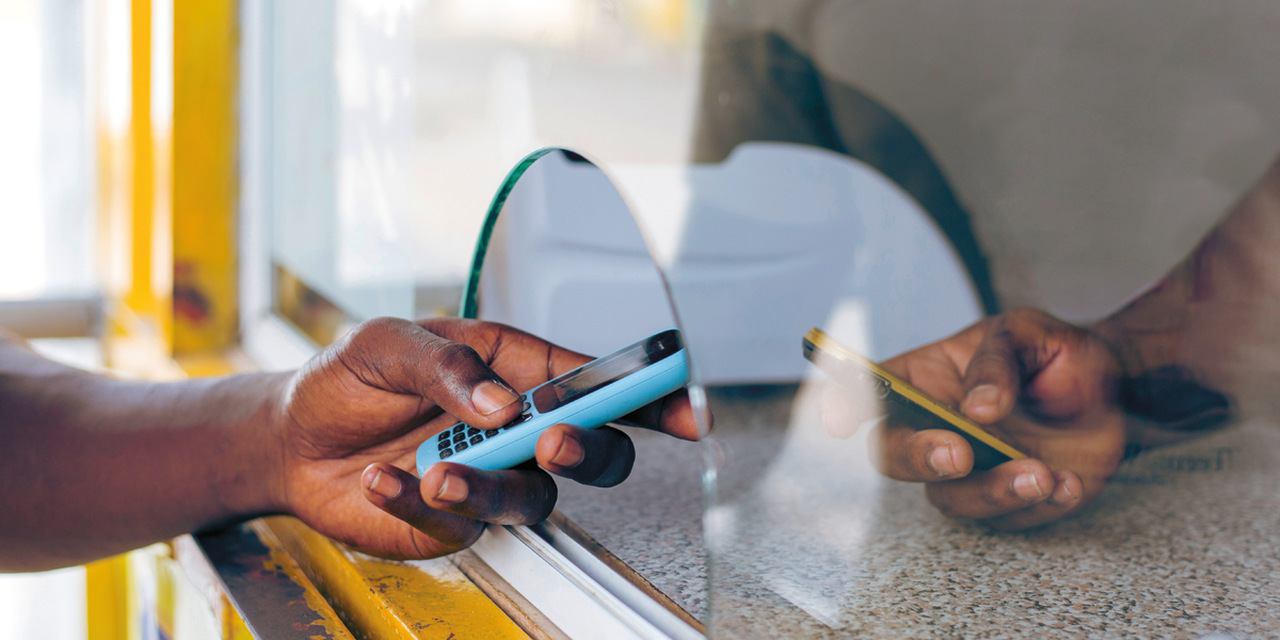
The growth of mobile financial services in Africa has transformed the lives of millions of people, especially in rural areas with limited access to traditional banks. A study conducted in southern Mozambique shows how this transformation is unfolding.
What is the real impact of the rise of electronic money? What real stories lie behind the numbers illustrating the expansion of this technology? A study now sheds light on what is happening on the ground. Inspired by the success of M-Pesa’s introduction in Kenya in 2007, a team of researchers led by Cátia Batista, Full Professor of Economics at Nova School of Business and Economics in Lisbon and Scientific Director of the NovaAfrica research center, carried out work between 2010 and 2013 on the implementation of these services in Mozambique. The research focused on rural areas of the provinces of Maputo, Gaza and Inhambane. Titled “Is Mobile Money Changing Rural Africa? Evidence from a Field Experiment”, the study revealed how the use of electronic money changed the daily lives of communities.
Given that these were entirely new services, Cátia Batista highlights access to isolated locations and the trust gained from local populations as key factors that eased the implementation of what could have seemed a complex service. At the time, Mkesh — the electronic money platform of the state-owned operator Mcel — was the only provider offering such services in the country, and multiple strategies were needed to win community acceptance.
Trust in a New Financial Safety Net
“Trust is the most important factor when introducing a technological innovation, especially a financial one. We worked with local authorities, had a team visiting each village, and always held meetings with the entire community. Several processes were required for this adoption to occur. And, in fact, it was a success,” she told E&M.
According to the researcher, although the service was new, within a year around 70% of the population had already adopted mobile money services. She highlighted its impact during negative shocks such as the 2013 floods. The service enabled the rapid transfer of resources, helping affected families avoid hunger and supporting the purchase of medicine. It also helped households facing hardships such as job loss or lacking funds for funerals. The study brought to light the role of remittances as a financial safety net in other contexts.
“Surprisingly, the service was not used to increase agricultural investment or create new rural businesses, as we had expected. Instead, many people began migrating to cities in search of better jobs and used electronic money to send funds back to their families in rural areas.” These transfers, in turn, also brought benefits. For example, “they were also directed toward children’s education expenses, such as the purchase of books and uniforms, showing a positive effect on human development,” she noted.
There is a clear contrast between small, isolated rural villages and dynamic urban markets. According to Cátia Batista, mobile financial services are more fluid in urban areas where there is greater movement and demand, creating sufficient transaction volume for mobile agents to sustain their activity. “By 2015, agents in city markets were already functioning well: they stayed on site all day, and this service proved to be a sustainable business.”
In rural zones, however, there is not enough business activity to support full-time financial agents, who generally operate as a complement to existing local commerce.
This evolution of the financial ecosystem also appears to reduce gender inequality. Batista mentions ongoing work in the markets of Maputo and Matola — the country’s largest urban area. By introducing electronic money services, particularly through an intervention with women entrepreneurs, multiple benefits emerged. “They were able to keep business funds separate from personal finances, gaining greater autonomy.”
Internet Access Barriers Are Slowing Progress
Asked about prospects for these services over the next ten years, Cátia Batista considers electronic money already a mature service, functioning even without Internet access by offering a broad range of services through traditional mobile networks. However, she identifies access to mobile data services as the biggest challenge for continued innovation.
“When people have access, new services emerge beyond the mobile wallet. However, in my work — both in rural and urban areas, including Maputo — I see many people who still cannot use mobile data.” Among 1,200 small business owners and market vendors in Maputo and Matola, a large share do not use the Internet because they lack compatible devices or cannot afford mobile data. “Until Internet usage becomes accessible, people will not be able to benefit from digital financial services available to smartphone users who can afford data.”
Thus, for the researcher, the major revolution will be making the Internet more accessible, starting with cities and then reaching rural areas. “More advanced technologies, such as blockchain and artificial intelligence, are far from the reach of a large part of Mozambique’s population — and elsewhere in Sub-Saharan Africa — due to lack of Internet access. Once this barrier is overcome, technological innovation can finally reach those who need it most,” she added.
According to Batista, for companies and startups seeking to innovate in rural markets, the lessons are clear: it is essential to invest in building local trust, offering support, and facilitating adoption. “With that, even in remote contexts, services are not only used but are transformative, promoting greater food security, health and education,” she concluded.
Experience Shows That the Risk Pays Off
See Also
Many technology companies avoid investing in rural areas for fear that services will not be used — a situation that has occurred in several countries. However, Batista explains that experience shows that when investment is made to bring services to people, build relationships, foster trust and offer customer support, the results are highly positive. Communities gain better access to food, medicine, children’s education and new economic opportunities.
Text: Ana Mangana • Photo: D.R.