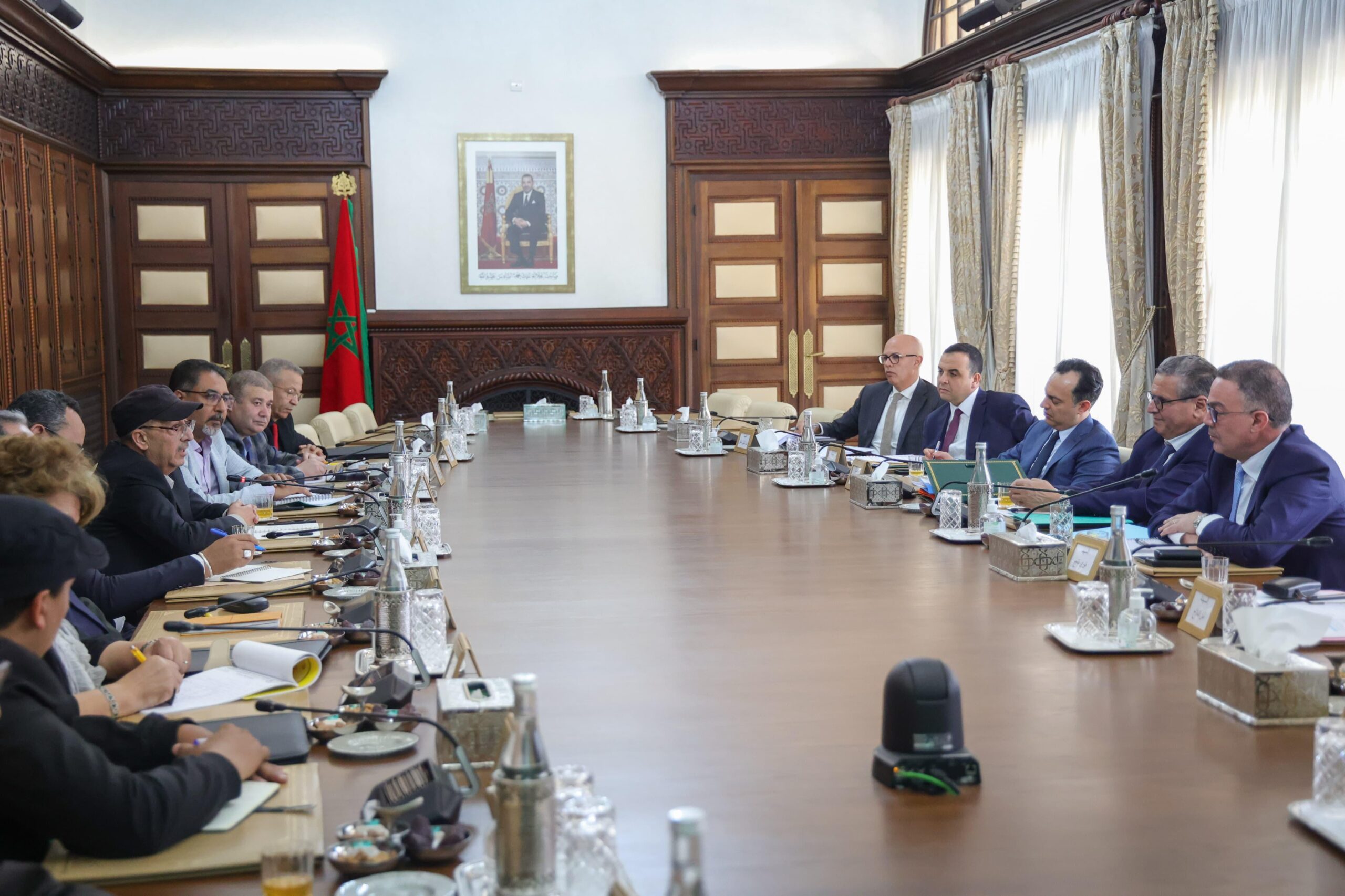
Rabat – The Moroccan government held a new round of social dialogue meetings in April 2026, which the Head of Government Aziz Akhannouch headed. They focused on wage increases, tax adjustments, and reforms to pensions and social protection in both the public and private sectors.
The meetings brought together major trade unions, the General Confederation of Moroccan Enterprises (CGEM), and the Confederation of Moroccan Agriculture and Rural Development. The meetings are part of ongoing efforts to strengthen institutionalized social dialogue in line with national commitments, according to a statement from the government.
During the session, the government reviewed key achievements and commitments made with social and economic partners. Officials said the dialogue has helped increase workers’ incomes, improve purchasing power, and expand social protection.
The government implemented a general salary increase of MAD 1,000 per month in two phases for civil servants across public administrations, local authorities, and public institutions. Additional measures included higher family allowances, improved promotion quotas, and an increase in the minimum wage. The annual cost of these measures exceeded MAD 14.8 billion.
Sector-specific agreements also led to salary improvements, especially in education (over MAD 18.47 billion), health (around MAD 4 billion), and higher education (MAD 2 billion annually).
The meetings brought together major trade unions, the General Confederation of Moroccan Enterprises (CGEM), and the Confederation of Moroccan Agriculture and Rural Development.
As a result, the average net salary in the public sector rose from MAD 8,237 in 2021 to MAD 10,600 in 2025, an increase of nearly 29%. The minimum monthly net wage also increased from MAD 3,258 to 4,500. The total annual cost of public sector measures, including income tax revisions, is expected to reach MAD 48.3 billion by the end of 2026 and MAD 49.7 billion in 2027.
Read also: Morocco Raises Minimum Wage by 20%, Biggest Increase Ever
In regard to the private sector, the minimum wage in non-agricultural activities (SMIG) increased by 20%, from MAD 2,828.71 before 2021 to MAD 3,422.72 as of January 2026. The agricultural minimum wage (SMAG) rose by 25%, reaching MAD 2,533.44 in April 2026.
In addition, workers with at least 1,320 days of contributions can now access retirement pensions, down from the previous requirement of 3,240 days. This measure applies retroactively to retirees from January 1, 2023. Workers who do not meet the minimum contribution threshold can now recover both their own and their employer’s contributions.
The meetings brought together major trade unions, the General Confederation of Moroccan Enterprises (CGEM), and the Confederation of Moroccan Agriculture and Rural Development.
The government also revised income tax, allocating over MAD 7.6 billion to increase net incomes by more than MAD 400 for various categories of workers. Discussions on further tax reform will continue.
The government pledged to continue implementing social agreements and address pending demands from different professional groups, including engineers, administrators, and technicians, before the end of its term.
It also plans to amend the labor law to reduce daily working hours for private security guards from 12 to 8 hours, with the change set to take effect in 2027.
In regard to pension reform, a national commission has begun developing a comprehensive reform plan, including a financial assessment of current systems. The government also committed to opening discussions on low pension levels.