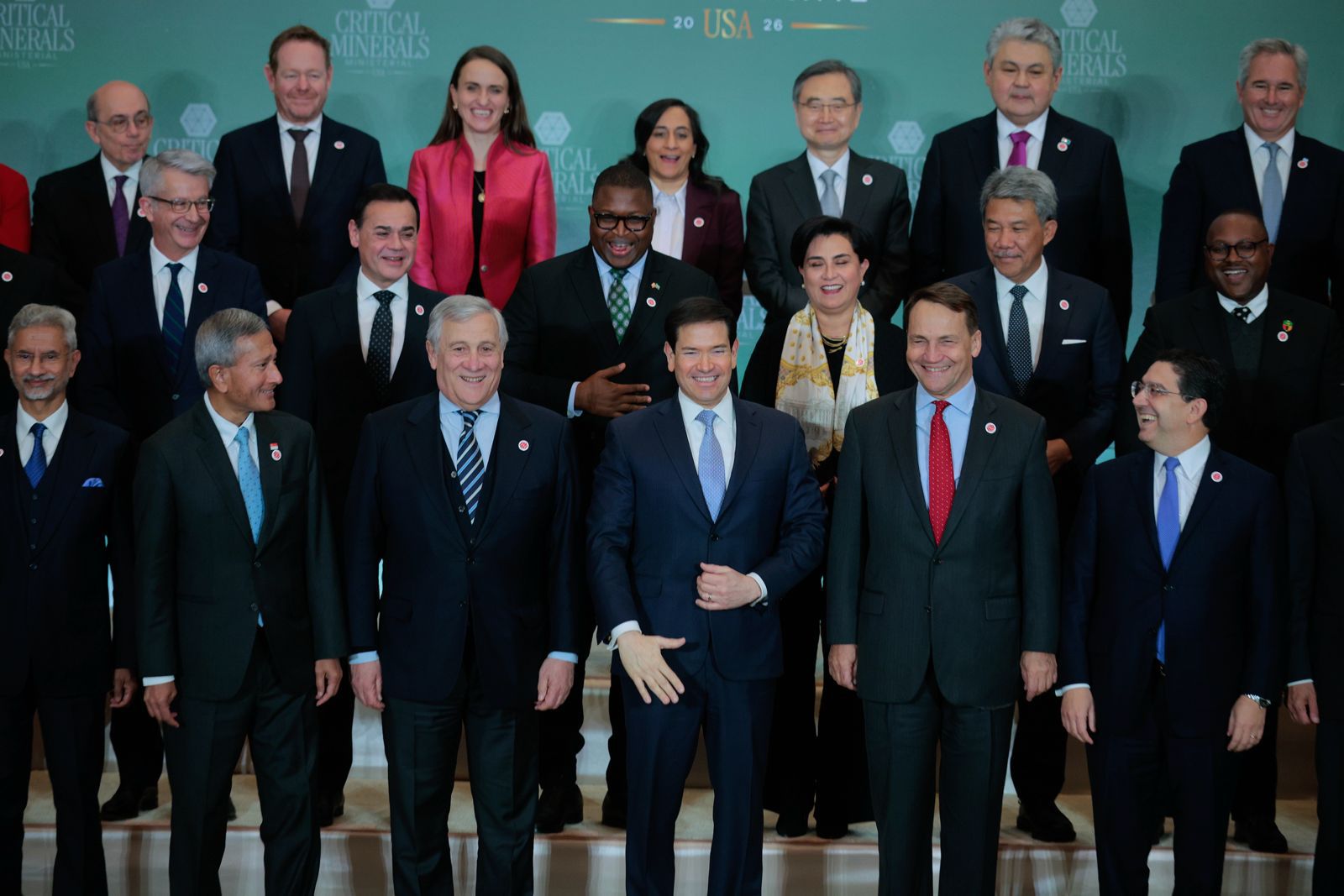
Marrakech – Morocco plays a “key role” in efforts to secure and diversify global critical mineral supply chains, US Secretary of State Marco Rubio declared Wednesday during a ministerial meeting in Washington.
Speaking at a press conference alongside the Critical Minerals Ministerial at the State Department, Rubio stressed Morocco’s strategic importance in the global minerals landscape.
“Morocco has a key role to play because of the deposits it has, but also because of the kingdom’s willingness to invest in transformation and its cooperation in agreeing to participate in this global initiative,” he stated.
The top US diplomat foregrounded the North African country’s economic potential in the sector. “This is important for Morocco, which can play a leading role because it has significant mineral reserves that it can leverage to develop its economy,” Rubio explained.
View this post on Instagram
Morocco’s Foreign Minister Nasser Bourita participated in the high-level gathering, which brought together foreign ministers and senior officials from more than 50 countries. The opening session featured US Vice President JD Vance.
Rubio noted Morocco’s mutual interest in supply chain diversification. He said the country, like other nations, “has an interest in having reliable and diversified supply worldwide of processed, finished and refined materials that can be used profitably to promote its economic development.”
“Morocco can therefore play a key role in this regard, and we are very happy that it is here today, at the table with us,” Rubio added, acknowledging Morocco’s presence at the ministerial.
Critical minerals include nonfuel materials essential for manufacturing batteries, electric vehicles, semiconductors, military hardware, and advanced technologies. These encompass nickel, cobalt, lithium, aluminum, zinc, and 17 rare earth elements, including lanthanides, scandium, and yttrium.
The US relies entirely on imports for 12 critical minerals and imports at least half its needs for 29 additional minerals. Rare earth metals possess special magnetic properties necessary for permanent magnets used in electric vehicle motors, renewable energy generators, and medical devices.
Morocco holds vast critical minerals like cobalt, copper, nickel, and especially phosphate (about 70-75 % of global reserves) used in EV batteries. The country’s resources and free-trade access to Western markets have attracted major Chinese battery and car firms to build production and processing hubs there, boosting Morocco as a strategic destination in the EV supply chain.
Washington targets China’s mineral dominance
The Washington meeting launched the “Forum on Geostrategic Engagement in the Minerals and Resources Sector” as part of broader US efforts to counter China’s dominance in critical minerals. Vice President Vance unveiled plans for a preferential trade bloc featuring coordinated price floors to prevent market manipulation.
“We want to eliminate that problem of people flooding into our markets with cheap critical minerals to undercut our domestic manufacturers,” Vance told the gathering of visiting ministers without mentioning China directly.
Discussions focused on investments in critical minerals and price floor mechanisms. The initiative addresses China’s control over 60% of rare earth minerals and processing of 90% of global supply.
The minerals are “heavily concentrated in the hands of one country,” Rubio said without referencing China directly, adding that the situation had become a “tool of leverage in geopolitics.”
China began restricting exports of rare earth metals last year, implementing controls on seven minerals in April before adding five more in October. These restrictions caused production delays and shutdowns for automakers in Europe and the US.
President Donald Trump announced Project Vault on Monday, a US strategic minerals stockpile backed by $10 billion from the Export-Import Bank and $2 billion in private funding. The broader coalition aims to establish reference prices and tariff adjustments.
“We will establish reference prices for critical minerals at each stage of production, and for members of the preferential zone, these reference prices will operate as a floor maintained through adjustable tariffs to uphold pricing integrity,” Vance explained.
Trade Representative Jamieson Greer announced bilateral plans with Mexico and trilateral agreements with the European Union and Japan to strengthen critical mineral supply chains.
China’s embassy in Washington said Beijing “has long played an important and constructive role in keeping the global industrial and supply chains of critical minerals safe and stable.”
Interior Secretary Doug Burgum revealed that 11 additional countries would join the critical minerals trade coalition this week, with 20 more expressing strong interest.
Participating countries included Saudi Arabia, UAE, Qatar, Jordan, Bahrain, Oman, France, Belgium, Germany, UK, Italy, Norway, Sweden, India, Japan, South Korea, Singapore, Argentina, Brazil, Mexico, and Australia.