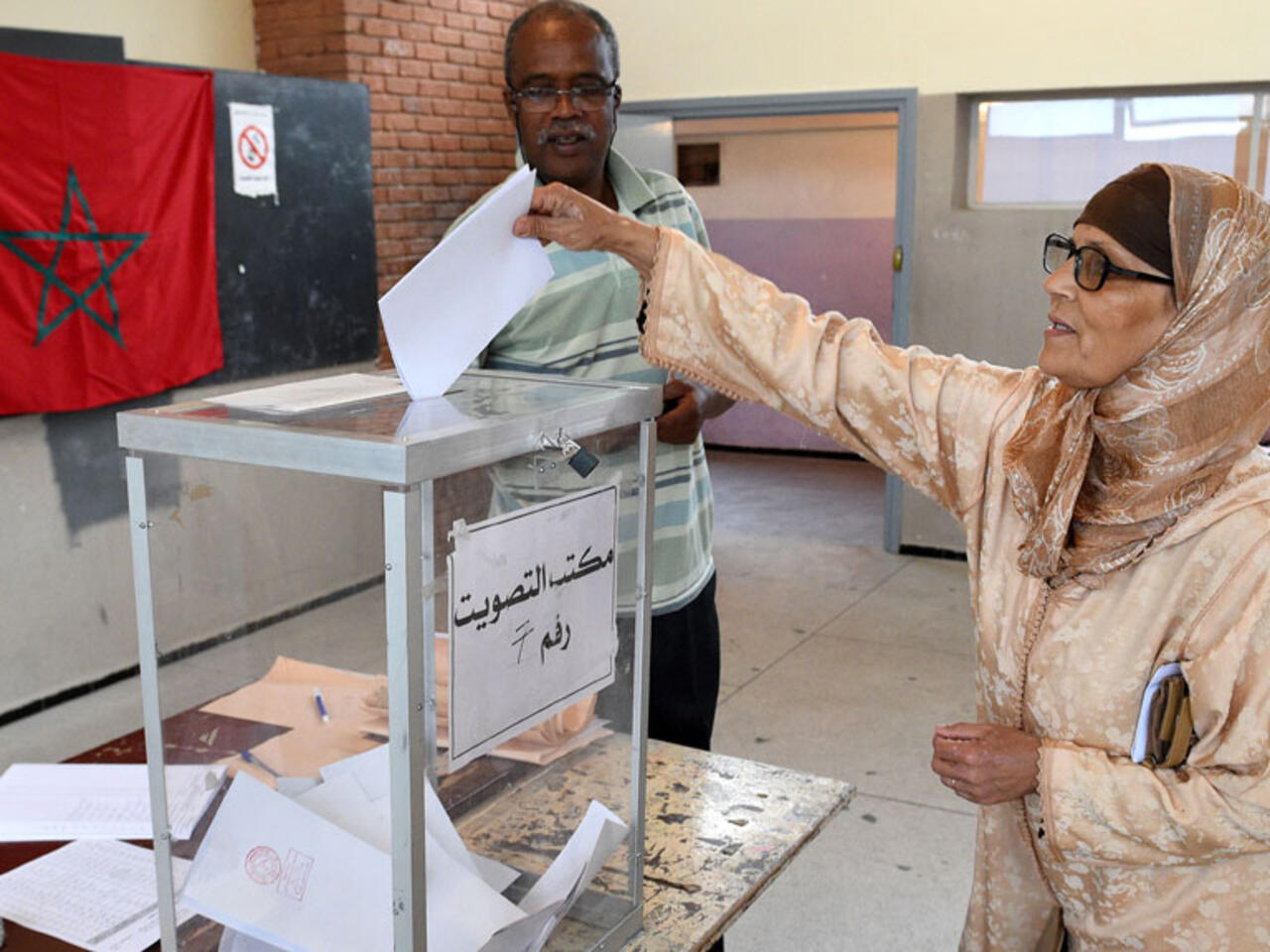
Marrakech – Morocco’s National Human Rights Council (CNDH) has formally launched the accreditation process for independent election observers ahead of the September 23 legislative elections.
The announcement came after the Special Commission for the Accreditation of Election Observers held its first meeting on Thursday, April 23, chaired by CNDH President Amina Bouayach.
The commission set April 27 as the start date for receiving accreditation applications, with the submission deadline set for May 22 at 4:00 p.m. Morocco time (GMT+1). Decisions on all applications will be issued by June 17.
The September 23 vote will elect 395 members of the House of Representatives, Morocco’s lower chamber of parliament. The government confirmed the election date in March, with the official campaign period set to run from September 10 to 22.
Preliminary data from the Interior Ministry puts the number of provisionally registered voters at approximately 16.5 million, with men making up 54% and women 46%.
The commission’s legal authority derives from Articles 11 and 161 of the Moroccan constitution, Law 30.11 governing independent and impartial election observation, and Law 76.15 on the reorganization of the CNDH. Under these provisions, three categories of entities are eligible to observe the elections.
Read also: How ‘The Weight of a Vote’ Has Gotten Lost Ahead of Morocco’s 2026 Elections
The first is national institutions legally mandated to carry out election observation. The second is civil society organizations with a documented track record in human rights, citizenship, and democratic values. These must be legally established and managed according to their bylaws. The third is international NGOs legally constituted under their national laws and recognized for independence and objectivity in the field of election observation.
Applications must be submitted through the commission’s website or the CNDH’s main portal. They can also be filed in person at the CNDH headquarters at 22 Riad Avenue in Rabat, in a sealed envelope addressed to the commission’s chair.
National observers must meet several conditions. They cannot be candidates in the election they seek to observe. They must be registered on the general electoral rolls. They must also sign a charter outlining the principles of independent and impartial observation, stamped by their organization.
International observers must demonstrate prior experience in election monitoring, sign the same charter, and submit applications through the CNDH via their legal representative.
The commission noted it gives particular attention to applications reflecting geographic and cultural diversity, gender balance, and representation of organizations working on the rights of persons with disabilities.
In the 2021 elections, the commission accredited more than 4,600 national observers from 44 NGOs and 100 international observers from 19 organizations.
The government has since approved comprehensive electoral reforms, including stricter penalties for fraud, financial incentives for candidates under 35, and expanded women’s representation in regional districts.