Overview:
Palau is already seeing warning signs of a potential drought, with weeks of little rain, water rationing now in place in northern states, and forecasts pointing to even drier months ahead. Officials are urging residents to conserve water as El Niño conditions loom.
Weather Service warns of very dry conditions through mid-2026 as El Niño threat grows
By: Eoghan Olkeriil Ngirudelsang
KOROR, Palau (April 21, 2026) — Early signs of a possible drought are emerging in Palau, with residents reporting weeks of little rainfall and officials warning of drier conditions ahead.
“It looks like we are going to have a drought,” an elderly woman from Babeldaob said, noting that it has been more than three weeks, possibly a month, with minimal rain.
The National Weather Service has issued alerts for “moderate drought” and “abnormal dryness” in the coming months, reinforcing those concerns.
Last Friday, water hours were imposed in Ngaraard and Ngermetong in Ngarchelong as the Palau Public Utilities Corporation (PPUC) began scheduled water rationing in the northernmost states. The utility cited a gradual drop and delayed recharging of the Metemellasch Dam, requiring controlled discharging to sustain water services during current dry conditions.
PPUC has deployed supplementary water trucks at the Ngaraard state office compound and near the Badrulchau entrance to assist affected residents.
The Palau National Weather Service also warned that El Niño conditions are likely to develop between May and July 2026 and persist through at least the end of the year. Its Early Action Rainfall watch indicates a “very high chance” of very dry conditions for the southwest islands and a “medium chance” for the rest of Palau during that period.
In a public advisory, the agency urged residents to prepare for a “very dry next three months,” warning of low water pressure, declining household water supplies, reduced stream levels and possible impacts on trees and root crops. Expanded water rationing is also possible.
Meanwhile, PPUC is conducting scheduled repair and maintenance at the Koror–Airai Treatment Plant in Ngeruluobel and continues to monitor water levels in Airai, Koror and outlying states. The utility is urging residents to conserve water, prepare catchments and store sufficient supplies.
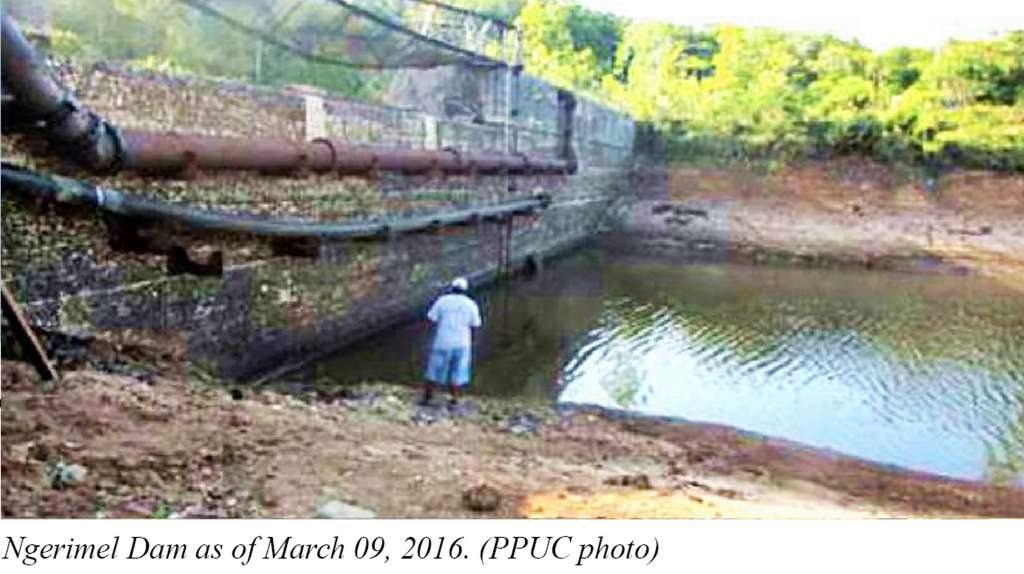
Palau typically experiences lower rainfall from February through April, but when dry conditions extend into May, drought risk increases. In 2016, a severe drought prompted a national emergency declaration and the closure of Jellyfish Lake.
Like this:
Like Loading…