Your support helps us to tell the story
From reproductive rights to climate change to Big Tech, The Independent is on the ground when the story is developing. Whether it’s investigating the financials of Elon Musk’s pro-Trump PAC or producing our latest documentary, ‘The A Word’, which shines a light on the American women fighting for reproductive rights, we know how important it is to parse out the facts from the messaging.
At such a critical moment in US history, we need reporters on the ground. Your donation allows us to keep sending journalists to speak to both sides of the story.
The Independent is trusted by Americans across the entire political spectrum. And unlike many other quality news outlets, we choose not to lock Americans out of our reporting and analysis with paywalls. We believe quality journalism should be available to everyone, paid for by those who can afford it.
Your support makes all the difference.Read more
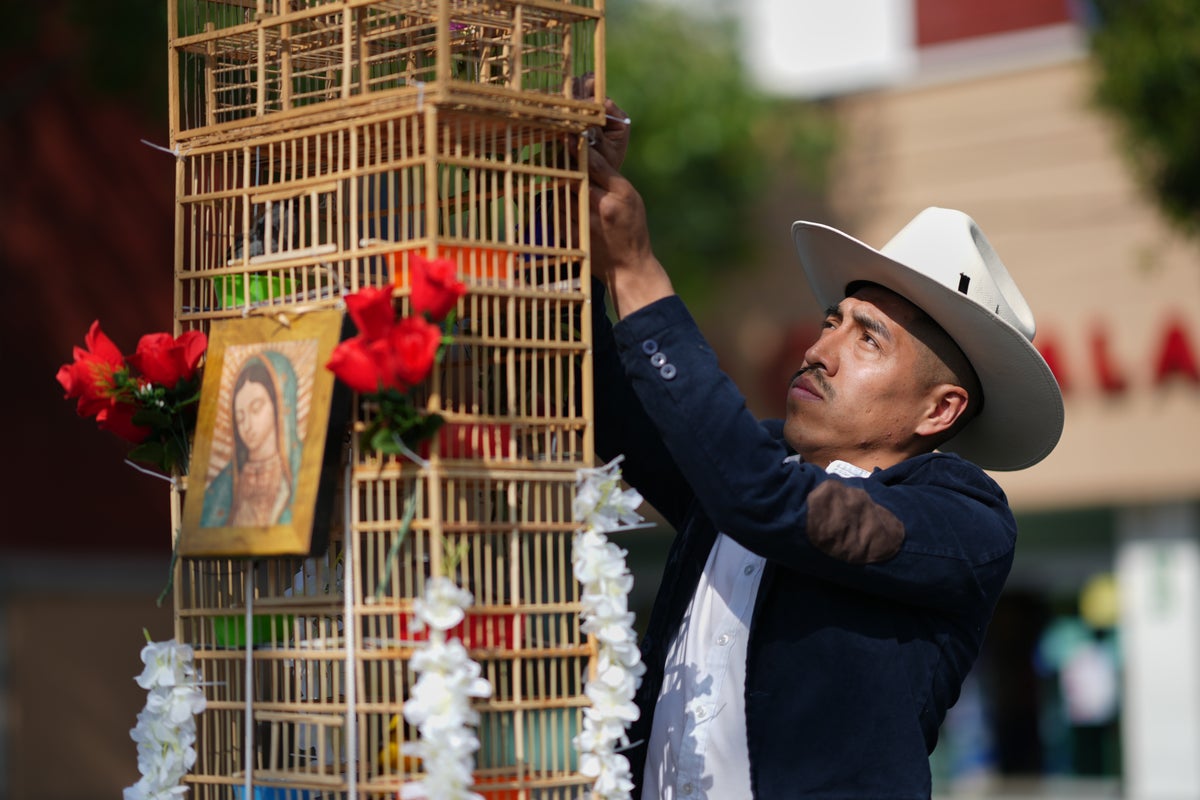
For 32 years, Cruz Monroy has walked the streets of a small town on the fringes of Mexico’s capital with a tower of small cages filled with a rainbow of birds.
The melodies of red cardinals, green and blue parakeets and multicolored finches fill the days of “pajareros,” or street bird vendors, like him.
The act of selling birds in stacks of cages – sometimes far taller than the men who carry them – goes back generations. They’ve long been a fixture in Mexican markets, and are among 1.5 million street vendors that work on the streets of Mexico.
“Hearing their songs, it brings people joy,” Monroy said, the sounds of dozens of birdsongs echoing over him from his home in his small town outside Mexico’s capital, where he cares for and raises the birds. “This is our tradition, my father was also a bird-seller.”
During the Catholic holiday of Palm Sunday, hundreds of pajareros from across the country flock to Mexico City and decorate 10-foot-tall stacks of cages, adorning them with flowers bright flowers, tinsel and images of the Virgin of Guadalupe, Mexico’s patron saint.
They walk miles through the streets of the capital with their birds and their families to the city’s iconic basilica.
But pajareros have slowly disappeared from the streets in recent years in the face of mounting restrictions by authorities and sharp criticisms by animal rights groups, who call the practice an act of animal abuse and trafficking.
Monroy and others say they don’t capture birds like parrots and others prohibited by Mexican authorities – which say tropical species are “wild birds, not pets” – often breed the birds they own themselves and take good care of their animals. Despite that, Monroy said in his family, the tradition is dying out.
In the face of harassment by authorities and mounting criticisms, he said he wants his own sons to find more stable work.
“Because of the restrictions, harassment by certain authorities, many friends have left selling birds behind,” Monroy said. “For my children, it’s not stable work anymore. We have to look for other alternatives.”