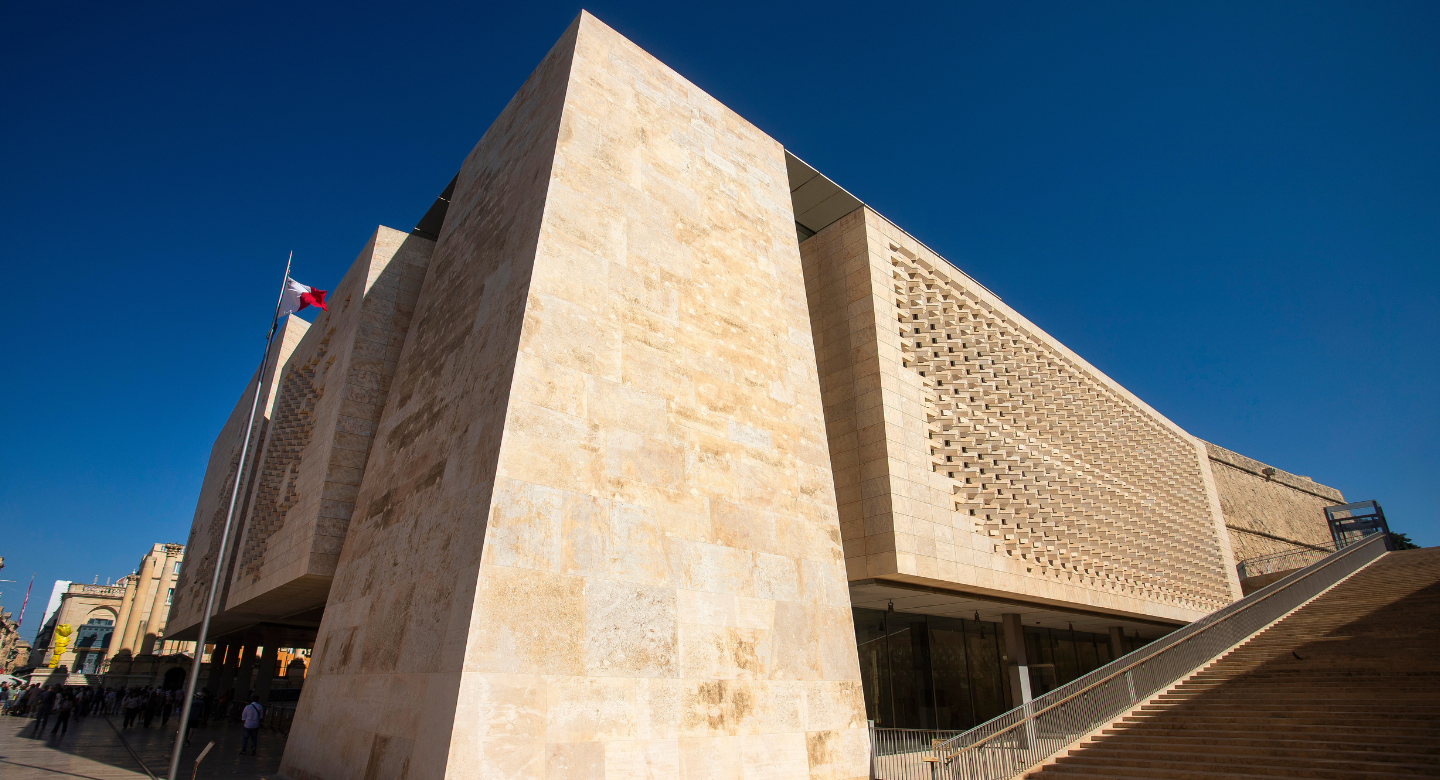
The recent debate between Labour MP Ramona Attard and PN MP Darren Carabott produced a constitutional puzzle worth pausing over.
Attard insisted that Parliament should have the final say in key institutional decisions – a statement delivered with the certainty of the guy with the beard descending from Mount Sinai with those prototype iPads.
It also echoed Parliament’s favourite reflex whenever its dignity feels bruised: the ritual cry of “the highest institution of the land,” repeated with numbing regularity.
Read my lips: It isn’t. It’s one of three, though I hesitate to place the Executive on equal footing with the Judiciary. And the media should also be given the nod as the Fourth Pillar.
But back to Attard’s point made on Il-Każin. Why would anyone think giving Parliament the last word is a good idea?
This isn’t meant disrespectfully. Well, not much. It’s meant historically.
Anyone observing Maltese legislative craftsmanship, especially since 2013, might conclude that entrusting Parliament with delicate constitutional matters is like appointing the village fireworks fanatic to run the Civil Protection Department.
The theory is that Parliament embodies democratic legitimacy. Members are elected. They debate. They legislate. And having persuaded us, the Great Unwashed, to vote for them, they attribute to themselves expertise in everything.
And anyway, somewhere in the recesses of their minds lies the comforting thought that if a law goes catastrophically wrong, they can always reconvene months later and pass another one to fix it.
Or not.
Take the Golden Passport saga (or Joseph Muscat’s Golden Goose phase, to be more precise). Malta’s citizenship‑by‑investment scheme was launched with evangelical zeal, marketed like a luxury frequent‑flyer programme, and defended as sovereign genius.
Then the European Court of Justice inconveniently pointed out that selling EU citizenship wasn’t exactly compatible with European law. Adjustments had to be made, quietly.
Then there’s planning law. Parliament creates regulatory frameworks; developers dismantle them with creativity. The solution? Regularisation schemes to re‑re‑regularise the irregular. The planning system becomes less a rulebook and more a polite suggestion.
The recent magisterial inquiry reform proposals achieved the rare feat of alarming half the legal profession and other right-thinking members of civil society before the ink was dry. The constitutional debate is now trundling through the judiciary.
Yet Attard remains serenely confident that Parliament should have the final constitutional word.
Carabott, to his credit, seems to recognise the underlying problem. The PN’s proposed mechanism, which would involve the President, a Minister, the acting Chief Justice, and an Opposition member, seeks to remove certain decisions from pure parliamentary mayhem. But with four members, a two‑two deadlock is a clear and present danger.
Malta has paralysed institutions over matters far less complex than the Constitution. Cynics might note that partisan paralysis can erupt over parking arrangements, for heaven’s sake.
Still, the instinct is sound: if the goal is to reduce tribal decision‑making, the mechanism must reflect that ambition. Some tweaking might get us there, though Prime Minister Robert Abela’s reflex to shoot down anything PN‑branded may complicate matters. Judge Mintoff’s sworn statement is instructive on that point.
Which brings us back to Ramona Attard. Her position assumes that Parliament behaves like a cautious constitutional guardian when left to its own devices.
Experience suggests something closer to a legislative improv troupe: enthusiasm first, consequences later, amendments afterwards, if at all.
Parliament should absolutely have a say. Just not the final one. Malta’s legislative history shows that leaving Parliament alone with the Constitution is like leaving a toddler unsupervised with a box of matches.
Disaster isn’t guaranteed, but you’d be unwise to bet against it.