Another summer, another national ritual: checking whether the lights will stay on.
A night without electricity during a heatwave is bad enough. Four consecutive days of power cuts is something else entirely. It is no longer an inconvenience. It is a failure of governance.
As I write this, the power has gone yet again. Fans fall silent. Air conditioners die. Fridges warm up. People open windows only to let in hotter air. Families sit in the dark hoping this outage will be shorter than the last. Businesses count their losses. Elderly residents worry about the heat. Parents try to settle children who cannot sleep.
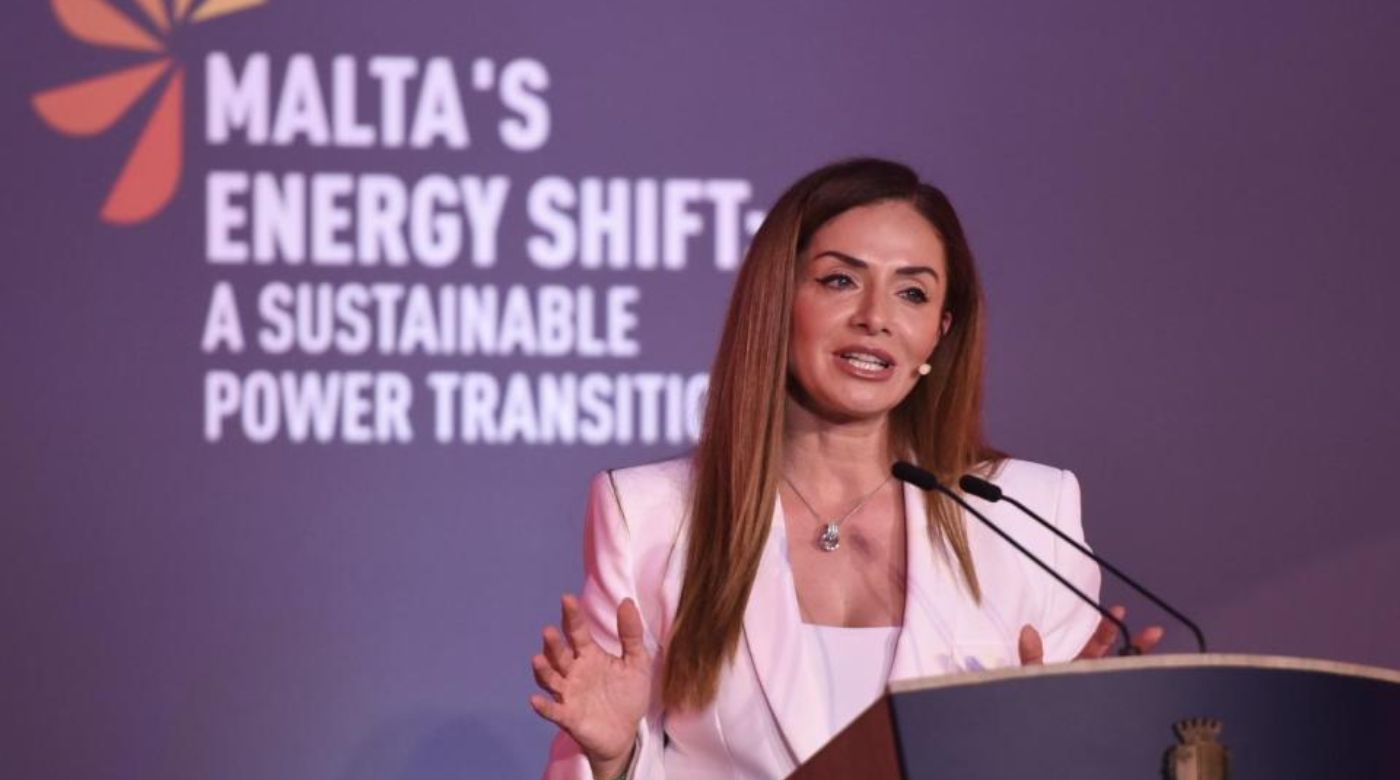
And the response from Energy Minister Miriam Dalli? Don’t worry, it’s not a shortage of electricity.
Technically, perhaps she is right. According to Dalli, Malta has enough generating capacity. The problem lies in the distribution network. The electricity exists; it just cannot reliably reach the people paying for it.
That is hardly reassuring.
Imagine telling airline passengers that the aircraft is fully fuelled, but the wings keep falling off. Or assuring motorists that there is plenty of petrol while admitting the roads have collapsed. Supply means little if the infrastructure delivering it repeatedly fails.
This explanation also raises an uncomfortable question. If generation is not the problem, then what exactly has the government been doing while Malta’s population has surged, construction has exploded, and electricity demand has climbed year after year?
Minister Dalli has spent much of her tenure cultivating an image as the minister of Malta’s green transition. She has announced renewable energy schemes, electric vehicle grants, offshore wind studies, solar incentives and hydrogen ambitions. Internationally, she speaks the language of climate leadership. Domestically, however, her most basic responsibility has been to ensure the country’s electricity system is resilient enough to withstand predictable summer demand.
In the summer of 2023, widespread power cuts left thousands without electricity for days. Government inquiries blamed unprecedented temperatures and cables that had literally overheated and melted. Dalli promised that lessons had been learned, emergency investments would be accelerated, and the network would be reinforced before the following summers.
Yet here we are again.
Across Malta, residents from Naxxar, Mosta, St Paul’s Bay, Mellieħa, Rabat, Mġarr, parts of Żebbuġ, Attard, Qormi, balzan and l-Iklin and many other localities have flooded social media with complaints. Some report losing power several times a day. Others describe outages lasting hours, only for electricity to return briefly before disappearing again. People speak of sleepless nights, spoiled food, interrupted work, malfunctioning lifts and vulnerable relatives left sweltering in homes that have become ovens.
If the explanation has shifted from melting cables to faults in the distribution network, it merely confirms that the underlying problem was never fully addressed. A resilient electricity grid is not built through press conferences after a crisis. It requires years of sustained investment, planning and anticipating future demand.
These are no longer isolated incidents. They are becoming the defining image of Maltese summers.
Meanwhile, government messaging continues to insist everything is under control. Every failure is presented as an isolated technical issue. Every outage is temporary. Every summer supposedly brings lessons that will solve the next one.
Yet the next one always arrives looking remarkably similar.
This is where Dalli’s political responsibility begins. Ministers are not judged solely on whether they can explain failures after they occur. They are judged on whether they prevented foreseeable failures in the first place.
The Opposition’s energy spokesperson, Mark Anthony Sammut, pointed to an Ombudsman’s investigation published two years ago, which concluded that chronic underinvestment in Malta’s high-voltage electricity network had significantly weakened the system’s resilience. According to that investigation, annual investment in the network between 2014 and 2023 was roughly one-third of the level invested during the previous decade. This, while the population continued to increase – another predictable outcome based on the government’s policies.
Governments love inaugurating shiny projects. They are less enthusiastic about spending political capital on replacing cables buried underground that nobody ever sees. Infrastructure maintenance is invisible until it fails spectacularly. And it has, again.
The irony is impossible to ignore. Labour has repeatedly celebrated Malta’s economic miracle, boasting about record growth, record investment and record surpluses. Yet a supposedly modern European economy cannot guarantee something as basic as keeping the lights on during summer.
The outcome was entirely predictable. If the network was not strengthened to cope with that demand, this is not bad luck. It is bad planning.
These failures are Minister Dalli’s responsibility. Leadership is not measured by optimistic press conferences or carefully worded explanations after systems collapse. It is measured by whether essential services actually function.
People are not asking for miracles. They are asking for electricity.
Not promises. Not explanations. Not another summer of sweating through government excuses while the lights flicker off once again.