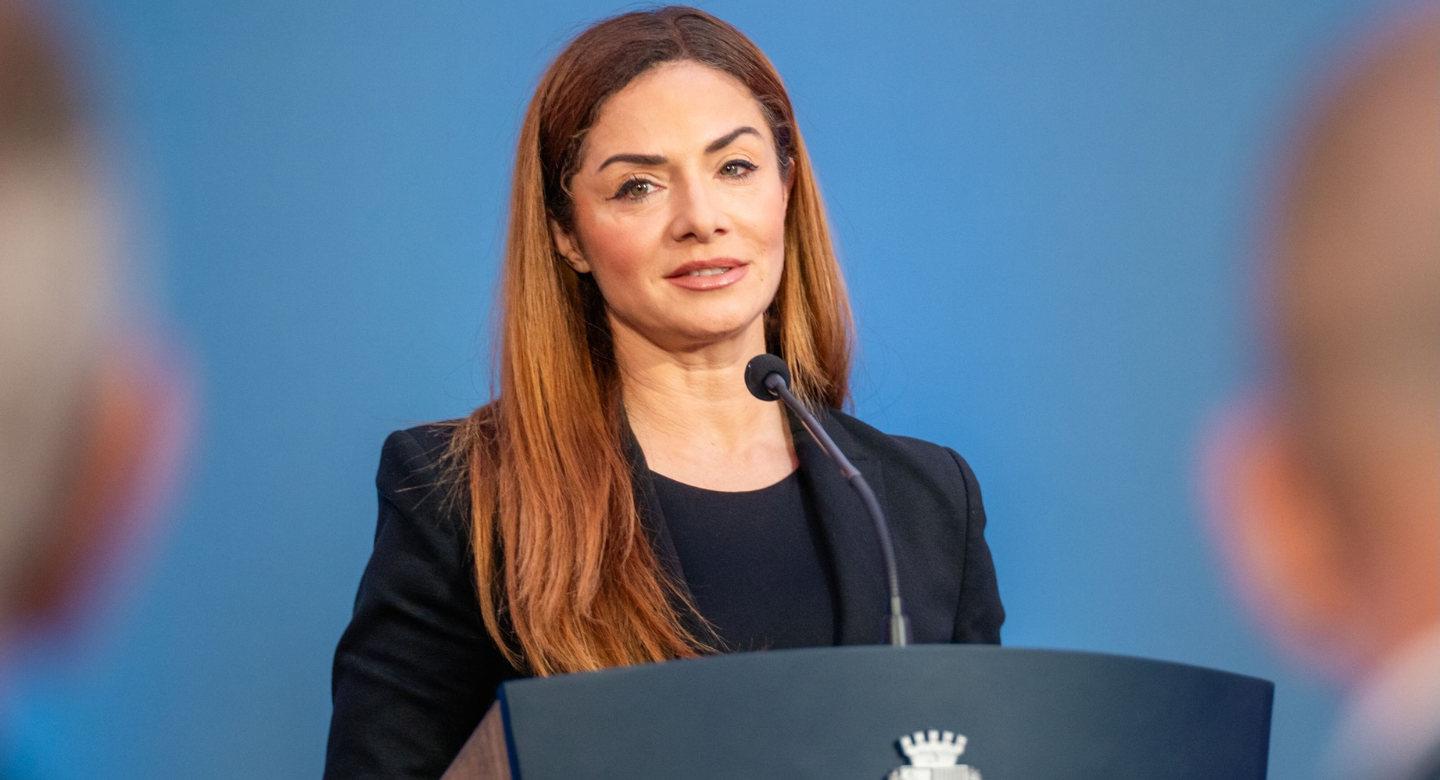
“We deliver on what we promise,” Energy and Environment Minister Miriam Dalli said on Sunday, one among a flood of candidates getting set for the looming general elections.
It is the kind of line that invites confidence. It is also the kind that demands to be tested.
The Environment and Energy Minister has presented the decision on Manoel Island as proof that the government can follow through, righting historical wrongs and restoring land to the public.
There is no denying the symbolic weight of that move. A site long earmarked for intensive development is now being repositioned as a public asset, acknowledging, in the minister’s own words, that “certain sites carry value beyond their development potential.”
But symbolism is not the same as consistency, which she says must prevail. If anything, the Manoel Island reversal highlights how inconsistent Malta’s land-use policy has been.
It has taken 26 years and sustained public pressure for this “mistake of the past” to be addressed, she said. That alone raises a more fundamental question: If the principle is now accepted, why does it appear to be applied so selectively?
The minister insists in her column published by The Times that “this initiative forms part of a broader effort to increase and improve open spaces across Malta and Gozo.” On paper, that broader effort is substantial. In practice, it sits uneasily alongside a parallel reality – one in which public land continues to be conceded, repurposed, or opened up for development.
From the long-standing concession of Manoel Island and Tigné Point itself, to White Rocks, to the transfer of the ITS site in Pembroke for large-scale construction, and to swathes of public land given to developers, the pattern has been consistent. Strategic land is routinely leveraged in the name of economic activity, often with permanent consequences.
Against that backdrop, the expansion of open spaces begins to look less like a coherent policy direction and more like a balancing exercise; an attempt to mitigate, rather than rethink, the underlying model.
This tension becomes even clearer when the minister points to “69 open spaces created in this legislature alone… turning developable land into public spaces.” The figure is meant to impress, and at first glance it does. Yet numbers without context can be misleading.
Many of these projects are small in scale: pocket parks, rehabilitated sites, or areas that were never realistically on the brink of major development.
Their value to local communities is real, but their cumulative impact is modest when set against the scale and intensity of ongoing construction across the islands.
More to the point, they do not offset it. Malta’s built environment continues to expand, often at a pace and density that directly contradict the very priorities the minister acknowledges. The government may be creating green spaces, but it is also enabling the conditions that make those spaces increasingly necessary and increasingly insufficient.
The credibility of this “green push” is not helped by the performance of Project Green, the agency entrusted with delivering it. Rather than embodying a serious, long-term environmental strategy, it has at times veered into the realm of optics.
Its latest misstep, a St Patrick’s Day party associated with the CEO’s son, where “green” served as little more than a theme, might seem trivial. In reality, it is telling. It reflects an approach in which environmentalism risks being reduced to branding, with the language of sustainability deployed more readily than the discipline required to achieve it.
The minister is on firmer ground when she notes that public feedback consistently calls for “retaining a natural character, limiting overdevelopment, prioritising trees and greenery.” There is no dispute here. Maltese society has been remarkably clear about what it wants its environment to look like.
The issue is not whether the government understands this sentiment. It is whether it acts on it.
Across Malta, the lived experience suggests otherwise. Development continues to push boundaries, literally and figuratively, testing planning limits, increasing density, and eroding what remains of urban greenery. Consultation processes gather input, but too often the outcomes appear preconditioned, with objections shaping the margins rather than the direction of projects.
Against this backdrop, the Manoel Island decision is best understood not as proof of a system that consistently delivers, but as an exception that proves the rule. Even here, the arrangement is not without caveats. As the minister notes, “The State does not pay for the land itself but contributes towards verified and justified expenses incurred.” Public funds are still being used to unwind a development trajectory that, for decades, was allowed to stand.
None of this diminishes the value of reclaiming Manoel Island for public use. It is a positive step. But it does challenge the narrative that is being built around it.
Because if Malta is truly entering a phase where environmental value outweighs development potential, that shift must be visible across the board – not in isolated, high-profile cases, but in everyday planning decisions, in land allocation policies, and in the willingness to say no as often as yes.
Until then, the claim that “we deliver on what we promise” remains aspirational at best.
At worst, it risks becoming just another line, well-crafted, frequently repeated, and increasingly difficult to reconcile with the reality on the ground.