Want to bookmark your favourite articles and stories to read or reference later? Start your Independent Membership today.
Join today
Already a member?
Log in
Your support helps us to tell the story
From reproductive rights to climate change to Big Tech, The Independent is on the ground when the story is developing. Whether it’s investigating the financials of Elon Musk’s pro-Trump PAC or producing our latest documentary, ‘The A Word’, which shines a light on the American women fighting for reproductive rights, we know how important it is to parse out the facts from the messaging.
At such a critical moment in US history, we need reporters on the ground. Your donation allows us to keep sending journalists to speak to both sides of the story.
The Independent is trusted by Americans across the entire political spectrum. And unlike many other quality news outlets, we choose not to lock Americans out of our reporting and analysis with paywalls. We believe quality journalism should be available to everyone, paid for by those who can afford it.
Your support makes all the difference.Read more
Burkina Faso has opened its first gold refinery as its military-led government seeks greater economic sovereignty after severing ties with traditional Western partners.
“From now on, gold from Burkina Faso must not only be extracted in Burkina Faso, it must be processed, controlled, valued and certified in Burkina Faso,” President Ibrahim Traore, who has ruled the West African country since a 2022 military coup, said on Monday at the opening of the refinery, known as Raffinor-BF.
Across West Africa, governments are taking steps to reclaim control over their natural resources by rewriting mining codes, banning exports of raw produce and boosting government ownership. Guinea and Ghana recently restricted gold exports. Mali said it was building a gold refinery together with Russia’s Yadran Group, and Ivory Coast announced it would open one next year.
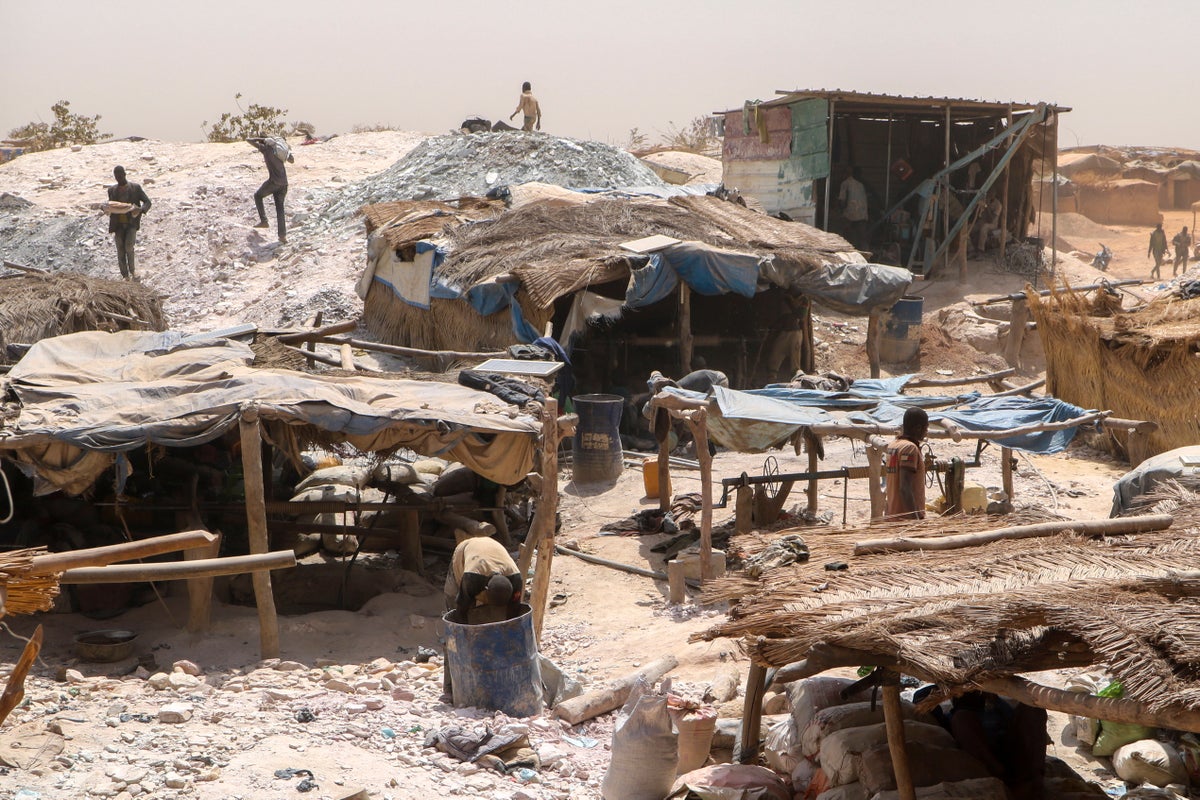
Burkina Faso is one of the region’s main gold exporters, but the sector has been disrupted by extremist violence, which has intensified since the military junta seized power.
Under Traoré, Burkina Faso has presented natural resources as a sovereignty issue. The refinery is part of the junta’s campaign to reduce its dependence on foreign states and companies, in particular the West, and to process natural resources at home, instead of exporting raw produce.
“Natural resources belong to the people,” Traore said. “They must contribute to improve their living conditions, with respect for the environment, social justice and in the interest of future generations.”
Built on five hectares in the capital Ouagadougou, the refinery has a capacity of 164 tonnes of gold per year, the presidency said, with a target capacity of 515 tonnes. Burkina Faso produced 94 tonnes of gold last year, according to the authorities.
Raffinor-BF cost more than 11 billion CFA francs ($19 million) and was financed by the government, including through the National Precious Metals Company, known as SONASP, and by the private sector.
The West African country of 23 million people has endured years of violence by extremist groups linked to al-Qaida and the Islamic State group. Government forces have also been accused of extrajudicial killings.
Since taking power in 2022, the junta has been accused of killings of civilians,cracking down on political dissent and journalists, shutting down independent media outlets and forcibly conscripting dissidents into the army to fight Islamic militants.