MUSLIMS across Malaysia will celebrate Hari Raya Aidilfitri on Saturday, March 21, following an official proclamation by the Keeper of the Rulers’ Seal.
Tan Sri Syed Danial Syed Ahmad announced the date in a nationwide broadcast carried by Radio Televisyen Malaysia, after receiving the consent of the Malay Rulers and in accordance with the command of the Yang di-Pertuan Agong.
“In fulfilment of the command of His Majesty the Yang di-Pertuan Agong, and with the consent of Their Royal Highnesses the Rulers, I hereby declare that the date of Hari Raya Aidilfitri for all states in Malaysia is Saturday, 21 March 2026,” he said.
The determination of 1 Syawal 1447H was made based on the position of the moon, which fulfilled the Imkanur Rukyah visibility criteria, as well as astronomical calculations marking the conjunction of the new moon.
The announcement formally concludes the fasting month of Ramadan, which began in Malaysia on February 19, and signals the start of nationwide Aidilfitri celebrations.
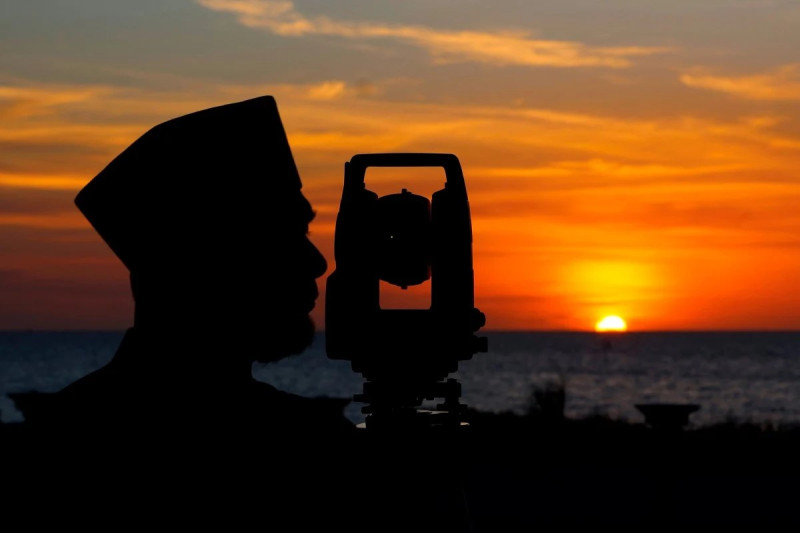
Earlier, the likelihood of sighting the Syawal crescent moon this evening was low, according to an astronomer, casting doubt on speculation that Aidilfitri could fall as early as tomorrow.
Dr Ahmad Irfan Ikmal Hashim, Director of the Centre for Islamic Development and Human Wellbeing at Universiti Malaysia Pahang Al-Sultan Abdullah, said current astronomical data does not meet the recognised criteria for confirming the start of Syawal.
A member of the Pahang Syariah Astronomy Committee and an expert panelist with the Department of Islamic Development Malaysia, he explained that the Imkanur Rukyah standard for crescent visibility has not been fulfilled for Syawal 1447H.
He attributed public speculation about an earlier Hari Raya to the use of outdated observational methods.
Some parties, he said, continue to rely on older criteria requiring the moon to be positioned more than two degrees above the horizon, a benchmark that is no longer applied in determining the start of the Islamic month.
“Some parties have raised the issue of the moon’s age at the time of observation this evening, which exceeds 10 hours — more than the previous criterion of eight hours.
“However, the eight-hour criterion (moon age) has already been abolished,” he said.
Dr Ahmad Irfan added that the age of the moon, which has also been raised in recent discussions, is no longer a determining factor in modern crescent sighting practices.
His remarks come as authorities across Malaysia carry out official moon sighting observations, with the outcome set to determine the date of 1 Syawal and the start of Aidilfitri celebrations nationwide. – March 19, 2026