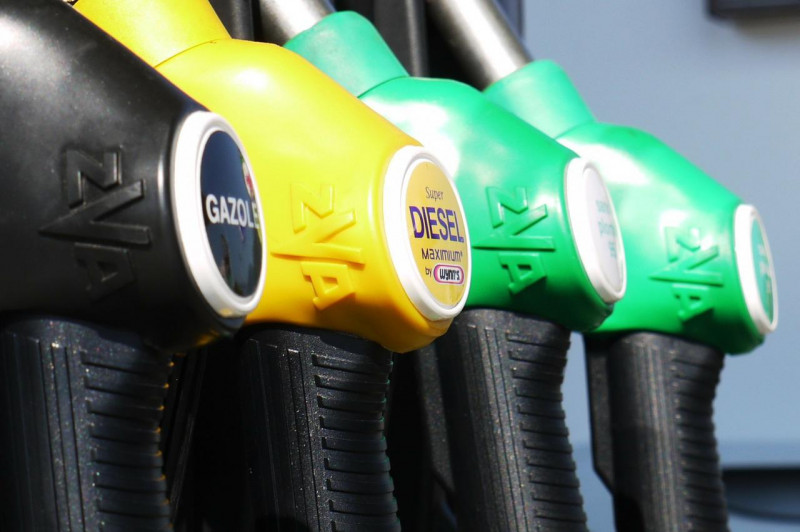
THE government is expected to spend approximately RM37.2 billion on fuel subsidies in 2026, although the implementation of the BUDI MADANI Diesel programme is projected to save around RM2 billion annually by improving subsidy targeting and reducing leakages.
In a research note, TA Securities said the anticipated savings remain significant in helping contain government expenditure and preserve fiscal space amid ongoing uncertainty surrounding global energy prices and supply conditions.
The stockbroking and financial services firm said the importance of fiscal reform becomes more apparent when viewed within the broader framework of subsidies and social assistance.
Under Budget 2026, the government has allocated RM49 billion for subsidies and aid programmes, covering not only fuel subsidies but also initiatives such as the Rahmah Cash Contribution (STR) and Rahmah Basic Contribution (SARA).
Assuming allocations for STR and SARA remain broadly unchanged at around RM15 billion, TA Securities estimated that combined spending on fuel subsidies, STR and SARA alone could reach approximately RM52.2 billion in 2026, after factoring in the RM2 billion savings expected from the BUDI MADANI Diesel programme.
Including other subsidy schemes such as cooking oil, sugar, flour and selected public utility support measures, total government spending on subsidies and social assistance could climb to as much as RM60 billion.
“Although this would remain below the RM71.9 billion recorded in 2024, it would still exceed the original Budget 2026 allocation and pose challenges to maintaining fiscal consolidation amid elevated energy prices and ongoing geopolitical uncertainty,” the research note said.
If realised, the estimated RM11 billion increase in subsidy and social assistance spending would raise total operating expenditure to about RM349.2 billion in 2026, compared with the original Budget 2026 estimate of RM338.2 billion and RM332.2 billion projected for 2025.
This would translate into annual operating expenditure growth of approximately 5.1 per cent, significantly higher than the 1.8 per cent increase envisaged under Budget 2026.
On the question of how the government could finance a potentially larger subsidy bill, TA Securities said higher petroleum-related revenue could help ease the fiscal burden.
The firm’s base-case assumption places Brent crude oil at US$80 per barrel, compared with the US$65 per barrel assumption used in Budget 2026.
Based on a general rule of thumb, every US$10 increase in Brent crude prices typically generates about RM3 billion in additional government revenue.
“Under our assumptions, the US$15 premium over the budget assumption could translate into approximately RM4.5 billion in additional petroleum-related revenue, partially offsetting higher subsidy expenditure,” it said.
Budget 2026 projects petroleum-related revenue of RM43 billion, comprising RM20 billion in PETRONAS dividends, RM15.7 billion in Petroleum Income Tax (PITA) collections and RM5.1 billion in petroleum royalties.
Should oil prices remain elevated for longer than expected, stronger upstream earnings could support higher PITA collections, larger royalty payments and potentially additional dividends from PETRONAS, the brokerage added.
TA Securities noted that historical experience demonstrates PETRONAS’ ability to make larger dividend payments during periods of high oil prices.
During the post-pandemic commodity boom and following the outbreak of the Russia-Ukraine conflict, Brent crude averaged close to US$100 per barrel in 2022. PETRONAS subsequently declared total dividend payments of RM50 billion to the government, including a special dividend.
This compares with the more typical annual dividend range of RM20 billion to RM30 billion in recent years.
“While this is not our base-case assumption, the episode illustrates the government’s capacity to offset part of the higher subsidy costs through stronger petroleum-related revenue during periods of elevated energy prices,” TA Securities said.
Beyond petroleum revenue, the research house said the government also has greater scope to improve tax collection efficiency than in previous oil price cycles.
The continued rollout of the e-Invoice system, alongside enhanced tax compliance measures and ongoing efforts to broaden the tax base through the expansion of the Sales and Service Tax (SST), is expected to provide additional support to government revenue collection over the medium term. – June 23, 2026