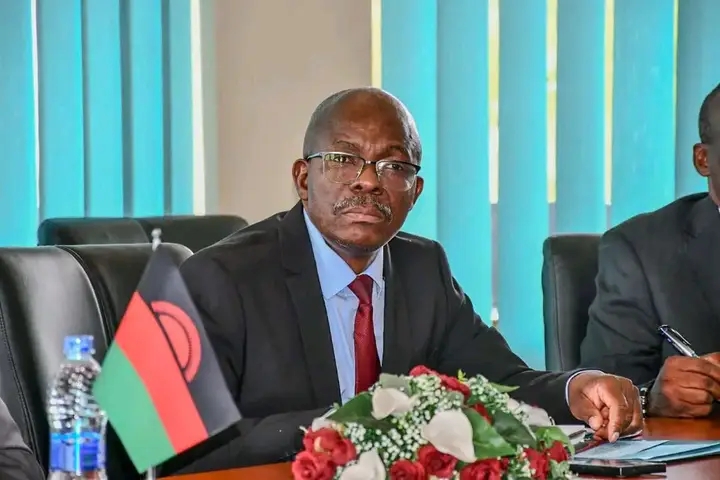
Inter-University Network for Peace, Unity and Development (INPUD) chairperson Master Dicks Mfune has faulted government for dissolving the Malawi Peace and Unity Commission (Mpuc) alongside statutory boards describing the move as a breach of the Act that established the body.
But Principal Secretary for Local Government, Unity and Culture Dr Elizabeth Gomani-Chindebvu dismissed Mfune’s views, saying as a statutory institution, the directive to dissolve boards applies to Mpuc as well.
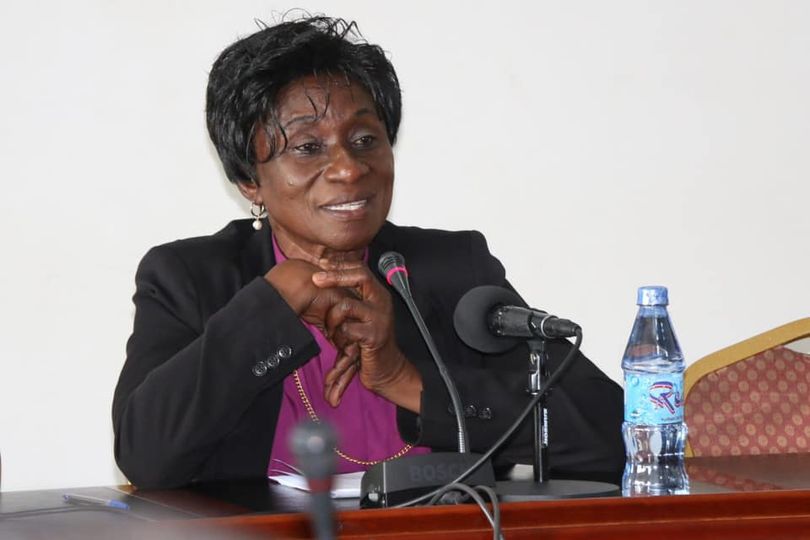
Chaired the commission: Bishop Nkosi. | Nation
Mfune stressed that what government did was an error.
“The commission is not a board. The Act is clear on its establishment, tenure of office and removal from office,” he said in an interview this week.
“Unlike other boards of statutory corporations, commissions, like the Malawi Human Rights Commission and Malawi Electoral Commission, created through an Act of Parliament, have fixed terms that cannot be terminated arbitrarily.”
Mfune said the commission’s dissolution is a grave mistake, arguing that the body cannot legally be dissolved like an ordinary statutory board because its constitutional role is categorically different from parastatals, and further warned that dismantling the commission’s governance could fracture the very architecture tasked with mediating national disputes.
Under the Peace and Unity Act, the President appoints members on recommendation from the minister, and, except for ex-officio members, each commissioner serves a four-year term, renewable once.
The policy states that the commission shall be an independent body whose mandate is to promote sustainable peace and unity in the country.
While both the policy and the Act do not explicitly touch on dissolution of the commission, in terms of removal of the commissioners, Section 7 (4) of the Act states that a commissioner may be removed from office by the President on the recommendation of PAC on grounds of incapacity or incompetence in the performance of the duties of the office of member.
Further, Section 7(5) stipulates that “a member shall not be removed from office in accordance with subsection (4) except after due inquiry”.
According to Mfune, these legal safeguards mean that the commission could not have been dissolved and urged the responsible offices to correct the error.
Malawi University of Business and Applied Sciences (Mubas) governance and development scholar Andrew Kaponya also joined those raising concern over the commission’s dissolution, and said the problem reflected deeper structural weaknesses in the country’s governance framework.
Kaponya said the challenge was that the country often responds to issues in bits and pieces instead of addressing the broader systemic challenges which include extensive powers granted to the President in appointing commissioners.
He said while the law states that Mpuc commissioners should serve a four-year tenure, the current cohort has not reached that period, yet the commission has been dissolved, a development that highlights how presidential powers can override established terms of office.
“We should start critiquing and proposing a review of the powers that we gave the President to actually appoint commissioners because experience has shown that when political leadership changes, new administrations often prefer to appoint individuals who align with their interests or political affiliations,” observed Kaponya.
He also noted that the law was silent on what should happen when a President dissolves a commission before expiry of their tenure, stressing the development creates room for arbitrary decisions that undermine institutional stability.
The controversy comes a few months after government was also faulted for disregarding the laid-down procedures for appointing the commission’s director general, which are stipulated in Section 11 of the Peace and Unity Act of 2022.
To illustrate its uncertainty, the Ministry of Local Government, Unity and Culture wrote to the Controller of Statutory Corporations requesting clarification on how the October 7 2025 dissolution of boards applied to Mpuc.
In its letter, dated October 8 2025, the ministry pointed out that unlike typical parastatal bodies or State-owned enterprises, the commission’s work was non-commercial and directly tied to peace-building and unity.
“Specifically, guidance and clarification is sought on whether the commission falls within the scope of the entities affected by the dissolution order,” reads the letter signed by the then Secretary for Local Government, Unity and Culture Richard Hara.
Responding to Hara’s inquiry, Deputy Comptroller of Statutory Corporations Christopher Mzenga said on October 30 2025, government’s directive applied uniformly to all statutory institutions.
“The intention of the directive is to facilitate the reform, strengthening, and renewal of governance structures across the parastatal sector, consistent with government’s policy objectives of enhancing transparency, accountability, and institutional performance,” wrote Mzenga.
In a WhatsApp response yesterday Gomani-Chindebvu said Mpuc is not a constitutional body.
“MEC, MHRC and others are specifically mentioned in the Constitution of Malawi that Malawi should establish those institutions. However, the establishment of Mpuc is in line with the Constitution of the Republic of Malawi especially Section 13(L).”
She argued that this does not make Mpuc a constitutional body but aligns the entity with the Constitution just like any other institution is supposed to.
But Gomani-Chindebvu did not address the legal safeguards in terms of removal of the commissioners, and specifically Section 7 (4) of the Act which states that commissioner may be removed from office by the President on the recommendation of PAC on grounds of incapacity or incompetence in the performance of the duties of the office of member.
Government dissolved the commission on October 7 2025, barely two years after former president Lazarus Chakwera appointed the first cohort of 11 peace and unity commissioners and confirmed by the Public Appointments Committee of Parliament.
Mpuc chairperson at the time of dissolution was Nkosi and in an interview, she said the commissioners were waiting to hear from relevant authorities on the way forward.
Said Nkosi: “The matter is being looked into, I think by the Chief Secretary [Justin Saidi] and obviously they have before them the Act of 2022 so we will wait to hear from them.”
The commissioners included Reverend Zacc Kawalala and Sheikh Dr. Ali Makalani, who represented the faith community; Bishop Mary Nkosi and Paramount Chief Kyungu representing traditional leaders; Dr. Francis Mkandawire from the business community; Simon Munde representing people with disabilities; a youth representative Mwandida Theu and veteran human rights advocate Emma Kaliya from the civil society.
Ex-officio members were solicitor general, Secretary for Local Government, Unity, and Culture and Secretary for Homeland Security.
The Malawi Law Society did not respond to our questionnaire. The group’s honorary secretary Francis M’mame acknowledged receipt of our inquiry and promised to revert but had not done so by press time.