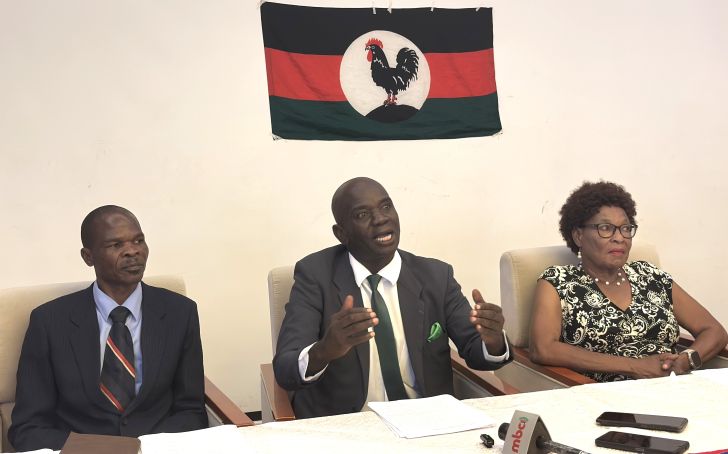
Health rights activist Maziko Matemba has commended Minister of Health and Sanitation Madalitso Chidumu-Baloyi for going undercover at Bwaila Hospital, saying the surprise visit has laid bare the scale of corruption and abuse patients face in Malawi’s public health facilities.
But Matemba warned that tackling the problem will require more than dramatic inspections if patients themselves remain too afraid to testify against corrupt health workers.
“Knowing that we have an order because of cries from patients, the minister is doing well to check enforcement,” he said. “It is upon her to ensure that things change, and such visits may also help uncover new issues.”
He added that one of the biggest obstacles in fighting corruption in hospitals is the reluctance of patients to support prosecutions.
“It is concerning if patients fail or fear to act as witnesses in cases already in court. The only way to end these vices is for people to testify. Chickening out weakens all efforts to deal with these cases,” said Matemba.
His remarks follow a dramatic undercover operation by Chidumu-Baloyi on Saturday, when the minister disguised herself as an ordinary patient and quietly joined the queue at Bwaila Hospital to see how the facility treats the public.
Dressed in a headscarf, floral blouse and a wrapper (chitenje), and posing as Mercy Banda from Area 36 in Lilongwe, the minister blended in with other patients waiting for treatment. She was accompanied by Ministry of Health director of creative and rehabilitation services Dr Frank Sinyiza.
For three hours—from around 9am to midday—she endured long queues and quietly observed operations inside one of the country’s busiest public hospitals.
What she witnessed, she later said, exposed troubling malpractice.
According to the minister, some health workers were openly soliciting money from desperate patients in exchange for faster service.
“I noted some clinicians receiving money from patients so that they are assisted faster,” she said.
To confirm the practice, the minister said one of the people accompanying her was asked to pay K10 000 and was subsequently attended to within just 20 minutes.
“The cartel begins with security guards and clinicians,” she said. “One clinician even said the hospital was not testing malaria, yet the person who paid money was tested.”
The minister also witnessed what she described as humiliating treatment of patients, including staff shouting at people in the queues and openly prioritising relatives or paying patients.
She recounted one incident where a clinician interrupted the queue to assist someone connected to a hospital employee.
“That clinician openly told patients, ‘mudikire kaye ndithandize uyu’ because he is related to a staff member. That is lack of professionalism and discrimination,” she said.
Another disturbing practice she observed was the lack of privacy during consultations.
According to the minister, several patients were sometimes sent into a doctor’s room simultaneously, forcing them to discuss sensitive health issues in front of strangers.
“Imagine seven of us entering the doctor’s room at once. How can someone explain their medical problem properly in such circumstances?” she asked.
Lilongwe District Director of Health and Sanitation Services Wilson Ching’ani confirmed the minister’s visit and admitted that corruption remains a problem despite repeated warnings.
“The minister was indeed at the facility from 9am to around 1pm and witnessed certain things,” he said.
Ching’ani said authorities have already involved several institutions, including the Anti-Corruption Bureau, police and the Ombudsman, to tackle the malpractice.
He added that some hospital staff are already answering similar cases in court.
However, he acknowledged that prosecutions often stall because victims are unwilling to testify.
“Some cases are stuck in court because people fail to support police as witnesses, which is a setback,” he said.
The undercover operation follows an executive order issued by President Peter Mutharika directing health workers to stop soliciting money from patients and banning public hospital staff from owning or operating private clinics or pharmacies.
The directive was introduced after investigations by local media exposed widespread bribery in public hospitals.
However, the second part of the order—restricting health workers from running private clinics—has sparked resistance from some medical personnel who argue that it infringes on their right to conduct economic activities.
Meanwhile, Chidumu-Baloyi says the government will continue investing in health centres to reduce congestion at major referral hospitals.
She added that the surprise inspections are part of efforts to enforce reforms and restore dignity to the country’s healthcare system.
The minister said the government remains committed to improving healthcare delivery under the Health Sector Strategic Plan III and the push for Universal Health Coverage.
But as the Bwaila sting operation has revealed, translating policy into reality may require confronting entrenched corruption within the system.
Follow and Subscribe Nyasa TV :