Fossil fuels have enriched a wealthy few, undermined economic development and left African economies exposed to external shocks, a new report published May 8 in Nairobi, Kenya, argues.
Examining 13 oil- and gas-producing African nations, the report concludes that decades of extraction have yielded little benefit for ordinary Africans.
“Oil and gas have not and will not deliver development for Africa,” Thuli Makama, Africa director at Oil Change International, said in a press release. “This model concentrates wealth in the hands of multinational corporations and political elites, while communities are harmed by pollution … lost livelihoods, and rising living costs.”
The study, “Pipe Dreams: How Oil and Gas Fail to Deliver Economic Development in Africa,” is a joint publication of Oil Change International and Power Shift Africa. It comes ahead of next week’s Africa-France Summit, expected to bring together more than 30 African heads of state as well as CEOs and other business leaders from Africa and France.
The report argues that oil and gas create few local jobs, undermine farming and fishing with toxic spills and expose economies to boom-and-bust cycles tied to global price swings like the ongoing war in Iran. It warns that new producers such as Uganda, Mozambique, Namibia, Tanzania, the Democratic Republic of the Congo and Côte d’Ivoire may face stranded assets and mounting debt if they invest heavily in new fossil fuel development and global demand then declines.
“Once again, Africa is being sold a fossil fuel fairytale that promises prosperity but delivers dependence,” said Mohamed Adow of Power Shift Africa. He argued that Africa’s promise lies elsewhere. “The real opportunity is clear: homegrown renewable energy that creates jobs, expands access and keeps value in African economies.”
The report points to renewables as a path to economic resilience and “energy democracy”—allowing countries to generate power domestically, support local industries and jobs and reduce import reliance. The report notes that a renewable-led transition could create up to 14 million jobs in Africa by 2030, far more than fossil fuel extraction.
Still, the debate is not settled. At recent global fossil fuel phaseout talks in Colombia, oil-rich African nations argued they would continue drilling to support economic growth.
Onuoha Magnus Chidi, an adviser to Nigeria’s regional development minister, told AFP that transitioning away from fossil fuels would take time in Nigeria. Nigeria is not phasing out fossil fuels, he said. “We are phasing down, and we are saying that there should be early planning. … It must be fair to all,” Chidi said.
The report argues that the current model of exporting crude oil and then importing the more expensive value-added gasoline and diesel leaves millions of Africans without access to affordable energy. In countries including Nigeria, Equatorial Guinea and Mozambique, for example, gas is extracted and exported to serve external markets, while domestic energy needs go unmet, the report notes.
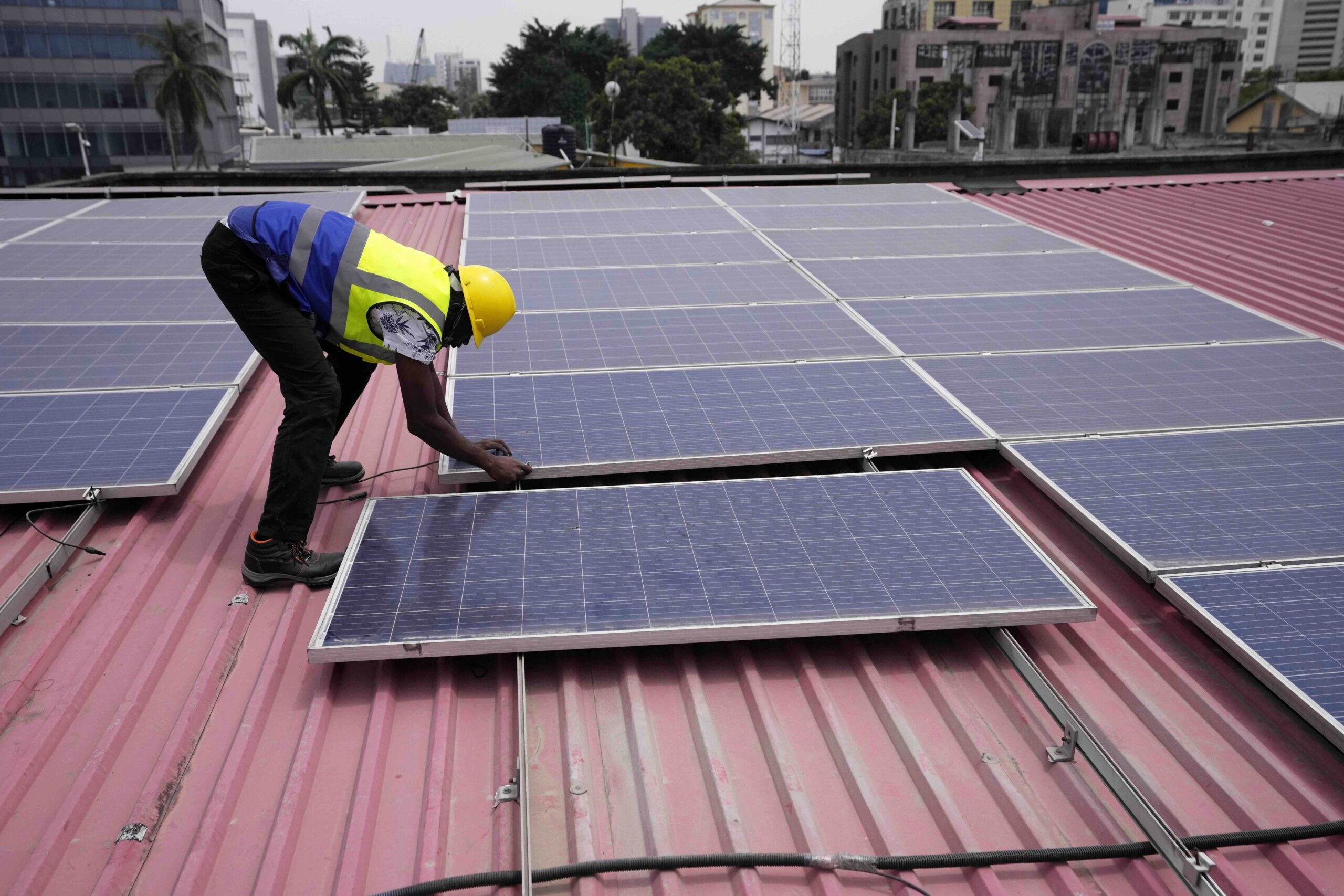
Banner image: Solar panels being installed on a roof of a house in Lagos, Nigeria. Image by Sunday Alamba/AP Photo.