- A global project that tracks wildlife via satellites has resumed operations after a hiatus of three years.
- Project ICARUS, which aims to create the “internet of animals,” capitalizes on advances in wireless tracking technology to monitor individual animals.
- The trackers record data that will help scientists track the movements, migrations and behaviors of animals in different parts of the world.
- The system also enables scientists and conservationists to understand how animals are interacting with one another and with their respective ecosystems.
See All Key Ideas
A global system dubbed the “internet of animals,” which tracks wildlife via satellite, is one step closer to becoming a reality.
Project ICARUS, an initiative that taps into advances in wireless sensor technology, has resumed operations after a three-year hiatus. In late November, a satellite carrying an ICARUS receiver was launched into space. Short for International Cooperation for Animal Research Using Space, ICARUS aims to create a global network that tracks individual animals fitted with sensors.
“It’s a global collaboration of scientists trying to understand animal movements and the information from animals,” Martin Wikelski, director at the Germany-based Max Planck Institute of Animal Behavior, who envisioned and leads the project, told Mongabay in a video interview in 2024.
The project hinges on tiny, lightweight trackers that scientists around the world have deployed on a wide range of species, from large mammals and sea turtles, to diminutive bats and migratory birds. The trackers measure crucial data including GPS-based location, acceleration, temperature, humidity, pressure and altitude, enabling scientists to track the movements, migrations and behaviors of these animals.
Migrating bats Image ©Peter J. Hudson.
Tracking tags have been around for years. However, what makes ICARUS stand out is the ability to bring together the tracking of myriad species from around the world under one project. This allows scientists to also observe how animals are interacting with one another and with their environments, giving them access to nuanced and incredibly specific data for wildlife conservation and biodiversity protection purposes.
“This is really grasping at the interaction of animals globally,” Wikelski said. “It’s almost like understanding dark matter and things that couldn’t be seen and studied before.”
ICARUS initially went live aboard a Russian launch vehicle in 2020. However, shortly after, it faced disruptions because of technical issues. Once the glitches were resolved, it went operational in 2022. But yet again, the data transmission stopped because of the war in Ukraine.
Now that the receiver is back in space, it will undergo extensive testing for three months before going back to receiving data from transmitters on Earth.
The applications for the technology are abundant.
Wildebeest during the migration in Serengeti National Park, Tanzania. Image courtesy of shankar s. via Wikimedia Commons (CC BY 2.0)
For example, if sensors detect that a few ducks in one location are recording higher body temperatures than usual, scientists can visit the site and collect samples to see if there’s a virus circulating among them. Similarly, if scientists notice an unusual number of pelicans dying in one location, they can look into it and probably come to the conclusion that it’s avian influenza.
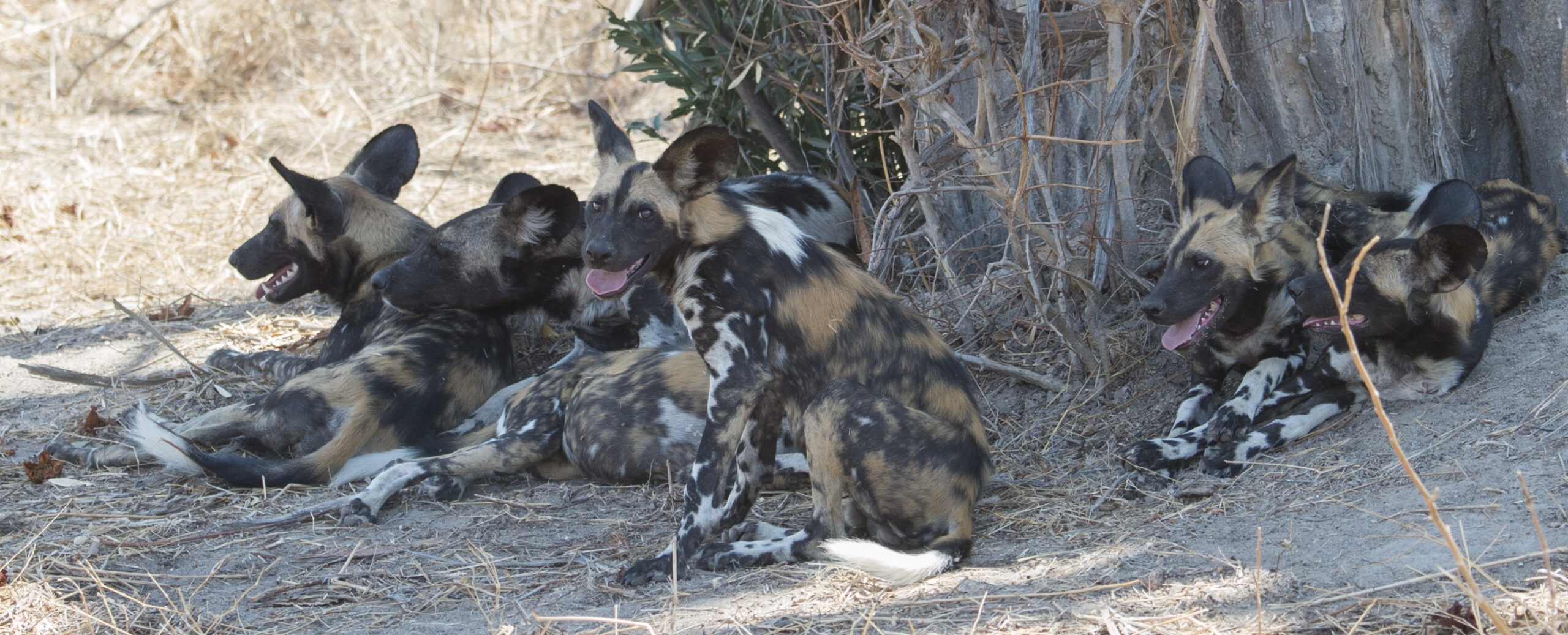
Another example, Wikelski said, is that of African wild dogs (Lycaon pictus) in South Africa’s Kruger National Park. The endangered canids keep running into poaching snares set for zebras. The trackers have, however, helped alert rangers when a pack of wild dogs runs into snares.
“With this system, we saved more than 10-15% of the population over the past few years,” Wikelski said.
Image of the ICARUS receiver payload that is integrated within the GENA-OT satellite. The ICARUS receiver measures 10 x 10 x 10 cm and weighs approximately 1 kg. Credit: TALOS GmbH.
Despite the potential, he said, there were initial challenges in changing the mindset of scientists and ecologists, many of whom were wary about being part of a global project for which they had to share data from their research. However, over the years, collaborations have become easier given the gravity of the threats facing global biodiversity.
“There’s life disappearing from our planet. All these mobile species that move between countries and continents, we don’t know where they disappear,” Wikelski said. “So it’s crucial we understand what’s happening so that it’s easy to remedy them.”
Banner image: African wild dogs (Lycaon pictus). Image by Julie Larsen ©Wildlife Conservation Society.
Abhishyant Kidangoor is a staff writer at Mongabay. Find him on 𝕏 @AbhishyantPK.
How AI helps conservationists better understand and protect giraffes