Rising temperatures in Bangladesh are creating an occupational health crisis for the 4.2 million workers in the country’s garment industry, reports Mongabay contributor Usraat Fahmidah.
A World Bank report shows that maximum temperatures across the country have climbed by about 1.1° Celsius (2° Fahrenheit) since 1980. The country’s capital, Dhaka, hit a record 40.6°C (105°F) in April 2023 and endured a 30-day heat wave in 2024. A 2025 study found that peak indoor temperatures at garment factories exceed 35°C (95°F) on 37% of monitored days, occasionally surpassing 40°C (104°F) during peak summer months.
That heat is taking a physical toll on factory workers. Mridula, a 20-year-old sewing operator in Dhaka, collapsed on the job after she became dizzy amid extreme heat. She was later diagnosed with jaundice, a condition exacerbated by dehydration and physical exertion.
Medical staff at Dhaka garment facilities report rising numbers of dehydrated workers suffering from low blood pressure, alongside a marked increase in needle injuries from sewing machines and falls during hotter months.
Systemic data on indoor heat-related illness remain scarce. Aaron Bach from Griffith University in Australia, who co-authored a 2025 study on heat impacts in Bangladeshi garment factories, said factory clinics are set up for acute emergencies and lack facilities to screen for chronic conditions.
“If we’re not recording health effects now, we’ll have no way of knowing how much harm is building up as conditions get hotter,” Bach told Mongabay. Moreover, Bangladesh’s 2024 National Guideline on Heat-Related Illness focuses on outdoor labor and doesn’t directly address indoor factory environments, he added. Bach said safety reforms following the 2013 Rana Plaza collapse prioritized structural and fire hazards over workplace heat exposure.
Cara Schulte, a researcher at Climate Rights International, said labor rights violations directly amplify heat risks. “You can tell a worker to drink more water, but that recommendation isn’t meaningful if she doesn’t have access to potable water at work, or can’t leave her production line to use the bathroom,” Schulte said.
Heat stress also imposes economic costs on the garment sector. An analysis by the Global Labor Institute at Cornell University in the U.S. found a 4.1% annual revenue drop associated with heat at one participating factory.
Md. Manirul Islam, deputy director of research at the Bangladesh Institute of Labour Studies, noted that Bangladesh law requires that factories control heat in their facilities. However weak enforcement and a reliance on superficial remedies like using water to cool factory roofs don’t address the root causes of unsafe heat.
Enforceable heat standards and sustainable cooling investments — such as reflective roof paint, thermal insulation, and improved airflow — are urgently needed to protect workers and maintain factory productivity, according to the research.
Read the full story by Usraat Fahmidah here.
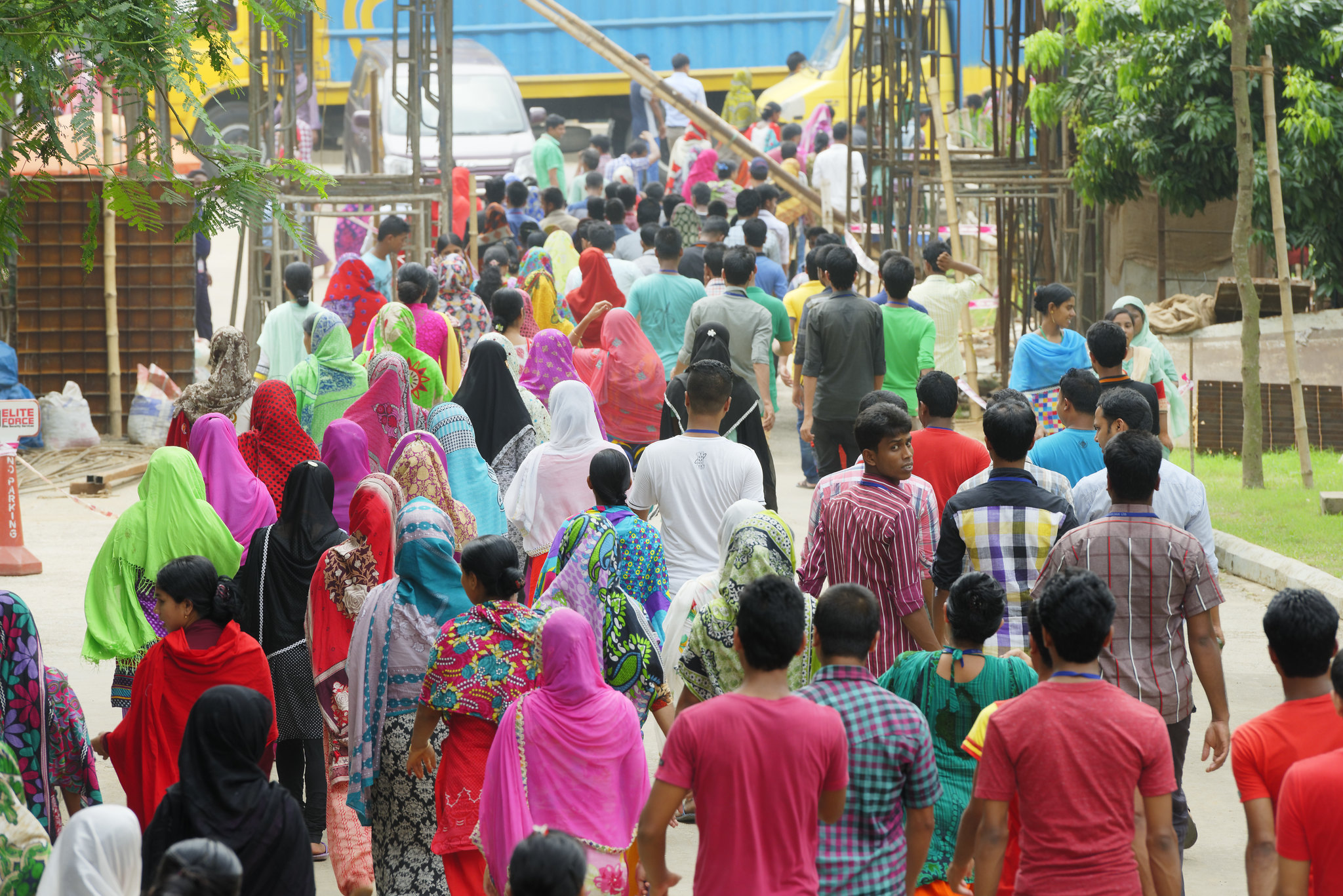
Banner image: Garment employees leave a clothing plant at the end of their work day. Image by Better Work Programme via Flickr (CC BY-NC-ND 2.0).