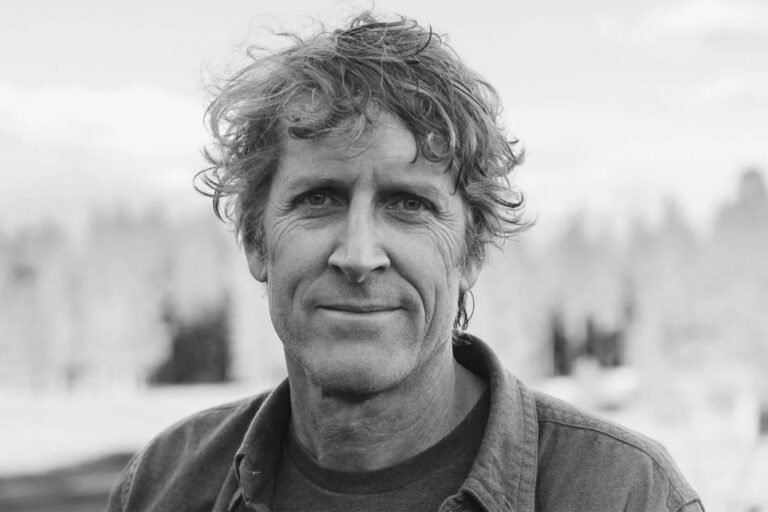
A backcountry ski run can depend on decisions made years before the snow falls. Forest plans determine where motorized vehicles may travel. Congressional appropriations affect whether trails are maintained and land-management agencies can enforce their rules. Public meetings give skiers, snowmobilers, conservationists, and local residents a chance to argue over how mountains should be used. David Page knew this work in detail. He also knew how to describe what it felt like to move through those mountains. Page, the executive director of Winter Wildlands Alliance, died on July 7th in a multi-vehicle crash on Teton Pass in Wyoming. He was 57. Rio, the family dog who often accompanied him outdoors, died in the accident as well. He had come to conservation advocacy through writing. Raised in Denver, he studied history and Spanish literature at Dartmouth, comparative literature at Berkeley, and creative writing at the University of California, Irvine. He wrote for the New York Times, Men’s Journal, Skiing, and other publications, and became a senior correspondent for POWDER. His guide to Yosemite and the southern Sierra Nevada went through three editions. His articles were closely reported and attentive to the people in them. “The Human Factor,” an examination of the decisions that lead experienced skiers into avalanche danger, was a finalist for a National Magazine Award in 2015. It was later used in avalanche courses. Another article described the immigrant workers whose labor sustains many ski towns. He also wrote about major descents, disappearing whitebark pines, solitary skiers, remote slopes,…This article was originally published on Mongabay