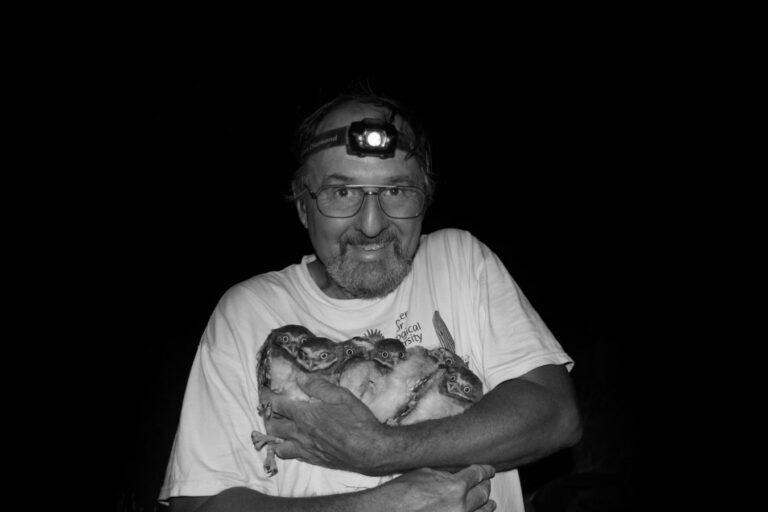
At the former Umatilla Chemical Depot in eastern Oregon, the weapons were gone, though their presence had shaped the land. Concrete bunkers stood among sagebrush and dry grass. Pronghorn moved through the open country. Badgers, once common there, had largely disappeared. Their absence mattered to the small owls that lived close to the ground. Burrowing owls do not usually dig their own homes. They occupy tunnels made by mammals, especially badgers and prairie dogs. At Umatilla, the decline of those animals had removed much of the owls’ shelter. By the late 2000s, only a few breeding pairs remained. David H. Johnson, who died on June 15th, aged 69, decided that the shortage of burrows could be addressed. He and his collaborators buried plastic barrels and connected them to the surface with lengths of pipe. The structures were crude substitutes for badger burrows, intended to keep the population breeding while the recovery of its habitat remained a longer-term task. The owls accepted them. Within a year, the number of breeding pairs had risen. Over the following decade, the depot became home to one of the region’s most closely studied burrowing-owl populations. Researchers banded chicks, recorded calls, tested nest designs, and tracked the birds’ movements. By 2024, they were monitoring more than 100 nesting attempts and had banded nearly 500 chicks that season. Johnson had been interested in owls since childhood. At 11, while camping alone, he heard an eastern screech owl calling outside his tent. The bird landed close enough for…This article was originally published on Mongabay