More than 50 Mennonites have been deported from Suriname following years of controversy over plans to establish agricultural settlements for large-scale farming in the Amazon Rainforest.
Authorities removed the Mennonites, members of a conservative Christian group that rejects modern technology, from state land in Suriname’s Sipaliwini district. They had been staying in the area with expired residency permits, according to a statement from the president’s office. On Oct. 31, they were reportedly flown to Bolivia, from where they originally came.
“The point is essentially that the primary Amazon Rainforest is not being cut down for large-scale agriculture. I am opposed to that,” Suriname President Jennifer Geerlings-Simons told local media in an Oct. 4 interview, per a statement published by her office.
In 2023 and 2024, Mongabay exposed plans to transfer hundreds of thousands of hectares of rainforest to Suriname’s Ministry of Agriculture, Livestock and Fisheries (LVV). The plan involved relocating Mennonites from other areas in Latin America, including Belize and Bolivia, to Suriname to help develop large-scale farming projects that could boost the country’s domestic food production.
Mennonites have a track record of rapid, profitable agribusiness development across the Americas — but often at the expense of forests. In some cases, their expansion has resulted in illegal deforestation.
Roughly 93% of Suriname is covered in forest. Some of the Mennonite agriculture projects were cancelled following backlash over protecting the country’s forest cover and net-negative carbon emissions status. But in 2024, one of the projects continued through a public-private partnership between the agriculture ministry and Suriname Green Energy Agriculture N.V., a private company working in agriculture and bioenergy.
Representatives for Suriname Green Energy Agriculture N.V. asked a court to stop the Mennonites’ recent deportation, arguing the government had agreed to work toward providing them with permits so the company could develop agricultural land and produce biofuel.
“The expulsion of the foreign workers will have serious consequences for the business activities of the [company],” a court summary said.
The court rejected the claim on Oct. 29, saying the Mennonites must follow residency and work permit regulations.
Also in October, authorities used drones to track down and remove more than 63 Mennonites who had arrived from Bolivia and Mexico. The operation was part of a task force to remove illegal settlements in the rainforest, announced in August by Geerlings-Simons.
On Oct. 31, at least 55 Mennonites were reportedly returned to Bolivia on a charter flight and banned from entering Suriname for one year. The other eight evicted Mennonites weren’t sent to Bolivia because they’re Mexican nationals.
It’s unclear how many more Mennonites remain in Suriname or whether they have permits to live and work there.
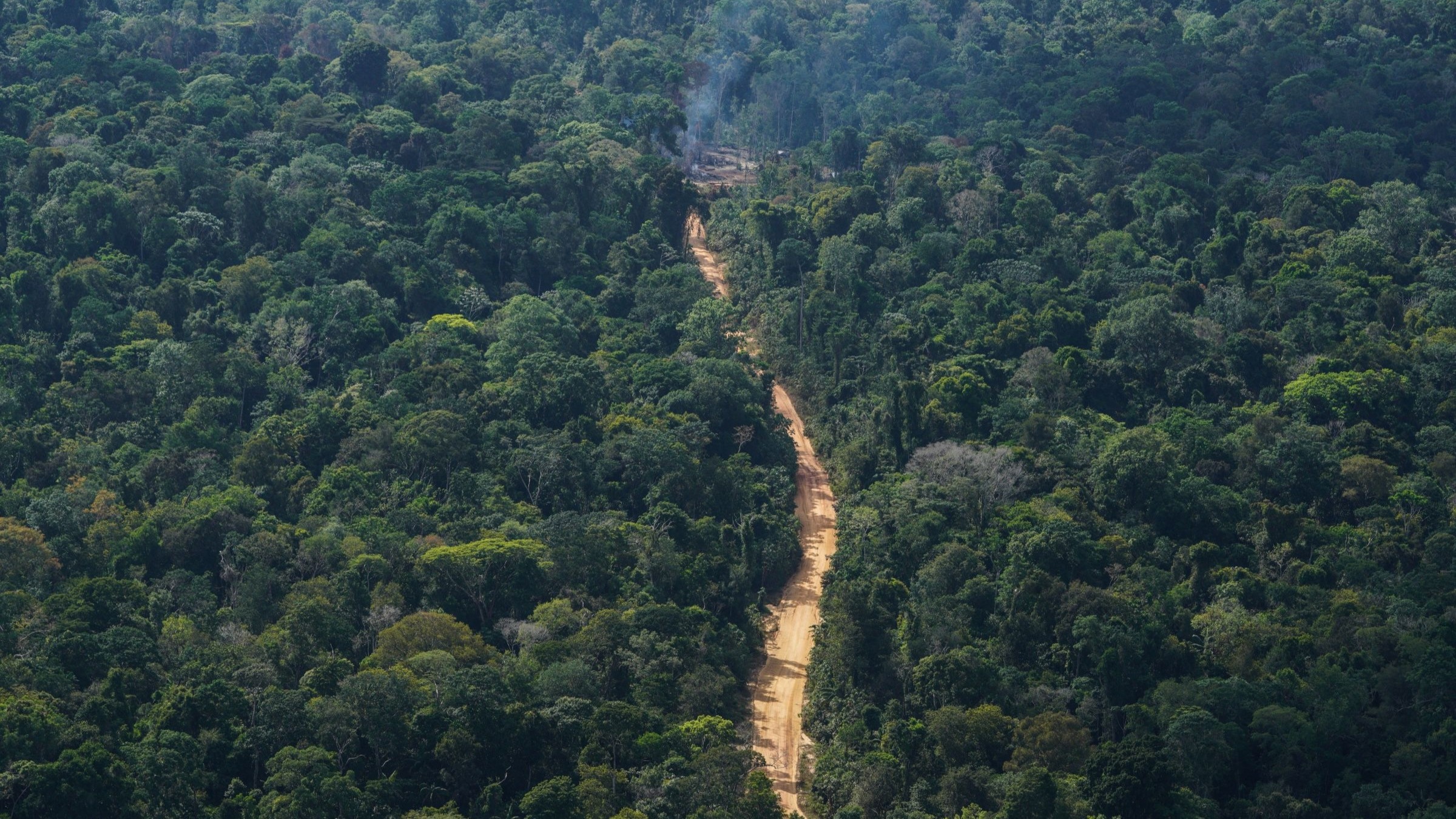
Banner image: An illegal road is visible in Suriname’s Amazon Rainforest. Image by AP Photo/Ivan Valencia.