- A new study that examines the status and recovery prospects of large mammals in Laos concludes many losses could have been mitigated with earlier recognition of population declines, better protection of habitats and tighter control of hunting and the illegal wildlife trade.
- Sumatran rhinos and Javan rhinos disappeared from Laos by the 1990s, and the last verified record of tigers was in 2013. Wild water buffalo and the kouprey, both species of wild cattle, have also disappeared.
- The study notes Laos still supports 24 separate populations of Asian elephant and recommends conservation authorities and researchers focus recovery efforts on reconnecting movement corridors, transboundary landscapes and implementing coexistence measures to minimize conflicts and killings.
- Experts say the future of large mammals in Laos depends on the political will to implement existing conservation plans and enforce protections. It also hinges on long-term financial support in a region often overlooked by conservation funders.
See All Key Ideas
Less than half a century ago, the thickly forested landscapes of Laos rumbled with herds of Asian elephants as well as two species of rhinoceros — the Javan rhino and Sumatran rhino. Wild water buffalo and the now-globally-extinct kouprey cattle wallowed in more open habitats that were also stalked by Indochinese tigers.
However, decades of habitat loss, infrastructure expansion and hunting for food and the illegal wildlife trade have diminished this impressive assemblage of some of the world’s largest mammals. Today, only the elephants remain.
A new study in Global Ecology and Conservation that examined the historic losses, current status and recovery prospects of large mammal megafauna in Laos, suggests that the disappearance of these species could have been avoided if stronger conservation, monitoring and protection plans had been in place.
“These trajectories were not necessarily inevitable,” the study, which analyzed historical species records and survey data dating back to 1850 alongside information on threats and conservation policies, says. “Delayed recognition and response, insufficient control of hunting, and limited enforcement capacity likely contributed to these declines.”
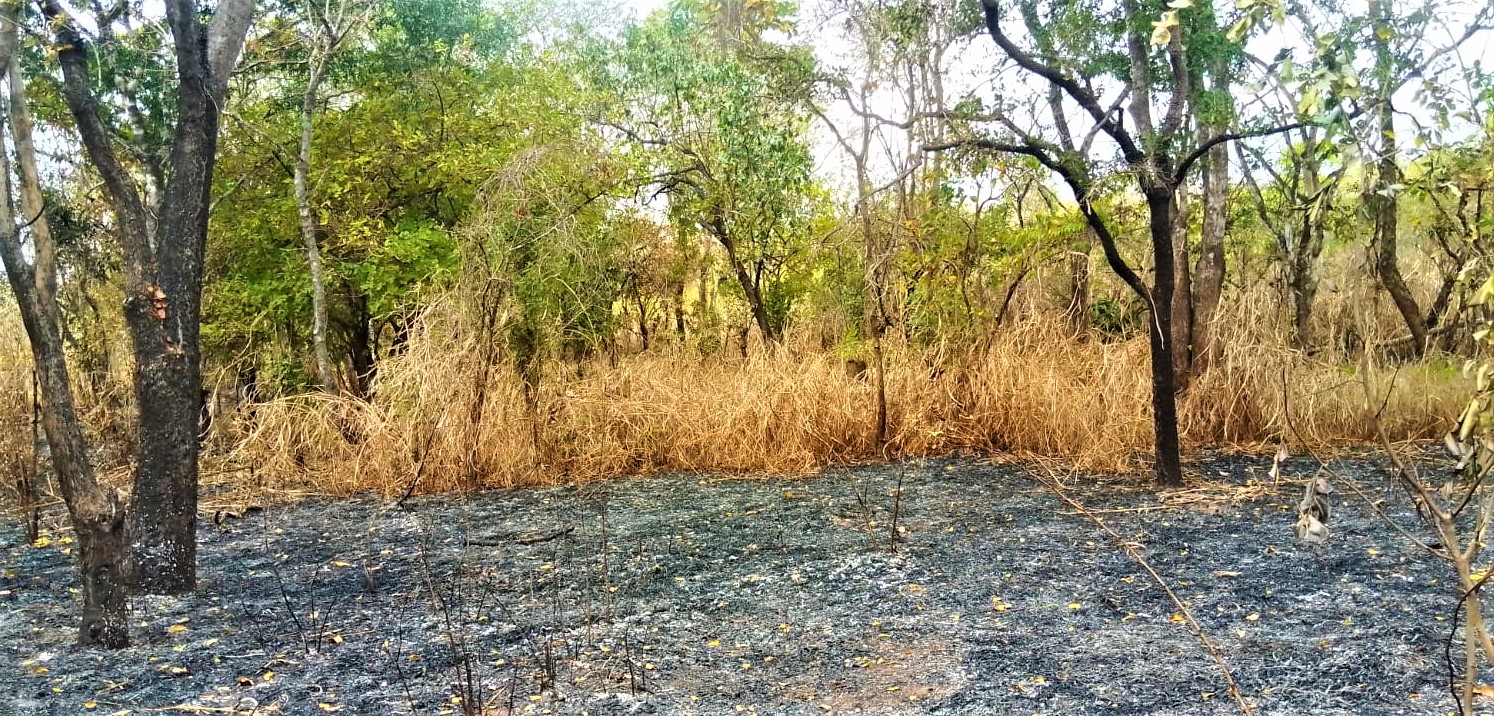
The loss of so many key large predators and herbivores, along with their ecological functions, occurred despite Laos retaining relatively extensive forest cover compared to other countries in mainland Southeast Asia, the study notes. Laos’s “empty forests” might at first glance seem intact and structurally diverse, yet they often lack key large animals that should inhabit them.
“Laos still has high forest cover and a large protected area network. The task now is to make sure the wildlife inside those forests is protected too,” said Akchousanh Rasphone, conservation director at WWF-Laos, who was not involved in the study.
Asian elephants live in 24 separate populations across Laos, the study found, most of them with fewer than 20 individuals. Image by Rhett A Butler/Mongabay.
Wildlife trade and development compound threats for large animals
The study, led by Duangphachan Souvansai from the Southeast Asia Biodiversity Research Institute at the Chinese Academy of Sciences, focused on Asian elephants (Elephas maximus), tigers (Panthera tigris) and Sumatran (Dicerorhinus sumatrensis) and Javan rhinos (Rhinoceros sondaicus), but also evaluates the present-day status of a wide range of other mammals known from Laos.
Sumatran rhinos and Javan rhinos had disappeared from Laos by around 1990, the study says, with rhino tracks found near the border with China in the late 1980s their last credible evidence of presence. Both species have disappeared from mainland Southeast Asia, although the exact timing of their loss is uncertain. The region’s last known Javan rhino was killed in Vietnam in late 2009.
The last verified records of an Indochinese tiger (Panthera tigris corbetti) were camera trap images recorded by researchers in 2013 in Nam Et-Phou Louey National Protected Area in northeast Laos. Although officially unconfirmed, scientists also widely consider leopards (Panthera pardus) extirpated, or nationally extinct, from Laos.
The study authors note the Kouprey (Bos sauveli), a type of giant wild cattle, is the only species extirpated from Laos that has gone globally extinct. All other species lost from Laos still retain habitat in other countries, albeit in some cases as very small and vulnerable populations.
In addition to Asian elephants, the study says large mammals still found in small, isolated populations in Laos include gaur, banteng, clouded leopards, sun bears, Asiatic black bears, dhole and golden jackals.
The researchers point to several main barriers to recovering healthy large mammal communities, including weak enforcement of existing environmental and wildlife laws; persistent hunting and snaring; cross-border illegal wildlife trade; and poor implementation of conservation action plans, exacerbated by limited institutional capacity and insufficient conservation funding.
While forest cover in Laos is relatively high for mainland Southeast Asia, deforestation rates, including within protected areas, are considerable. Laos recorded the highest rate of deforestation within the Mekong region in 2025, with 230,200 hectares (569,000 acres) lost, according to Global Nature Watch data.
Laos’s recent drive to expand largescale infrastructure, such as hydropower dams, compounds many of the issues identified in the study. Road networks built for development projects, for instance, give poachers supplying the illegal wildlife trade increased access to remote habitats, while booming tourism has sparked the expansion of illegal wildlife shopping sites.
Sumatran rhinos photographed in Sumatra. The species used to range across much of mainland Southeast Asia, including Laos. Image by Rhett A Butler/Mongabay.
Focus first on recovering elephant populations
A total 300-400 Asian elephants remain in the wild in Laos, according to the study, dispersed across 24 separate populations, 88% of them with fewer than 20 individuals, making them vulnerable to sudden collapse. The study identifies Nam Pouy National Protected Area in northwest Laos and Nakai-Nam Theun National Park in the central Annamite Mountains as harboring the country’s most significant and viable elephant populations.
Rasphone of WWF said these transboundary landscapes are rare beacons of hope that still have enough biodiversity to support large mammals and act as reservoirs for wider biodiversity recovery. She noted the government’s recent approval of the 2026 National Tiger Recovery Action Plan, and its 2022 National Elephant Action Plan. “What matters is implementation over the next decade,” she said.
According to the study, Asian elephants are the most promising species to focus large mammal recovery efforts. They recommend authorities and researchers in Laos attempt to recover stable, viable populations by maintaining and restoring habitat corridors and investing in coexistence measures that reduce the risk of conflict and killings.
For tigers, the proximity of Nam Pouy in Laos to Thailand’s Doi Phu Kha National Park could be the strongest pathway for “natural recolonization” back into Laos, the study says, although experts question the evidence for this assumption.
“Doi Phu Kha itself currently lacks tigers and would require natural recolonisation from Thailand’s Western Forest Complex or active reintroduction before it could serve as a source for Laos,” K. Yoganand, a conservation biologist based in Cambodia with over a decade of experience in Southeast Asia who was not involved in the study, wrote in an email to Mongabay. “This may take several decades, even with functional connectivity across the national border.”
The study authors also note tiger recovery in Laos would be infeasible without sustained threat reduction, prey recovery, long-term funding and local support.
Yoganand said in addition to the multiple conservation challenges identified in the study, wildlife recovery in Laos will depend on sufficient political will to address it as a national priority. “Establishing a protected area network in the 1990s was a major step,” he said, “but one must assess whether governance structures have enabled these areas to meet their species conservation goals.”
According to Yoganand, insufficient government investment in state wildlife agencies stymies the implementation of species action plans, which often exist on paper but aren’t carried out in practice. “Laos must establish species-specific goals backed by enabling policies and a well-funded state management authority with real enforcement power,” he said. “Relying primarily on NGOs or community groups cannot deliver conservation at the necessary scale and speed.”
Yoganand pointed to the “heartbreaking” example of the Laotian black-crested gibbon (Nomascus concolor lu), a species which has dwindled to one last known population confined to a small pocket of habitat in northwest Laos, despite a gibbon action plan existing since the 2010s. “Watching a species slide toward extinction despite official plans highlights the stark gap between policy on paper and action on the ground,” he said.
Compared to other countries in mainland Southeast Asia, Laos still has a lot of forest cover, but it’s facing multiple converging threats. Image by Christophe95 via Wikimedia Commons (CC BY-SA 4.0).
‘Flagship’ species in key biodiversity hotspots
Lorraine Scotson, CEO of the Saola Foundation for the Conservation of the Annamite Mountains, said Laos is an overlooked global biodiversity hotspot, home to some of the world’s rarest wildlife. Yet conservation efforts often struggle to secure funding.
The Saola Foundation’s search for the saola (Pseudoryx nghetinhensis), a tropical bovid that was only discovered by scientists in 1992, had to halt temporarily in 2026 due to a lack of funds. Scotson said the uncertainty of long-term sustained funding threatens the efforts to find the critically endangered mammals, which has not been recorded in the wild since 2013, as well as wider research into the irreplaceable biodiversity of the Annamite Mountains.
“The current issue is essentially a lack of sufficient sustainable funding that can be directed to effective conservation strategies,” Scotson said. “Without that, megafauna recovery and preventing unrecoverable biodiversity loss will remain an unachievable goal.”
Rob Timmins, technical director of the Saola Foundation, said he agrees with the study authors that focusing on large megafauna as “flagship” species can often be a powerful way of building support for conservation. Recovering large mammals can often, by extension, protect many other species of plants, fungi and animals.
The challenge, according to Timmins, is not simply recovering large mammals, but deciding where their recovery could deliver the greatest benefits for biodiversity as a whole. This means monitoring the rare, endemic and undiscovered species of plants, fungi and animals across mammal habitats and directing limited conservation resources to the places where their needs overlap.
“[Laos’s] overall intactness of forest is a huge and underappreciated conservation positive,” Timmins said. “Cryptic, highly localized endemics that are obligates of intact forests with old-growth trees are likely doing better than in potentially any other nation in Southeast Asia.” The Annamite Mountains is one landscape where rare and endemic species overlap with critical mammal assemblages, he noted.
As Scotson put it, the Annamite Mountains can give “more bang for your buck” than anywhere else globally.
Banner image: Clouded leopards still inhabit pockets of remote forest in Laos, according to the study. Image by Charlie Marshall via Flickr (CC BY-NC-SA 4.0).
Carolyn Cowan is a staff writer for Mongabay. Her reporting focuses on wildlife, ecology, and communities responding to environmental challenges across Southeast Asia.
Citations:
Souvansai, D., Ruppert, N., Harapan, T. S., Manyvong, B., Bleisch, W. V., Khounboline, K., … Campos-Arceiz, A. (2026). Megafauna in Laos: Historical losses, present status, and recovery prospects. Global Ecology and Conservation, 71, e04399. doi:10.1016/j.gecco.2026.e04399
Rasphone, A., Kéry, M., Kamler, J. F., & Macdonald, D. W. (2019). Documenting the demise of tiger and Leopard, and the status of other carnivores and prey, in Lao PDR’s most prized protected area: Nam et – Phou Louey. Global Ecology and Conservation, 20, e00766. doi:10.1016/j.gecco.2019.e00766
See related story:
To track a unicorn: Laos team goes all out to find the last saolas
FEEDBACK: Use this form to send a message to the author of this post. If you want to post a public comment, you can do that at the bottom of the page.