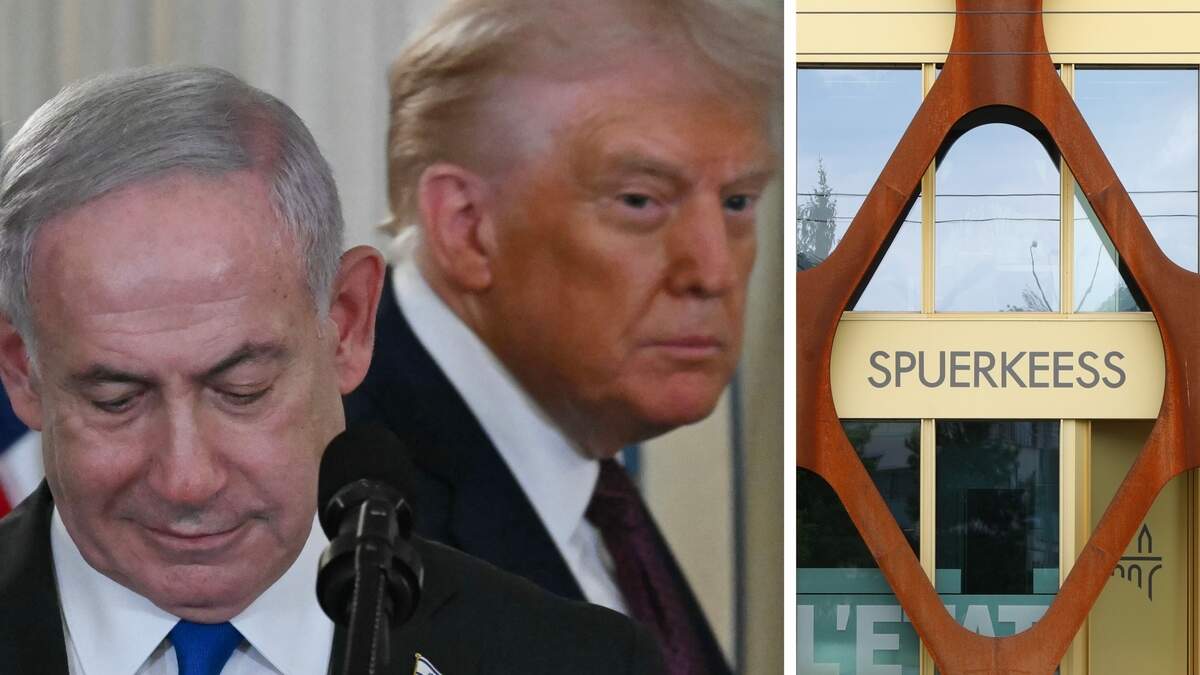
President Donald Trump looked to rally support for his military operation in Iran in a new social media video on Sunday, casting the effort that killed Ayatollah Ali Khamenei as a mission “not merely to ensure security for our own time and place, but for our children and their children.”
Arguing the bombing campaign was the duty of the “strongest military the world has ever seen,” Trump in a social media video reiterated his calls for Iranian officials to lay down their arms, while conceding that more American troops would likely perish in a conflict that has engulfed much of the Middle East.
Trump in an interview with the New York Times said he intends the bombardment of Iran to continue for the next four to five weeks.
Still, even as Trump returned to Washington buoyed by another audacious military strike that has decapitated a longtime US enemy, he does so facing familiar questions about what, exactly, the objectives are and the plan going forward. The death of three US service members underscored the risk of a conflict that in just two days has destabilized security, travel and trade across the Middle East.
Trump navigated this sort of tension just weeks ago, after the capture of Venezuelan strongman Nicolas Maduro in a nighttime raid. With Iran, he so far seems to be following a similar playbook — offering broad justifications for his actions rooted in longtime grievances, while threatening further violence in hopes of limiting future retaliation or chaos.
“These intolerable threats will not continue any longer,” Trump said in the video posted shortly before he departed his Mar-a-Lago estate to return to Washington. “I once again urge the Revolutionary Guard, the Iranian military police, to lay down your arms and receive full immunity or face certain death.”
Yet Trump’s gambits in the Middle East and South America are fraught with risk.
While the interventions have effectively beheaded regimes in Venezuela and Iran, that can leave power vacuums that produce more instability. Now, with Khamenei and possibly other top Iranian officials removed, it remains to be seen whether Trump can avoid a longer entanglement, like those that bedeviled his predecessors in other foreign involvements.
The president and his supporters point out that the US action in Venezuela has had only limited blowback — without the regional retaliatory attacks and repercussions already sweeping across the Middle East. It’s also yielded some swift changes.
Interim authorities have released hundreds of prisoners — including some Americans. A US mission to control Venezuela’s crude sales has edged out Beijing’s influence in the region. And in recent weeks, Trump has repeatedly praised US interactions with the country’s post-Maduro leadership, led by interim President Delcy Rodriguez.
Trump has already signaled that Venezuela could serve as a template for his vision for a post-mission Iran, with a more compliant version of the existing regime retaining power rather than the type of full overhaul American presidents have traditionally sought.
“What we did in Venezuela, I think, is the perfect, the perfect scenario,” Trump told the New York Times, also adding that he’d be willing to consider sanctions relief for Iran if the country proved to be a cooperative partner.
Earlier: Opposition Leader Machado to Return to Venezuela in a Few Weeks
In an interview with The Atlantic, Trump said he’d agreed to resume negotiations with Iranian officials. “They want to talk, and I have agreed to talk,” he said.
Iran’s national security chief Ali Larijani on social media Monday morning disputed that, saying the country “will not negotiate with the United States.”
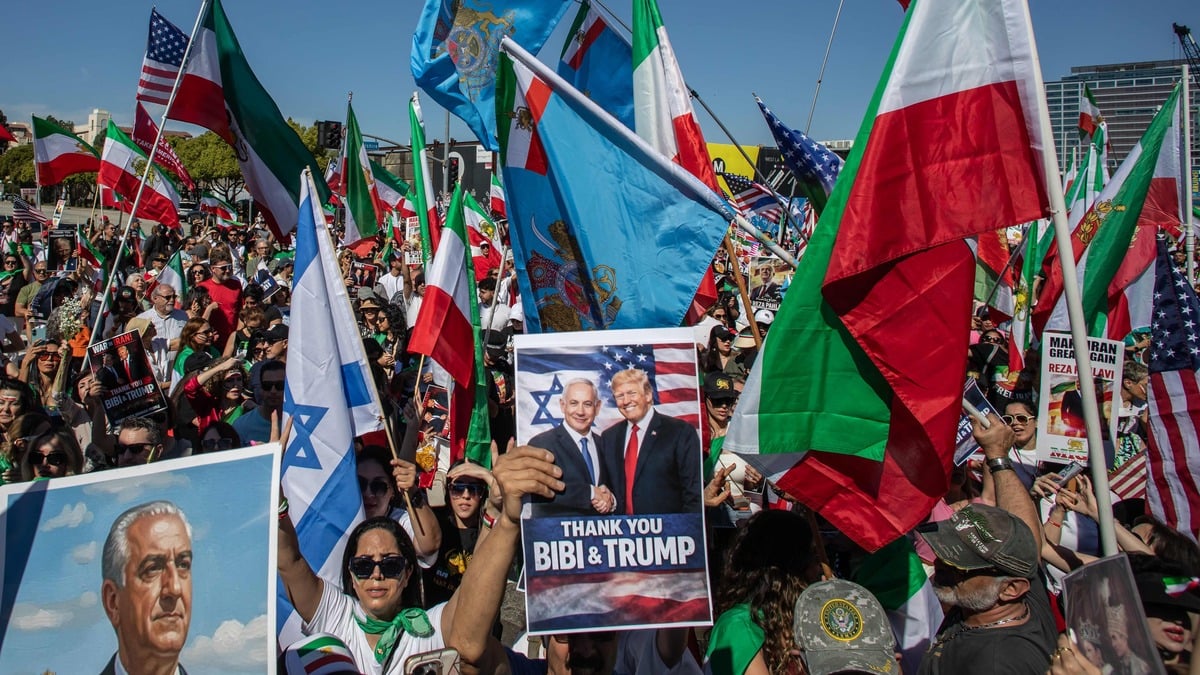
After Maduro’s capture, Trump reveled in the people dancing, singing and waving the Venezuelan flag in Miami streets. Similar scenes are now playing out in Tehran, where cheering crowds gathered to rejoice, and in communities of Persian expatriates across the US.
Yet past interventions in the Middle East have underscored the risk of unintended consequences. In Iran, previous efforts to install favored governments by the US and UK hardened nationalist movements and gave rise to the regime Trump is now seeking to topple.
More recently, Iraq and Afghanistan have shown the danger posed by weakening authoritarian regimes without a clear plan for the future, ultimately allowing extremist movements to gain or regain a foothold.
In Iran, there’s a risk that Khamenei will be replaced by hardliners who want to continue the war, said Dennis Ross, President Bill Clinton’s envoy to the Middle East, who is now a fellow at the Washington Institute for Near East Policy.
“The supreme leader is gone, but we don’t know what we’re going to face,” he added.
Trump said he’d identified three “very good” contenders to be the next leader of Iran, but later told ABC News that most would-be successors had died in the attacks.
Nation-building efforts
Previous wars have also soured the American public on the prospect of prolonged nation-building programs, and Trump’s inclination to do little of the groundwork to win over public opinion — before or after the operation — leaves him on somewhat tenuous ground. Only one in four Americans supported the strikes in Iran, according to a Reuters/Ipsos poll published Sunday, and Trump is yet to speak to the public beyond prerecorded videos and short media interviews.
“Trump has decided he is going to use military force on whims, however he sees fit, to achieve objectives that he frankly does not seem to feel the need to explain or justify to the American people in muscular, showy ways, and then sort of saunter off stage on cue,” said Rosemary Kelanic, director of the Middle East program at Defense Priorities, a policy institute that’s skeptical about the use of force.
Trump will also have to reconcile his actions with his pledge to usher in lasting change and guarantees of protection for US interests.
“Building up of something durable afterward, and something that’s legitimate domestically afterward, is the hard part,” said Kori Schake, a former State and Defense Department official who now directs foreign and defense policy studies at the American Enterprise Institute. “I am worried the result of this can be the removal of the religious leadership and the installation of an even worse and more repressive force domestically in Iran.”
At a meeting of the United Nations Security Council on Saturday, after a torrent of criticism was directed toward the US by UN Secretary-General Antonio Guterres and various nations, US Ambassador Mike Waltz argued that the greater good of getting rid of Khamenei and the Iranian leadership justified the means.
“You know who is not complaining tonight? You know who is not citing the vagaries of international law? You know who is celebrating in the streets around the world?” Waltz asked. “The Iranian people.”
Global alliances
Trump’s moves also risk angering allies, including nearby nations who’ve already found themselves the target of Iran’s retaliatory strikes, as well as those who’ve championed negotiations in a bid to deliver a peaceful, diplomatic resolution. Trump has now twice attacked Iran in the midst of ongoing negotiations he deemed weren’t adequately progressing.
And it further strains global alliances that Trump’s already put under pressure — including NATO — as European leaders rushed Saturday to emphasize they took no part in the attack.
Oman Foreign Minister Badr Albusaidi, who’d helped mediate talks and told CBS News’s Face the Nation hours before the attacks that a peace deal was within reach, later lamented the strikes that he said had undermined “active and serious negotiations.”
The risk, said Kelanic, is in deepening distrust of a less-predictable US — with consequences from Brussels to Beijing.
“The seats in Geneva were barely cold from the last meeting before bombs started falling in Iran,” she said. “Who is going to want to negotiate with the US government right now? Who’s going to trust that we’re going to keep our promises?”
For now, Trump and top deputies may look at the US operations in Venezuela and Iran as affirming their approach — and validating the strength and prowess of American armed forces the president has frequently extolled as the best in the world.
“So far, I think the president actually has a lot of basis for celebration,” Schake said. “The intelligence and military expertise to pull a final attack on the Iranian leadership so successfully is really quite extraordinary and could well redound to the benefit of the people of Iran. But it’s just too early to tell.”
–With assistance from Courtney Subramanian, María Paula Mijares Torres, Josh Wingrove, John Harney and Laura Davison.
©2026 Bloomberg L.P.