A meeting on 15 December between Education Minister Claude Meisch, teaching union representatives and members of the national parents’ council will seek to bring clarity to a public debate on the volume of homework given to some primary school pupils.
Meisch called the meeting after parents on a Facebook group highlighted the struggles some children were facing. The founder of the group, Aurore Rössler, has since submitted a petition to parliament calling for “a controlled reduction in the amount of homework assigned, in order to protect students’ well-being while ensuring that academic standards are maintained.”
In the first week of its publication, petition 3876 had gathered fewer than 150 signatures, well below the threshold of 5,500 required for it to be debated in parliament.
Government mulls mandatory Luxembourgish in all schools
Pupils are supposed to have just one hour a week of homework in Cycle 2 (ages 6 to 8), up to three hours in Cycle 3 and no more than four hours a week in Cycle 4, the last two years of primary school. These guidelines were laid down by the education ministry in a circular to teachers and schools in spring 2021. The circular also specified that no homework should be assigned to primary students during school holidays or at the weekends.
Teaching unions said their members were fully aware of the guidelines, but that some pupils obviously took longer to complete their homework than others. “There are studies that show that a ‘slower’ child needs six times more time to do homework than a ‘faster’ child,” said Patrick Remakel, head of the SNE union of teachers.
He told the Luxembourg Times that teachers try to adjust homework accordingly, either by giving them less volume, or by giving those pupils who struggle simpler tasks to do at home.
In principle, we don’t think any profound changes to homework are necessary, as the circular provides clear guidelines
Patrick Remakel
President, SNE teachers’ union
While welcoming the chance of dialogue at the meeting on 15 December, Remakel said that: “In principle, we don’t think any profound changes to homework are necessary, as the circular provides clear guidelines.”
Joelle Damé, president of the SEW (education and science) section of the OGBL agreed that it is sometimes difficult for a teacher to estimate how much time a child at primary level actually needs. “Which is why feedback is so important,” Damé told the Luxembourg Times. “I always encourage my children’s parents to contact me if they notice that their child is spending an unusually long time on homework. Anything that takes more than half an hour is already unusual.”
Kids feel pressure
That will come as a surprise to some parents that this newspaper spoke with on condition of anonymity.
The feedback that one mother received was simply that her child was “slow”, but she was given no further explanation.
The parents we spoke to were also unaware of the homework guidelines published over four years ago.
“The kids feel the pressure,” the mother, who has two girls, told us. “My daughter in the first year of third grade came home crying about the amount of maths homework she had been given.” “I think the whole system is a bit archaic,” she added. “Three days a week kids have a really long day. And I don’t think they need a two-hour lunch break, for instance.”
If a kid has more than one activity outside of school, it’s close to impossible to manage the volume of homework
Father of two primary school children
The need for balance in children’s lives is of concern for another parent. “They need more time to do other activities,” the father of two said. “But to fit music lessons or sports training in after school and then have homework to do on top of that is a real challenge. If a kid has more than one activity outside of school, it’s close to impossible to manage the volume of homework.”
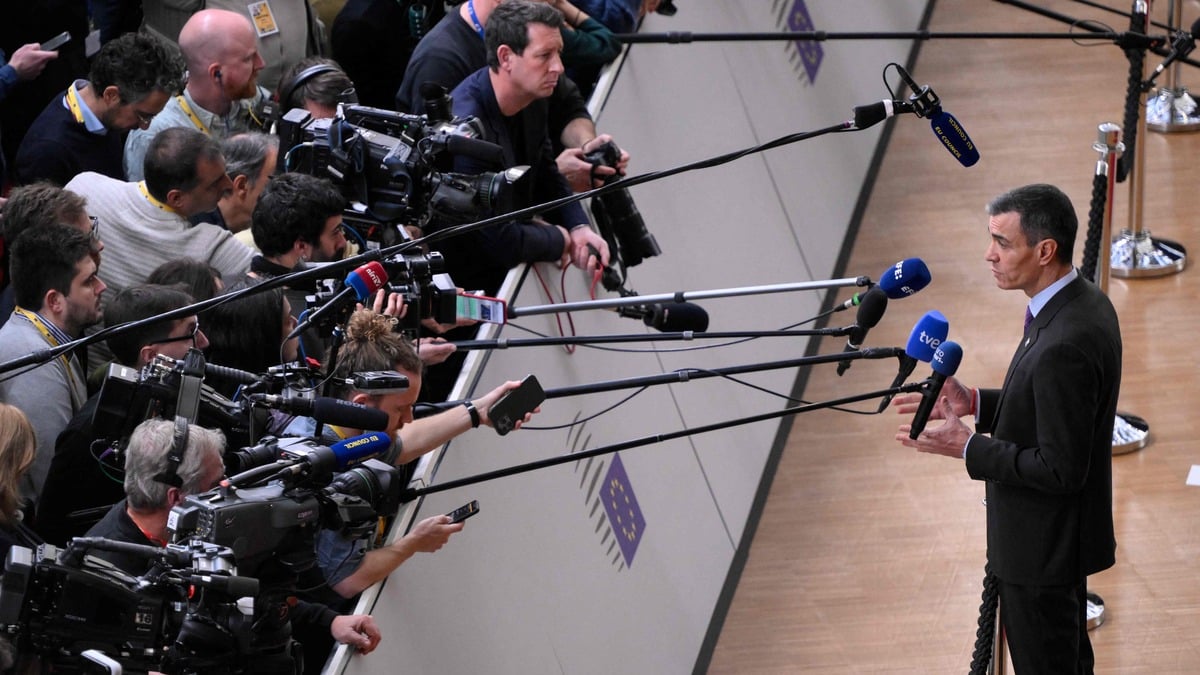
Meisch has sympathy for the challenge children and parents face in balancing school and leisure activities. “Informal learning is very important for students,” the minister said in an interview on radio 100,7 two weeks ago. But he also stressed that homework is needed to introduce children to working autonomously, as well as to refresh what has been taught at school and to prepare for the next course.
Education Minister Claude Meisch has acknowledged the importance of ‘informal education’, but also stressed the role that homework plays in teaching children to work autonomously © Photo credit: Alain Piron
However, a lack of consistency in the amount of homework given by teachers, even within the same school, also poses a problem and may lead to a sense of injustice for some children, according to Alain Massen, president of the Elterevertriedung national parents’ council. Speaking on radio 100,7 in November, Massen said that this may be the result of teachers not managing to keep pace with the curriculum, or if they fall sick and a substitute teacher has to step in.
Some parents think there should be more coordination between teachers at the same school. “They should cooperate, so that within the school everyone gets the same amount of homework and is under the same expectations. Because it does vary from teacher to teacher,” another mother said.
Another suggestion has been to create a weekly plan for homework, so that families can better organise their schedules. The OGBL’s Damé thinks this will create other problems. “It would offer the teacher little flexibility, and the plan may include tasks on a subject that are only been addressed in class in the middle or towards the end of the week,” she said.
But there is little doubt that many parents are worried about the mental health impact that the stress of homework is having on their offspring.
Many parents, teachers, and health professionals report cases of exhaustion, sleep disorders, anxiety, and constant rumination related to the fear of forgetting or doing homework incorrectly
Aurore Rössler
Author of petition 3876
“Many parents, teachers, and health professionals report cases of exhaustion, sleep disorders, anxiety, and constant rumination related to the fear of forgetting or doing homework incorrectly,” Rössler wrote in her petition text.
One parent of a child who has been sick on a couple of occasions speculates as to whether their illness is also related to stress at school. “I wonder if sometimes these kids just get overloaded and have, you know, a sort of burn out. I think maybe she just needed a day at home.”
Massen said that the complaints from parents about the volume of homework were not just individual cases. But he also told 100,7. that “society has changed”. In the past, often one parent did not work full-time and children had fewer distractions, he said. And more parents spoke Luxembourgish and could help their children with their homework.
That has led many families who are not Luxembourgish to enrol their children in one of the country’s public international schools, where there is also less focus at primary level on homework.
Primary school students to be taught in French or German from 2026
On the other hand, teachers in the Luxembourg system also feel under pressure to obtain results, according to the unions. “The demands on schools are increasing, but the conditions and challenges in the classroom are not necessarily developing in the right direction,” Damé said. “Nevertheless, we have an educational mandate, and the ÉpStan [standardised tests], which are written every two years, can certainly lead to pressure and stress, just like various requirements in the curriculum, which in some cases are unattainable.”
Remakel, too, thinks that expectations placed on teachers from all parties are very high. “Teachers must try to do justice by every child, both the very gifted students and those who have more difficulty assimilating the material,” he said.
Better feedback
Massen of the national parents’ council would like to see teachers provide better feedback on homework to pupils and parents, and thinks that homework should be more individualised according to each student’s needs.
But Meisch points out that the introduction in 2022 of the e-Bichelchen app that allows parents to view timetables and see what homework has been assigned, and also to exchange messages with teachers, “plays an important role in managing homework by facilitating communication between parents, teachers, and educators.”
Also in 2022, the ministry also launched a Hausaufgabenhëllef (homework help) programme at Maison Relais aimed at helping students organise their work and, where necessary, assist them with understanding homework instructions.
The ministry told the Luxembourg Times that an analysis of the homework help programme is currently being conducted by the National Observatory for Children, Youth, and School Quality (OEJQS) and that results should be available in the first half of 2026.
“The need for any adjustments to the system will be assessed based on the conclusions of this analysis,” a ministry spokesperson said.