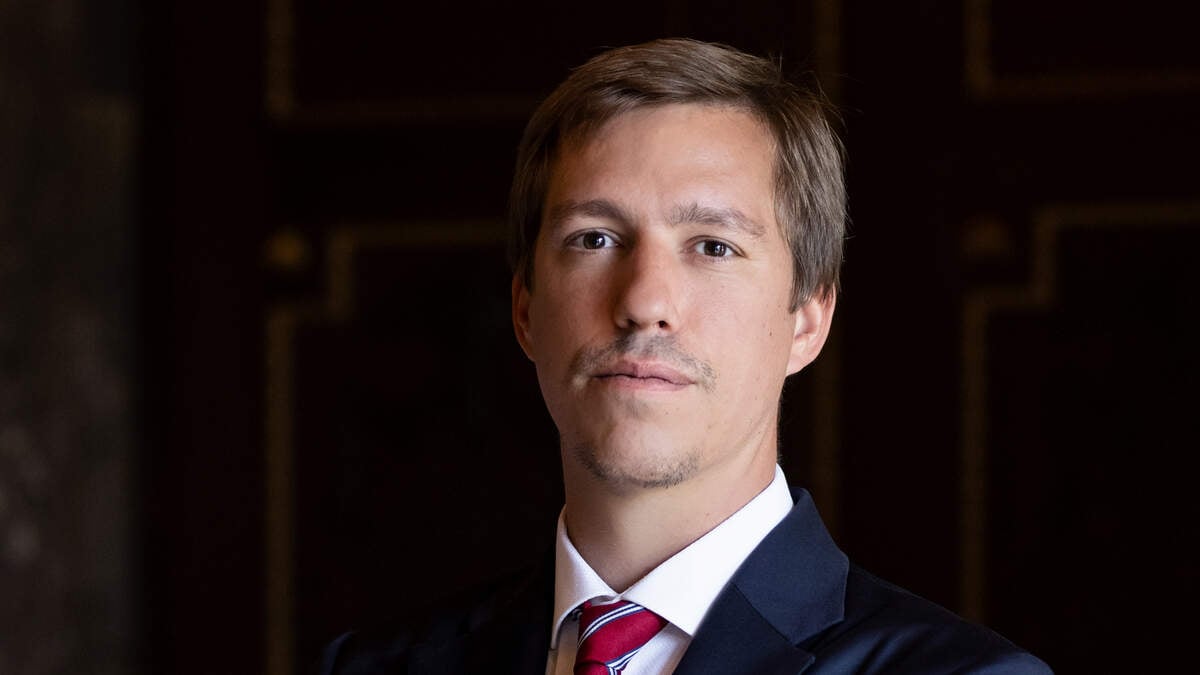
Prince Louis, the brother of Grand Duke Guillaume, has outlined his struggle with dyslexia during a six-part podcast.
Louis shared his story on the French language podcast Dys: ma force (Dyslexia: My Strength), a series promoted by the Fondation Henri – Maria Teresa, the charity under the presidency of his mother.
The series brings together doctors, specialists, associations, families and people who suffer from dysfunctional disorders.
Diagnosed with dyslexia at age 10, Louis, now 42, spoke openly about his own experience.
“I realised very quickly that my brain didn’t work like other people’s, because I saw that I wasn’t able to do things that others found simple,” he said.
In Luxembourg, around 4,500 young people have dyslexia, according to estimates from the education ministry, while worldwide between 5% and 8% of children are affected.
Prince Louis said reading, writing and memorising facts while studying were particularly difficult. “For me, it was really reading and writing, especially spelling, that were very problematic. Then, also memorising while studying, an inability to learn from memory,” he said.
Dyslexics are constantly required to put in additional effort to keep up with others, Louis said.
“That’s the problem for all dyslexics: we are constantly confronted with our weaknesses and, in order to more or less reach the level of others, we end up not knowing what we are good at, because we have spent too much time trying to alleviate the negative symptoms of dyslexia,” he said.
Throughout the series, experts explained that these neurodevelopmental disorders are not linked to a lack of intelligence.
The podcast questioned the notion of “normality” in learning, addressed the impact of the school system, and advocated for a more inclusive approach. “Deep down, we know we’re not stupid,” Louis said.
New learning disorder test for multilingual kids to launch next year
Assessing potential solutions and the role of technology, the prince said: “Artificial intelligence will be absolutely gigantic for dyslexics, because everything that dyslexics cannot do is what artificial intelligence will take over.”
Acceptance of difference
The grand duke’s brother called for inclusion and people to accept differences in others. “I don’t believe it’s necessary for everyone to understand everything about everyone. I want everyone to accept everyone,” he said.
The six episodes of Dys: ma force are available on digital platforms and on the AirZen Radio website.
The series combines science, testimonials and personal experiences, aiming to raise awareness of dysfunctional disorders and explain how they affect the learning and daily lives of people with these conditions.
According to the scientific literature, specific learning disabilities result from alterations in one or more brain functions, such as attention, memory, executive functions and language.
Among the most common types of learning disabilities are dyslexia, which focuses on difficulties with written language, dysphasia (difficulties with spoken language), dyspraxia (psychomotor difficulties) and ADHD (attention deficit hyperactivity disorder).
These cognitive developmental disorders, which occur in children with normal or even above-average intelligence, differ from learning disabilities.
While the latter can be resolved with occasional support, specific learning disabilities require re-education measures, which help the child develop strategies to cope with the disorder.
Warning signs
If a child has persistent difficulties with speech or associating words with images, or has problems reading, copying, writing or concentrating, these may be warning signs.
It is also important to observe difficulties in memorising multiplication tables or time sequences, slower independent work or frequent fatigue in daily tasks.
In these cases, evaluation by professionals such as neuropediatricians, neuropsychologists, speech therapists, psychomotor therapists, occupational therapists or psychologists is recommended for a multidisciplinary diagnosis and the planning of appropriate strategies.
(This article was originally published by Contacto. Machine translated using AI, with editing and adaptation by John Monaghan.)