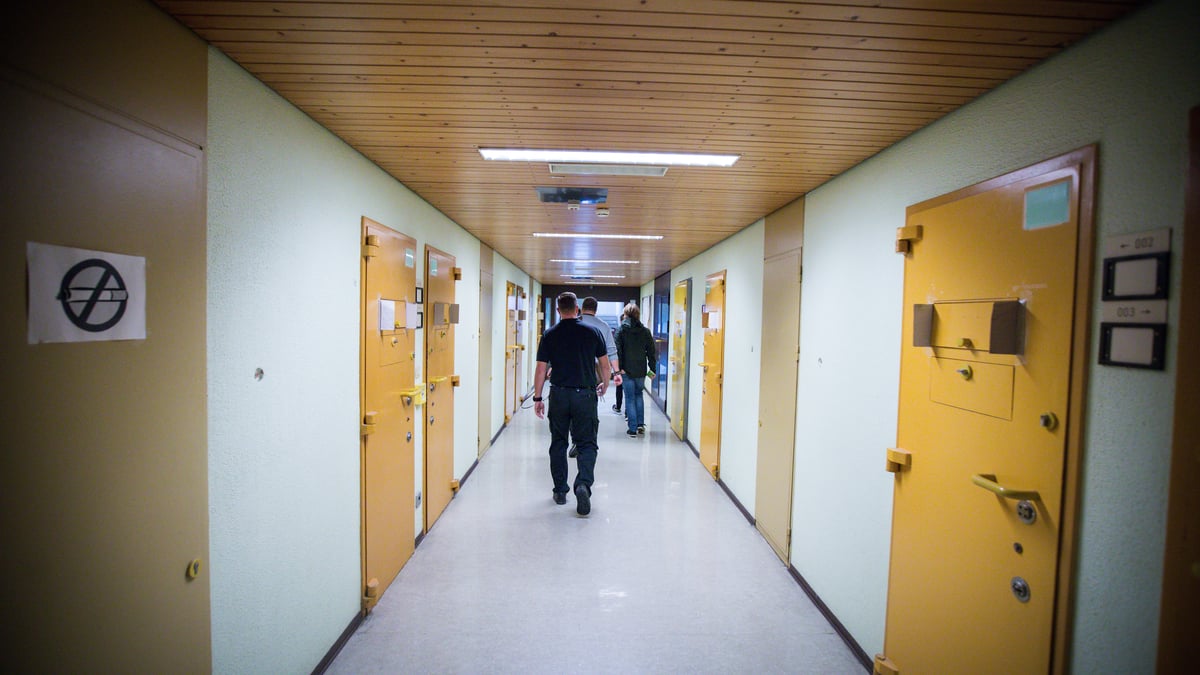
Luxembourg has sent more than 50 children to adult jails in the past six years, some on more than one occasion, according to data presented in response to a parliamentary question on Tuesday.
A total of 51 young people aged under 18 were incarcerated in prisons intended for adults a total of 58 times between 2020 and 2025, Justice Minister Elisabeth Margue and Minister of Education, Children and Youth, Claude Meisch said in a joint response to a written question from LSAP deputy Dan Biancalana.
The ministers stressed that the measure is taken only in extreme circumstances, but the issue of underage imprisonment in Luxembourg has attracted international attention, including in a damning Council of Europe report from 2023.
Children held in unacceptable conditions in Luxembourg jails
Each case is examined individually, the ministers said in their response. “Every minor has personal, psychological, social and family characteristics that are unique to them. Their needs, vulnerabilities, previous trajectory, level of maturity, environment, and any harmful external influences must be considered thoroughly,” they said.
The judicial authorities constantly try to avoid putting minors at risk, or hinder their rehabilitation, the ministers said.
Last resort
When tackling juvenile delinquency, judges try first to set up a support and rehabilitation package that does not require incarceration, the ministers said.
However, there are cases where minors risk manipulation by third parties, where they lack the required support, or where they are deemed unlikely to engage, or to run away.
In such cases where custody is deemed necessary, space at the country’s only tailored youth detention centre is sought, seen as a support mechanism for young offenders rather than punishment. However, Luxembourg lacks sufficient space at the facility in Driesborn where currently there are places for just 12 children at a time.
A project to expand the facility will not be completed until the start of the next decade, the country’s outgoing ombudsman said last year.
Expanded youth detention facility not ready until 2030s
“When a specialised magistrate orders a placement in a closed facility, it is always a carefully considered decision, viewed as a last resort after all less restrictive measures have been examined or implemented without success,” the ministers said in their joint response.
When the secure youth unit is full, judicial authorities have to choose between an open facility or an adult prison. “Experience consistently shows that minors who should be in a closed setting often flee an open facility within the first hours or days,” the ministers said, adding that ending up back on the street, at the mercy of gangs or exploiters, puts minors at even greater risk than prison.
Youths are sent to adult jails “as a last resort and with the aim of ensuring structured supervision”, the ministers stressed. Minors who are extremely violent, radicalised, or dangerous to staff or their peers are sometimes housed in prisons – but always separate from adult inmates.
The number of times the authorities sent minors to adult prisons in the past five years ranges from a single case in in 2020 to six in 2021, 2023 and 2024, 10 times in 2022 and 29 times in 2025. The total number of incidents was 58, relating to 51 people, some of whom were detained more than once.
In addition to a new juvenile detention centre with higher capacity – envisaged as part of a new juvenile criminal law – the government is also working on a “semi-open” option that would provide a third alternative, the ministers said.