Luxembourg-based cargo airline Cargolux on Thursday reported its “highest profit” outside the pandemic years of 2020 to 2022, with net income reaching €398 million ($465 million) in 2025.
The result marked an increase of €17 million ($20 million) compared to 2024. Total revenues reached €2.6 billion ($3 billion) last year. The airline transported 1,092,731 tonnes of air freight over the year.
“It was the year with the highest profit, excluding the Covid years,” said Tom Weisgerber, Chairman of the Board of Directors.
During the Covid-19 pandemic, when passenger fleets – which carry roughly half of all airborne freight – were grounded, cargo airlines such as Cargolux were able to charge significantly higher prices due to the lack of competition.
Cargolux registered net profits of $768.7 million, $1.3 billion and $1.6 billion between 2020 and 2022. Profits dropped to $286 million and $448 million in subsequent years.
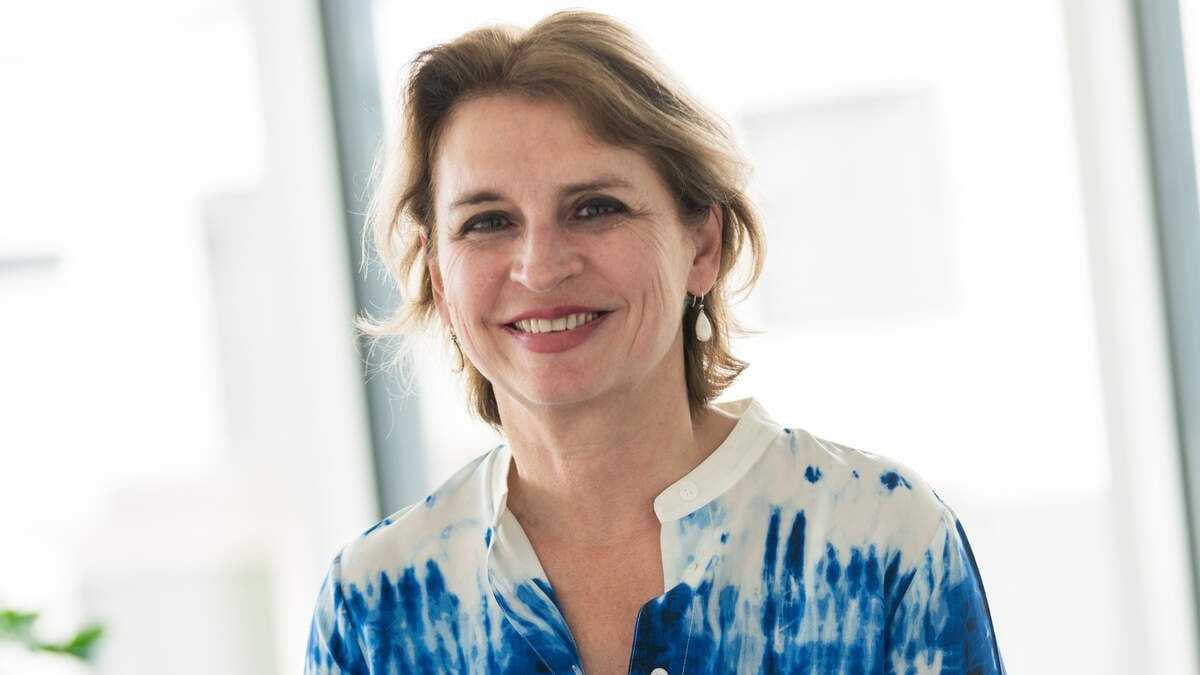
CEO Richard Forson, Chairman of the Board Tom Weisgerber and CFO Maxim Straus. © Photo credit: Laurent Sturm
The 2025 results were achieved despite a challenging operating environment marked by geopolitical tensions and trade disruptions linked to tariffs introduced under Donald Trump.
According to CEO Richard Forson, transpacific cargo flows from China to the United States declined significantly. “The flow of goods between Asia and Europe, on the other hand, has increased,” he said.
Activity also expanded in the Middle East, where additional Cargolux aircraft were deployed to handle freight from the Far East.
The shift in trade routes, combined with continued growth in e-commerce, supported higher yields. “We were able to achieve higher prices per kilogramme of air freight,” said CFO Maxim Straus.
Cargolux suspends Middle East trips as strikes across region wreak havoc
Geopolitical constraints continued to affect operations. Since the start of the war in Ukraine, Cargolux has avoided Russian airspace, requiring longer routes and increasing fuel consumption.
“Our flight corridors do not touch Russian airspace,” said Forson, noting that the airline introduced surcharges to offset higher costs. Flights were also rerouted during the Iran conflict, without major disruption to operations.
To strengthen fuel security, Cargolux established a subsidiary, CVFuel, in December 2025. “That was a very smart move on our part,” said Weisgerber.
Through CVFuel, the airline can procure kerosene directly from refineries and ports connected to the NATO pipeline network, reducing reliance on traditional supply channels at Luxembourg Airport.
We have plans to ensure we always have sufficient fuel. In the short to medium term, our level of concern is not very high
Richard Forson
CEO Cargolux
“This allows us to diversify our kerosene suppliers,” said Straus.
CVFuel is already sourcing 140,000 tonnes of fuel, around one-third of Cargolux’s consumption in Luxembourg. “We now have our own fuel reserve,” said Forson.
Luxembourg Air Rescue seeks CGDIS lifeline as fuel prices double
Difficult to make predictions
Despite ongoing tensions in energy markets, Forson expressed limited concern about immediate supply risks. “We have plans to ensure we always have sufficient fuel. In the short to medium term, our level of concern is not very high.”
He identified “kerosene prices and availability” as the main issues, noting that prices have doubled compared to 2025 levels. The situation affects “all airlines worldwide,” he added.
“The way Cargolux is structured enables us to navigate through such situations,” said Forson, while cautioning that a prolonged disruption – such as an extended closure of the Strait of Hormuz – could have wider economic consequences.
Should the crisis last for over a year, Cargolux could also face a kerosene shortage. © Photo credit: Laurent Sturm
The company, however, also warned that a sustained crisis could eventually affect fuel availability and global trade more broadly.
“But then the global economy would have a problem with the situation,” Forson said, pointing to the dependence of Asian manufacturing on energy supplies. “We are a carrier,” he added, highlighting the company’s role within global logistics chains.
“Because the global situation is extremely volatile, it is difficult to make predictions,” the company said.
Nevertheless, Weisgerber expressed cautious optimism for the year ahead. “We hope to be able to present similarly good results to you next year.”
Cargolux €80m fine for price-fixing will stand, court rules
(This article has first been published by the Luxemburger Wort. AI translated, with editing by Lucrezia Reale.)