His passport is Luxembourgish. Yet his heart is Lebanese. “I fell in love with Lebanon,” said Patrick Zeches. In the early 2000s, keen to better understand Arab culture, the Luxembourg national began studying literary Arabic at the Athénée in 2006. His teacher was Lebanese.
“One day, he suggested I take a trip to Lebanon. There I discovered a different way of life, laid-back people who gave me a very warm welcome,” Zeches recalled. Whilst getting to know Lebanon, he also met Rima Chedid. “For five years, I then travelled to Lebanon once a month before we got married and decided to make our life in Luxembourg.”
By moving from Lebanon to the Grand Duchy, Chedid swapped her career as a scientist for a secretarial and accounting role alongside her husband. For roughly the past ten years, Zeches has been running his own property valuation firm, having spent much of his career in the construction industry. But even though the couple’s daily life is based in Luxembourg, Lebanon remains very much a part of their lives.
A humanitarian dimension
Zeches and Chedid had planned to settle in Lebanon once they turned 65 and he reached retirement age. “But then there was the explosion in the port of Beirut, which led to an economic crisis and a ban on accessing our bank accounts. Withdrawals are still very limited today,” said Chedid.
On every flight, our suitcases are packed to the brim with medical supplies, which we take to a clinic where a pharmacist handles the handover
Their regular family visits then took a different turn. The couple’s travels took on a humanitarian dimension. “In Lebanon, medicines aren’t reimbursed, and have become particularly expensive due to the economic crisis that followed the explosion. We therefore decided to help people who found it difficult to afford their prescriptions,” she continued.
The couple also collects crutches, old glasses and even nappies. “On every flight, our suitcases are packed to the brim with medical supplies, which we take to a clinic where a pharmacist handles the handover. A soup kitchen is also run there, where hot meals are served every day to those in need,” explained the couple.
-
During their trips to Lebanon, the couple have made a habit of supplying medical supplies to a clinic © Photo credit: Patrick Zeches and Rima Chedid
-
The distribution of medicines is then handled by a pharmacist © Photo credit: Patrick Zeches and Rima Chedid
-
Zeches and Chedid collect all sorts of medical supplies to deliver to Lebanon © Photo credit: Patrick Zeches and Rima Chedid
Disruption by bombs
This humanitarian commitment has become a natural part of Zeches and Chedid’s lives, but also of those around them. “We’ve seen a great deal of generosity towards Lebanon from those around us, whether in the form of offers to donate medicines or even financial donations,” said Chedid.
These donations have notably enabled the couple to purchase laptops for a school.
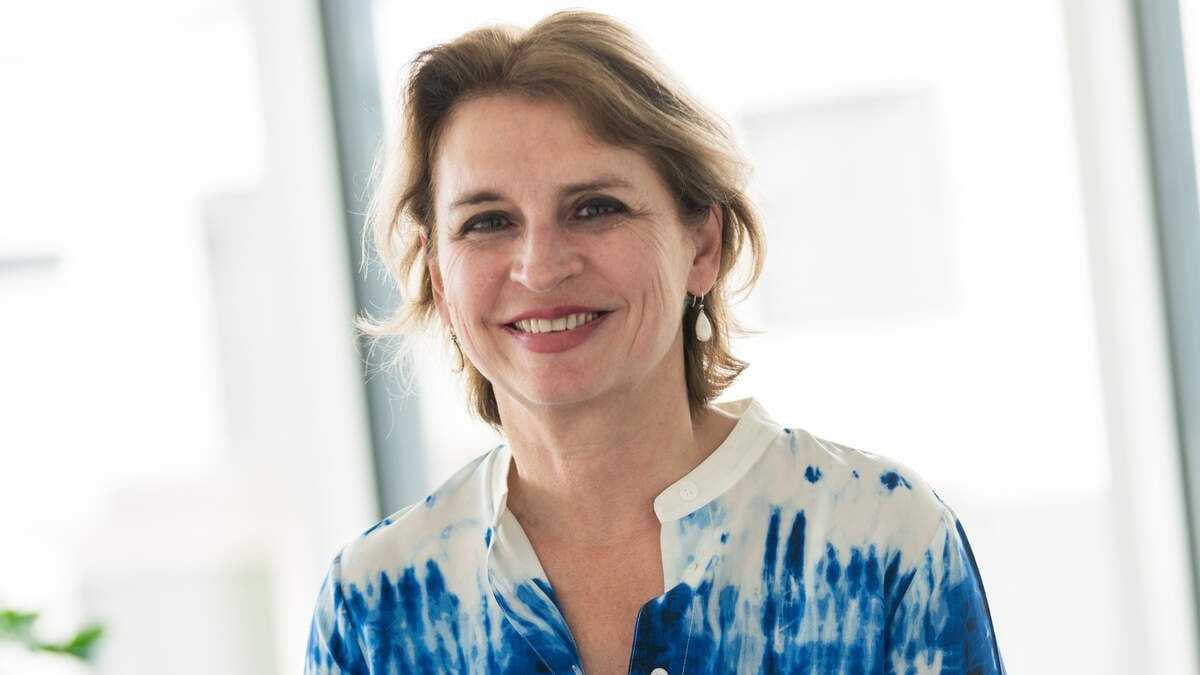
Rima Chedid and Patrick Zeches were unable to travel to Lebanon as planned at the end of March © Photo credit: Chris Karaba
Once emptied of the medical supplies they contained, the couple’s suitcases are filled with fine bottles of Lebanese wine or luxurious olive oil soaps for the return journey. “It’s our way of thanking the people who have supported our efforts from Luxembourg,” they said.
Fortunately, my family lives north of the capital, in a relatively unscathed neighbourhood. But we can still hear the bombs, and the atmosphere is very tense
Rima Chedid
But since the start of 2026, this commitment has become more complicated.
The war triggered by Israeli and US bombing of Iran on 28 February, and attacks by Israel on Beirut and southern Lebanon, has prevented the couple from making their regular trips.
“This year, I’ve only been to Lebanon once, in February. We should have gone at the end of March, but it was impossible because many flights have been cancelled, and there are no direct flights from Luxembourg. We don’t want to risk getting stuck in a third country,” said Chedid.
The important role of the diaspora
Back home, Chedid’s family lives a daily life marked by bombardments.
“Fortunately, my family lives north of the capital, in a neighbourhood that has been relatively spared. But we can still hear the bombs there, and the atmosphere is very tense,” said Chedid, who is in regular contact with her sister. In the neighbourhood, vigilance is the order of the day. “Landlords, for example, are afraid to rent their properties to refugees, fearing they might be people targeted by Israel.”
At the clinic where Patrick and Rima deliver their medical supplies, a soup kitchen is also being run © Photo credit: Patrick Zeches and Rima Chedid
Having arrived in large numbers from Syria under the Assad regime, there are many refugees in the country.
“There isn’t enough work for everyone; the economic situation is very complicated. Today, there are as many Lebanese expatriates as there are residents in Lebanon, and without this diaspora and its financial support, Lebanese families would not be able to survive,” said Chedid.
We are therefore waiting for an effective and lasting ceasefire so that we can return there.
Already complicated by the economic crisis resulting from the port explosion, the situation has worsened following recent events in the Middle East. “You can still find all the products; there are no shortages, but everything is even more expensive than usual. So we’re waiting for an effective and lasting ceasefire so we can go back there again,” the couple said.
A resilient country
For as long as she can remember, Chedid has always known her country to be occupied, by Palestinian factions as well as the Syrian army, and today, by Israel. “It breaks my heart to see my country occupied again. We Lebanese are caught in a vice, even though we are a sovereign nation. We want peace; this is not our war,” said the woman who describes herself as a pacifist.
Both Zeches and Chedid are hopeful that the situation will calm down. “Lebanon is resilient. We always bounce back. I hope the negotiators will show goodwill in finding common ground. But you can’t negotiate under the bombs,” Chedid said.
A pacifist, Rima Chedid is particularly fond of the patchwork that makes up Lebanese society. © Photo credit: Chris Karaba
Her husband, for his part, recalls a concert he attended in a Beirut villa, renovated after the explosion. “Someone had said, ‘We can do whatever we want, but they won’t take this culture away from us’,” he recalled. “We should focus on the things that unite us, rather than those that divide us. With that perspective, there would be fewer wars.”
(This story was first published in Virgule. Translated using AI, edited by Cordula Schnuer.)