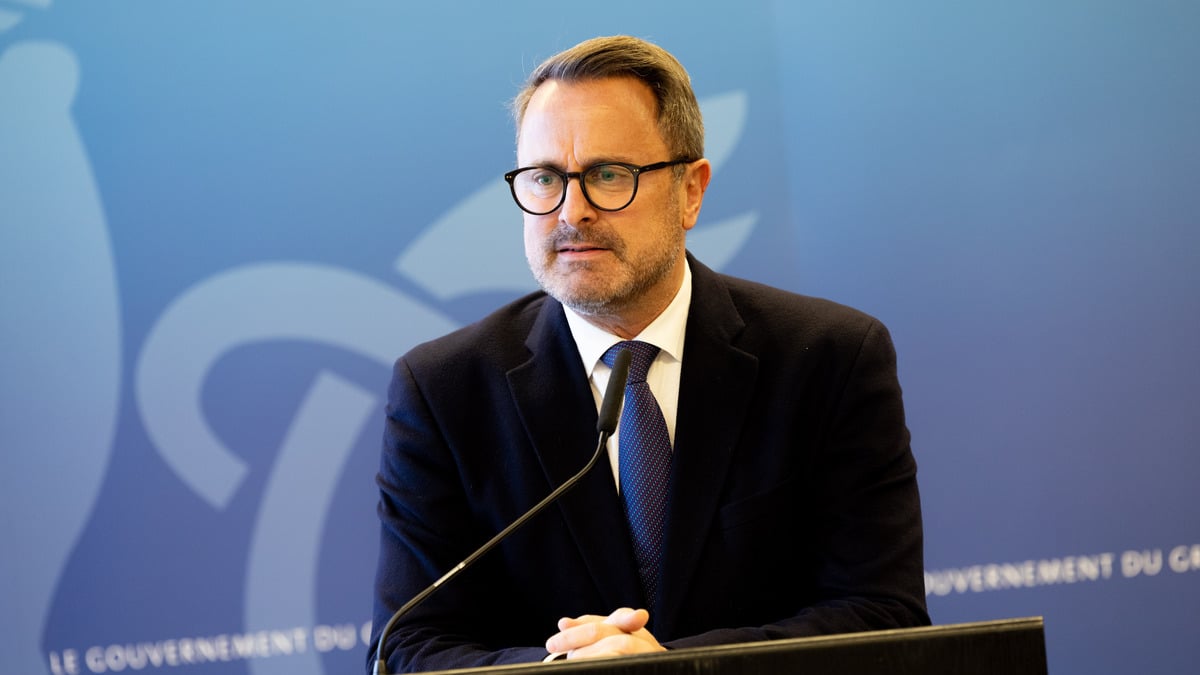
Foreign Minister Xavier Bettel has strongly advised Luxembourg nationals against travel to the Middle East amid the deteriorating security situation in the region following the US and Israeli air strikes on Iran.
Writing on social media platform X, Bettel urged nationals to follow local authorities’ instructions, and register their stay with the ministry via Guichet.lu.
Iran has launched retaliatory attacks against Israel as well as a US military base in Bahrain. Explosions have reportedly also been heard in Abu Dhabi and Dubai, Qatar’s capital city Doha, and Saudi Arabia’s capital Riyadh.
Earlier, Bettel had said that Luxembourg is closely monitoring the situation in the Middle East. “Every attack risks further destabilising the region,” the minister posted on X. “We call on all parties to exercise maximum restraint, to protect civilians, to de-escalate and to fully respect international law.”
US, Israel launch attacks on Iran as Trump urges uprising
Bettel’s predecessor, Jean Asselborn, had told the Luxemburger Wort that he was sceptical about the chances of air strikes alone bringing about regime change in Iran.
Chaos could follow regime fall
Former defence minister and deputy prime minister François Bausch warned against jumping to conclusions.
It is difficult for the press and outsiders to assess the situation accurately, he said. However, it can be assumed that US and Israeli intelligence services have been closely monitoring the situation in Iran for months and “had not published this for good military reasons,” Bausch told the Wort.
The two countries were certainly in a better position to judge whether it was a good time for an attack from a military point of view, he said. “In any case, the Iranian regime has been massively weakened in recent years.”
However, the former minister said there is a big difference between providing military support to a country under attack, such as Ukraine, and launching a preventive strike. “If there is a real risk of genocide, then such intervention is justified, but we would need more information to make that assessment,” said Bausch.
But even if the military action succeeded in ending the Islamic regime, there would still be questions about what should happen next. In the worst case, chaos could ensue, as in Iraq in 2003 after the fall of Saddam Hussein, Bausch suggested.
“I hope there is a plan. Because if Donald Trump continues to act as he has so far: simply taking a huge risk and starting something, but with no plan for how to proceed, then I see extremely high risks for the region.”
(This story is based on an article first published by Luxemburger Wort. Machine translated and edited by Duncan Roberts)