Want to bookmark your favourite articles and stories to read or reference later? Start your Independent Membership today.
Join today
Already a member?
Log in
Your support helps us to tell the story
From reproductive rights to climate change to Big Tech, The Independent is on the ground when the story is developing. Whether it’s investigating the financials of Elon Musk’s pro-Trump PAC or producing our latest documentary, ‘The A Word’, which shines a light on the American women fighting for reproductive rights, we know how important it is to parse out the facts from the messaging.
At such a critical moment in US history, we need reporters on the ground. Your donation allows us to keep sending journalists to speak to both sides of the story.
The Independent is trusted by Americans across the entire political spectrum. And unlike many other quality news outlets, we choose not to lock Americans out of our reporting and analysis with paywalls. We believe quality journalism should be available to everyone, paid for by those who can afford it.
Your support makes all the difference.Read more
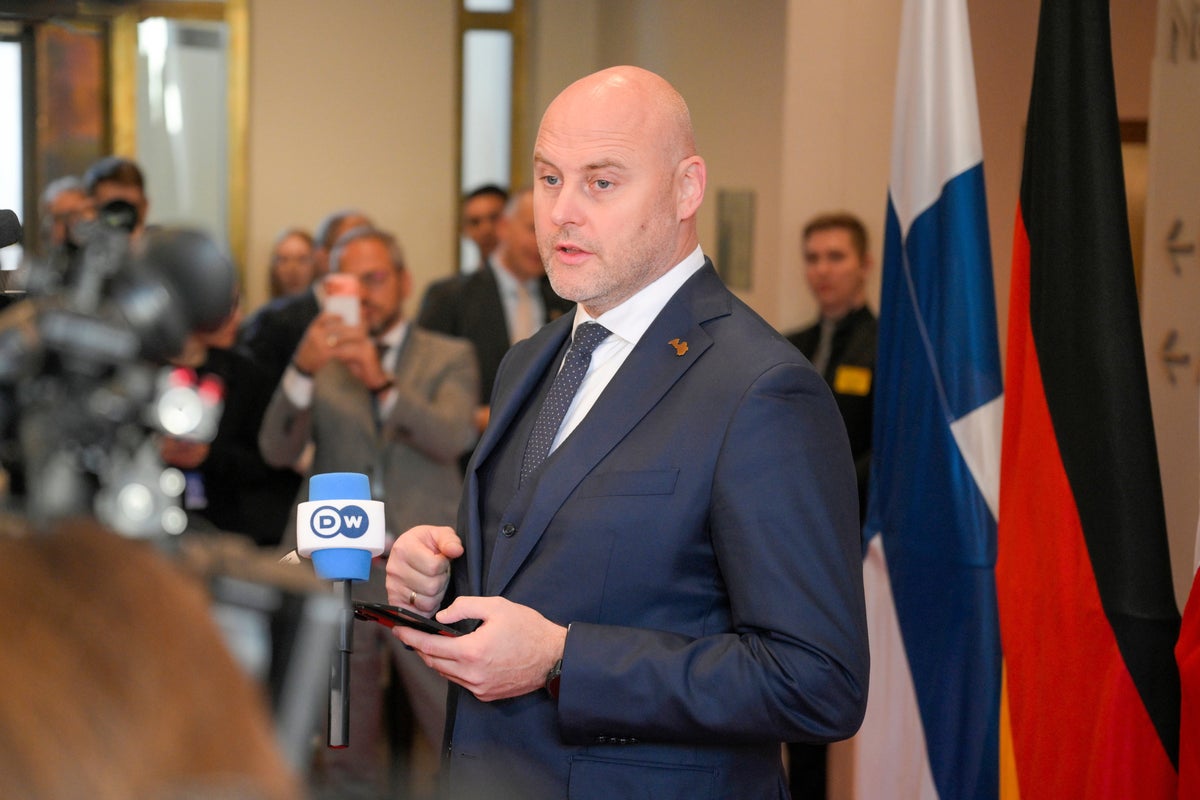
Latvian lawmakers on Sunday planned to begin negotiations to form a new government following a parliamentary election in which pro-Ukraine Prime Minister Andris Kulbergs ‘s four-party coalition emerged with 35% of the vote.
A political crisis in May over the handling of stray drones suspected of coming from Ukraine brought down the governing coalition that had been under strain over several other issues. The parliament, or Saeima, then approved the coalition led by Kulbergs of the centrist United List party, previously in opposition.
Latvia, like its Baltic neighbors Lithuania and Estonia, strongly supports Ukraine in its fight against Moscow’s invasion. It borders both Russia and Moscow-allied Belarus.
Saturday’s vote came as the small republic on NATO’s eastern flank contends with growing concern about potential Russian aggression.
The election saw a voter turnout above 51%, according to election data. Nearly 1.56 million people in the nation of more than 1.8 million were entitled to choose the 100 members of the single-chamber Saeima for a four-year term.
The United List party is expected to take 42 seats in parliament, and a multiparty coalition will be needed to govern in a splintered political landscape. Parties must take at least 5% of the vote to win parliamentary seats.
___
Dazio reported from Berlin.