Your support helps us to tell the story
From reproductive rights to climate change to Big Tech, The Independent is on the ground when the story is developing. Whether it’s investigating the financials of Elon Musk’s pro-Trump PAC or producing our latest documentary, ‘The A Word’, which shines a light on the American women fighting for reproductive rights, we know how important it is to parse out the facts from the messaging.
At such a critical moment in US history, we need reporters on the ground. Your donation allows us to keep sending journalists to speak to both sides of the story.
The Independent is trusted by Americans across the entire political spectrum. And unlike many other quality news outlets, we choose not to lock Americans out of our reporting and analysis with paywalls. We believe quality journalism should be available to everyone, paid for by those who can afford it.
Your support makes all the difference.Read more
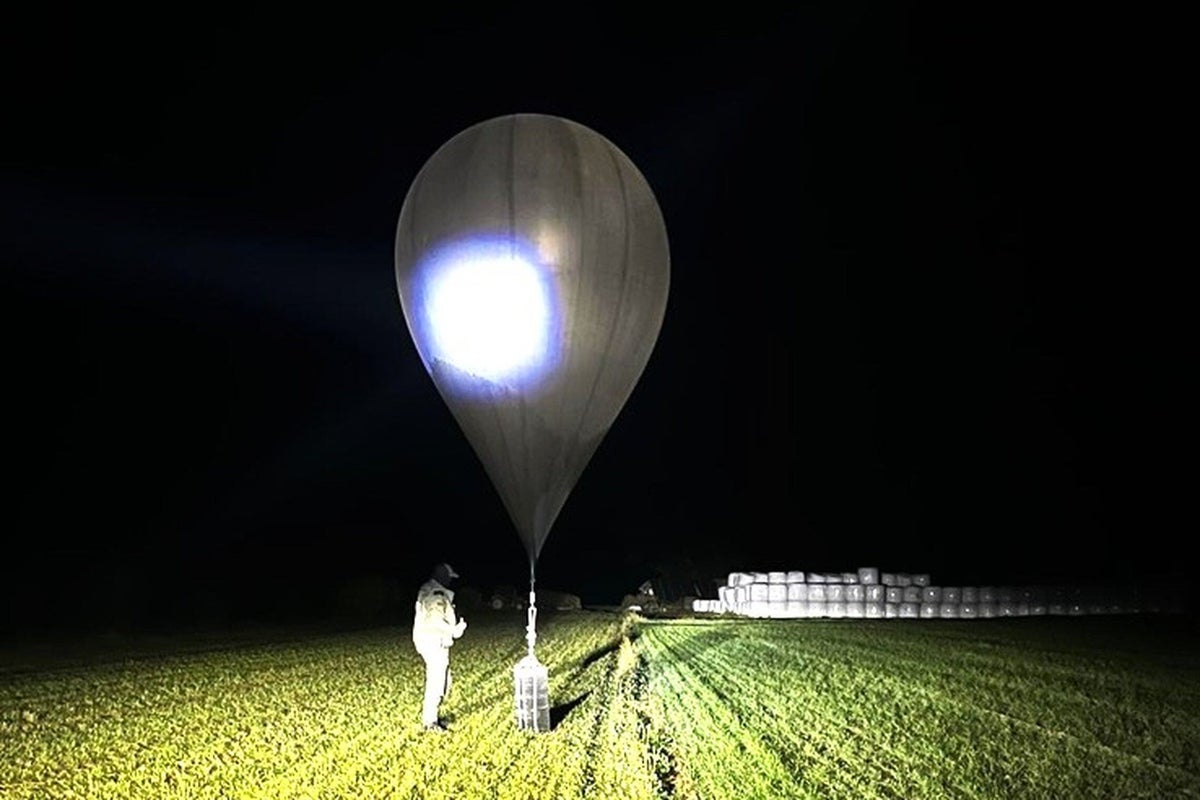
Lithuania has temporarily closed its main airport due to weather balloons in the sixth such incident this month.
Vilnius Airport confirmed it had been forced to close again on Thursday due to the balloons flying in its vicinity.
Lithuania has said the balloons are sent by smugglers transporting contraband cigarettes, but it also blames Belarus President Alexander Lukashenko, a close ally of Russian President Vladimir Putin, for not stopping the practice.
“According to preliminary information, the decision to restrict the airspace was made due to a balloon (or balloons) flying in the direction of Vilnius Airport,” the airport said on Thursday.
Belarus’s President Alexander Lukashenko (AFP/Getty)
Traffic at the capital airport was suspended until 9.10pm GMT.
The Baltic nation has already closed its border crossings between Lithuania and Belarus for most travellers until the end of November in response to the airspace disruptions, and has said it plans to shoot down balloons.
Lukashenko said on Tuesday that the Lithuanian border closure was a “crazy scam” and he accused the West of fighting a hybrid war against Belarus and Russia that was ushering in a new era of barbed-wire division.