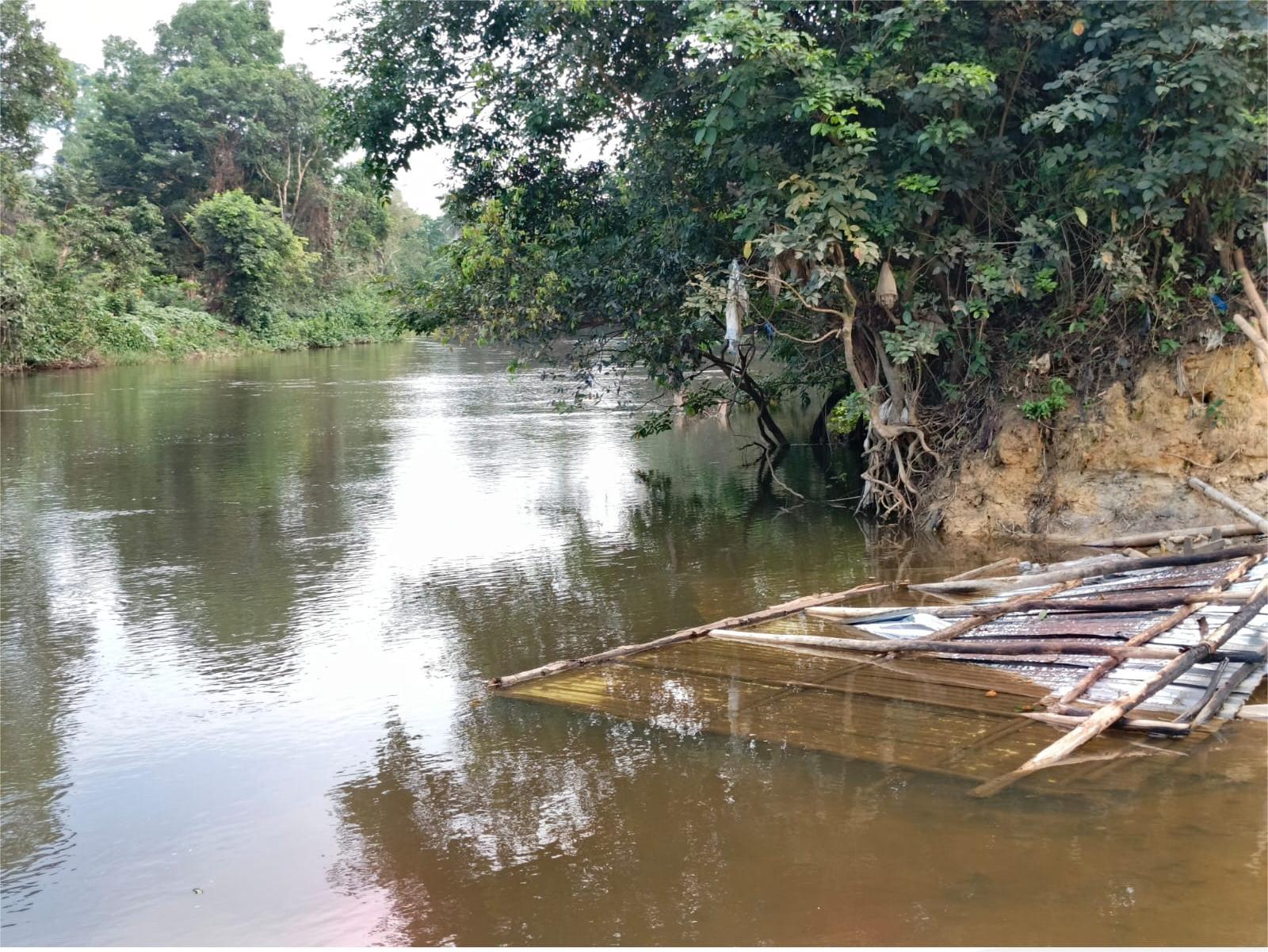
Konadu Town, Quadu Gbondi District, Lofa County – March 24, 2026 – Tension continues along the Liberia–Guinea border as residents of Konadu Town in Quadu Gbondi District accuse Guinean authorities of encroaching on Liberian territory following the discovery of a colonial-era boundary cornerstone near the Makona River.
The citizens are calling on the Government of Liberia to urgently clarify the country’s border position and investigate alleged activities along the river, including destruction of farmland and the hoisting of the Guinean flag in areas citizens insist belong to Liberia.
The dispute has attracted attention from lawmakers, security officials, and local authorities who recently visited the affected communities.
The disagreement centers on a survey marker inscribed “Service Géographique de l’A.O.F – Point Géodésique,” placed decades ago during the French colonial period to map territories in West Africa. Point Géodésique refers to a fixed reference used by surveyors to measure land coordinates.
While still found across the region, residents argue that the marker does not reflect the traditional boundary recognized by communities who have farmed the area for generations.
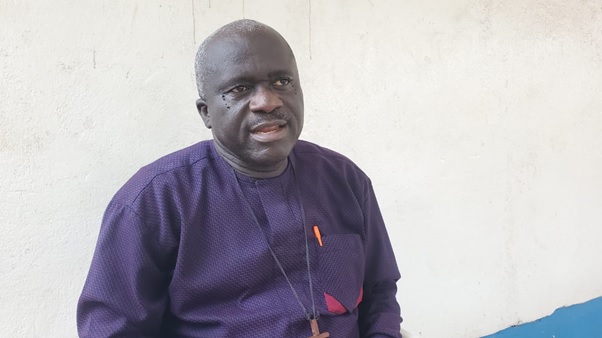
Reports circulating on social media suggesting that Guinean troops had taken two Liberian towns were dismissed by local sources. A journalist familiar with the situation told this paper: “I went at the same time after hearing that Guinean troops had taken two towns, but the information I received confirms that no town has been taken. The situation is tense, but the communities remain under Liberian control.”
Residents said Guinean authorities recently cited the cornerstone as the official border, but locals rejected the claim, insisting the disputed land has been cultivated by Liberian families for decades. The area is not near the main immigration crossing but is used primarily for farming sugarcane, palm, and other crops.
On March 10, 2026, villagers reported that Guinean authorities hoisted their national flag in the contested area, heightening residents’ fear. Despite the tension, no one has fled, and locals continue to farm as they await a formal response from the Liberian government.
Additional tension has been reported at the Sorlumba and Kasaka crossing points along the Makona River, where residents claim Guinean immigration officers crossed the river and destroyed plantations while asserting ownership of land historically recognized as Liberian territory.
Community leaders also voiced concern over the absence of Liberian security personnel at Kasaka, leaving locals vulnerable as Guinean officers patrol freely, affecting traders who depend on the route to sell goods across the border.
The dispute has also been linked to sand-dredging activities along the Makona River.
Authorities in Quoima Town confirmed that a dredging machine has been operating in the river for weeks, but the work involves collecting sand for construction, not mineral mining.
Deputy Speaker Thomas P. Fallah, who visited the border on March 21 with a legislative delegation, dismissed allegations of illegal mining, stating that the operation supports local development projects.
During the visit, Speaker of the House of Representatives Richard Nagbe Koon, accompanied by lawmakers from multiple counties, toured the affected communities and held a town hall meeting with residents.
The Speaker issued a 48-hour ultimatum to the Liberia Refugee Repatriation and Resettlement Commission and the National Disaster Management Agency to respond to the situation, warning that failure to act would prompt legislative action.
Local youth leaders urged the government to strengthen national security along the border and expand recruitment into the Armed Forces of Liberia, giving more citizens the opportunity to defend the country’s territorial integrity.
While diplomatic discussions between Liberia and Guinea continue, residents insist that the urgent deployment of security personnel and a clear boundary-verification process are essential to prevent escalation.
Citizens warn that although the situation remains calm, prolonged uncertainty over land ownership, border control, and access to farmland could threaten livelihoods and regional stability if the government does not act swiftly.