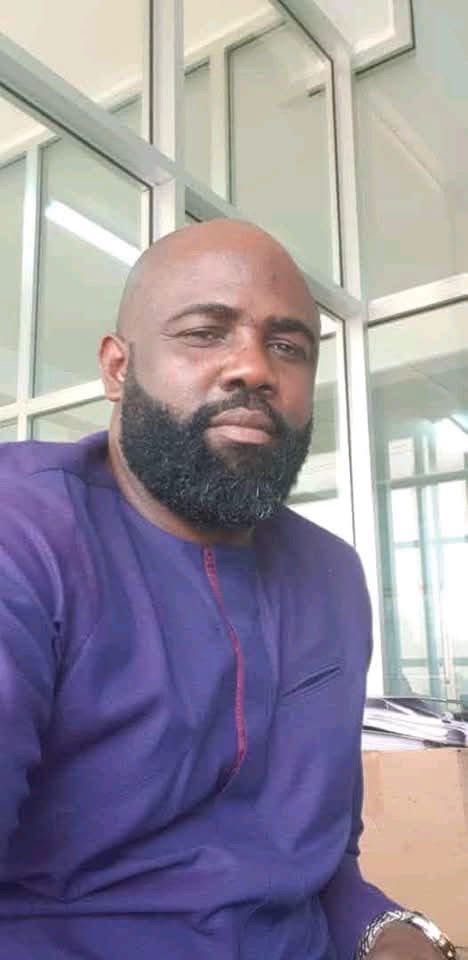
That Dusty Wolokolie is being laid to rest today, I must shout out loud, blowing the trumpet in the middle of the country announcing that the passing of Dusty Wolokolie marks the sunset of a defining era in Liberian progressive political struggle, or the phasing of an era. To the nation, he was a fearless lawmaker and a towering student leader. To me, since my teenage years in Monrovia, he was a living testament to what it means to lead with an unyielding conscience. Dusty did not just witness Liberia’s history; he boldly shaped it, leaving behind a legacy forged in the fires of activism, sacrifice, and moral clarity.
By James Larsah, Contributing Writer
First casually encountering him in the last quarter of the 1970’s in our Bassa Yard/Kpelleh Yard community on Camp Johnson Road in Monrovia, it was always a beautiful scene to watch for me then as a teenager, seeing two young adult males, Conmany Wesseh – dark skin and energetic young man along with Dusty Wolokolie, light skin, tall, slender and quite appealing young man, both often walking together as if racing to make it to the airport, with brief cases in their hands and nearly always accompanied by their two very pretty, light skin young partners – Conmany with Patience and Dusty with Jamima.
This was during the heat of the cold war between the East and the West or the USSR (Russia) and the USA, where both sides had competing interests and were infusing funds to organize and conduct frequent international conferences for young people at the time.
My introduction to this vanguard – Dusty, this leader, this trailblazer, was not through history books, but right in our own backyard on Camp Johnson Road. Throughout the late 1970s and 1980s, our family yard was a bustling sanctuary for the progressive movement, where my late father was one of the landlords. Conmany Wesseh and his family lived there, and Dusty was a constant, familiar presence, given that while Conmany was ULSU President at the time, Dusty was also the Vice President. I remember them vividly: brilliant, passionate young men, and again almost always accompanied by their similarly sharp, smart-looking partners— Patience and Jamima. Walking side-by-side through our yard as we watched and dearly admired them, it was evident that they carried the weight of Liberia’s future on their shoulders, yet exuding a vibrant, hopeful energy that defined their youth.
It was within this environment that our political education was forged under the banner of the Student Unification Party (SUP), MOJA, and eventually the Liberian People’s Party (LPP) even while I was still a grade student. We were trained in a culture of political discipline and with emphasis on austere lifestyle – living very plain, simple life without comforts or luxuries or unnecessary spending, always guided against hustling for pecuniary gains or just for profit.
We wore sandals and simple khaki shirts and trousers, intentionally rejecting luxury to stand in solidarity with the ordinary Liberian people. We bitterly frowned upon corruption, and Dusty embodied this Spartan discipline throughout his entire life.
Dusty was an outstanding Liberian political icon who spent all his life in public service and in very top roles but without a single trace of corruption scandal ever. Of course, Dusty was an exceptional and exemplary leader but he was more than just that, serving as the desirable model for the absolute best of its kind.
Much of Dusty’s legacy hinges on his courage of always speaking truth to power. That discipline gave Dusty the legendary fortitude to speak truth to absolute power, even when it meant facing targeted state wrath: In 1984, the then military leader of Liberia sent his armed men after Dusty following his Strange Things Are Happening speech against the military government, placing him in the crosshairs of state security. In subsequent period, then rebel leader and member of the Council of State Charles Taylor ordered his security men to arrest Dusty following his Underachiever speech, in reference to Taylor’s incompetence and national leadership failure.
As a lawmaker for the former District 4 and now District 10 in Montserrado County, Dusty was the ultimate maverick in the halls of power where, for example, he refused to let a legislative seat soften his radical integrity. Even as a member of the ruling party, he fiercely opposed bad concession laws, putting the wealth of Liberia’s future ahead of partisan loyalty—an act of defiance that nearly cost him his official standing. In this way, Dusty’s political DNA closely mirrored that of the late U.S. Senator John McCain. Both men were quintessential mavericks who understood that loyalty to one’s country and its people must always supersede loyalty to a political party. Like McCain, who famously bucked his own party on critical votes and championed campaign finance reform, Dusty was a country-first leader.
He ran for Speaker of the House not to claim a crown, but to establish a standard of governance that refused to bow to rubber-stamp politics. And this is where Dusty and I converged very strongly.
While Dusty Wolokolie provided the macro-level blueprint for my political inspiration, the micro-foundations of my values were laid by my paternal grandmother, Nowah Gorkoyah Larsah. There is a beautiful, striking convergence between the political chastity Dusty practiced in his khaki uniform and the foundational wisdom of my grandmother.
Nowah Gorkoyah Larsah taught me the value of uncorrupted integrity, resilience, and grounding oneself in the truth of who you are. Dusty practiced on the national stage what my grandmother preached at the fire hearth: that a clean name, a clear conscience, and a life lived in service to others are worth more than any silver, gold, or political title. Just as Dusty refused to be silent but spoke out even to his death, even participating in a protest while bound in a wheelchair, so, too, shall we also refuse to be silent but always speak out until we can no longer.
Dusty Wolokolie has joined the ancestors, leaving behind a vacancy in the Liberian progressive movement that will be incredibly difficult to fill. But as we mourn the man, we must celebrate the blueprint he left behind. In a world of political compromise and hustle after luxury and riches, let us remember the young men and women walking through the Camp Johnson Road yard and Sonewein today, and the man in the khaki shirts and trousers who go hungry or to prison countless times for freedom. Guided by Dusty’s radical bravery and sustained by the timeless principles of Nowah Gorkoyah Larsah, we must carry the torch forward. Rest in power, Comrade Dusty. Your conviction remains our command.