MONROVIA – The Managing Director of the Liberia Petroleum Refining Company (LPRC), Amos Tweh, is facing mounting public questions following the dedication of the newly refurbished Logan Town Market, amid lingering concerns over how he personally financed half of the renovation without any known history of comparable financial capacity.
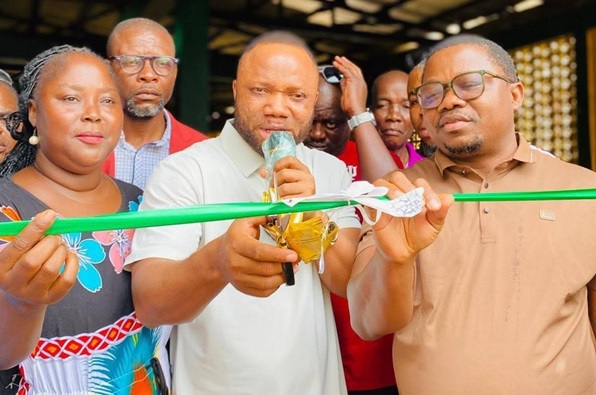
On Saturday, January 10, 2026, Tweh officially dedicated the renovated market and announced a 500,000 Liberian dollar interest-free loan for marketers. According to information attributed to Inside LPRC, the renovation was funded jointly, with 50 percent coming from LPRC as an institution and the remaining 50 percent reportedly contributed by Tweh from his personal resources.
Deputy Managing Director Eric Ceekay Sayee publicly confirmed that Tweh personally covered half of the renovation costs. That claim, however, has intensified scrutiny rather than eased it, as questions persist over how a sitting managing director of a state-owned enterprise suddenly mobilized substantial personal funds for a public facility.
Tweh’s dual role as LPRC Managing Director and Secretary General of the ruling Unity Party has further deepened public concern. As head of one of Liberia’s most financially sensitive public institutions, critics argue that any personal financial involvement in public projects demands full transparency, especially where institutional and personal funds appear intertwined.
The political context of the project has also drawn attention. The Logan Town Market is located in a district where Tweh previously contested as a Representative candidate, raising questions about whether the renovation represents genuine philanthropy or a strategic political gesture aimed at consolidating local influence.
Public debate intensified after Liberian political commentator Matthew Nyanplu remarked on social media that public officials in lucrative positions often become “philanthropists overnight.” His comment echoed wider concerns about why such generosity tends to emerge only after individuals assume powerful government offices.
Beyond public perception, hard financial questions remain unanswered. What was Tweh’s declared income before his appointment at LPRC? Did his asset profile prior to assuming office demonstrate the capacity to independently finance a market renovation of this scale? If so, where are the publicly available records to substantiate this claim?
Equally unresolved are questions about oversight. Was Tweh’s alleged personal contribution independently verified? Did LPRC’s Board of Directors formally review or approve the funding arrangement? Without clear documentation, doubts persist over whether institutional influence may have played a role in the financing.
The 500,000 Liberian dollar interest-free loan to marketers has also raised concerns. Under what authority was the loan extended, and from which account was it funded? If public resources were involved, what safeguards exist to ensure repayment and prevent abuse of state funds?
In a country where public trust in financial governance remains fragile, the lack of clarity surrounding Tweh’s claimed personal contribution risks overshadowing the development project itself. Until detailed, verifiable explanations are provided, the Logan Town Market renovation will continue to raise troubling questions about transparency, political power, and unexplained wealth within Liberia’s public sector.